
5 Mistakes to Avoid With Driveway & Pavers
The most expensive driveway paver mistakes in Lancaster usually aren’t made during installation. Four of them are made in the 72 hours before a contractor is hired, in decisions about scope, documentation, and base specification that most homeowners don’t know to ask about. And the number-one failure mode in the Antelope Valley isn’t cracked units or faded color – it’s base failure from under-specified aggregate depth, decided at the quote stage and invisible until 18 to 36 months after the last truck pulls away.
If you’d rather have a pro read your quote line by line, call (844) 797-3312. Estimates are free.
Key Takeaways
- A paver driveway quote is only as good as its base spec, and “4 inches of base” without a compaction standard leaves the number open to interpretation.
- Paver load rating (PSI) should be matched to what actually parks on the driveway, not to what looks best in a sample photo.
- No written change-order clause in the contract is a quiet green light for scope creep that can run into the low five figures.
- Edge restraint has to match Lancaster soil conditions – caliche and sandy loam don’t hold the same way.
- Sealer applied over uncured polymeric sand can lock in failure at the joints before the driveway sees weather.
Lancaster sits on a high desert floor where the ground swings hard between wet winters and long, dry summers, and that swing is what most paver problems are really about. If you want the full scope of what we install, see our Driveway & Pavers in Lancaster page. Otherwise, here are the five mistakes, in the order they actually happen.
Mistake #1: Accepting a quote that specifies base depth in inches, not compacted density
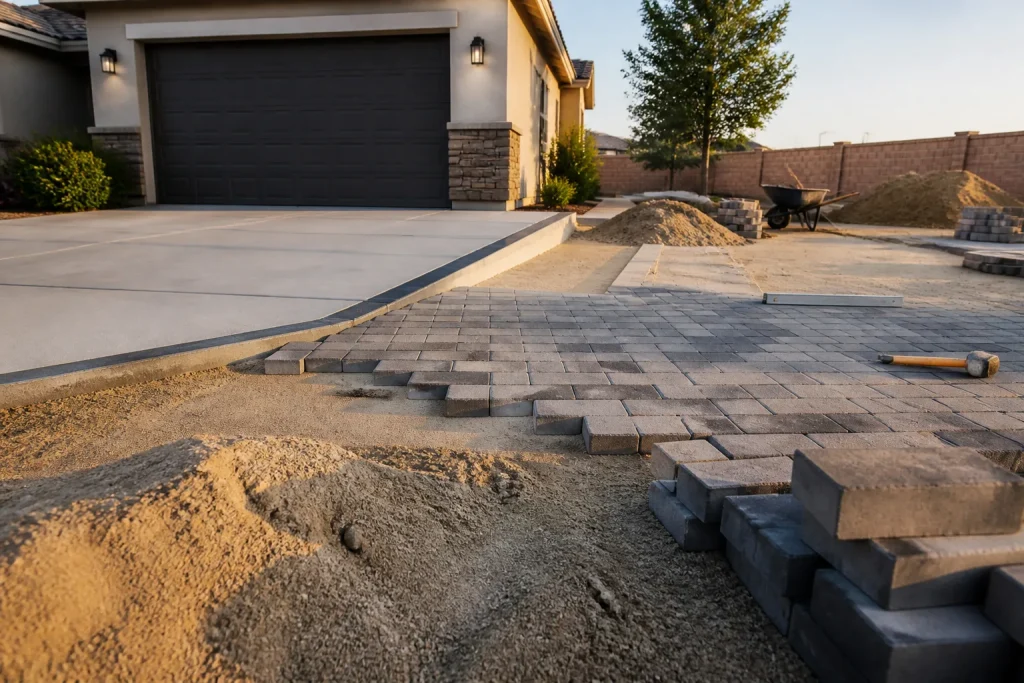
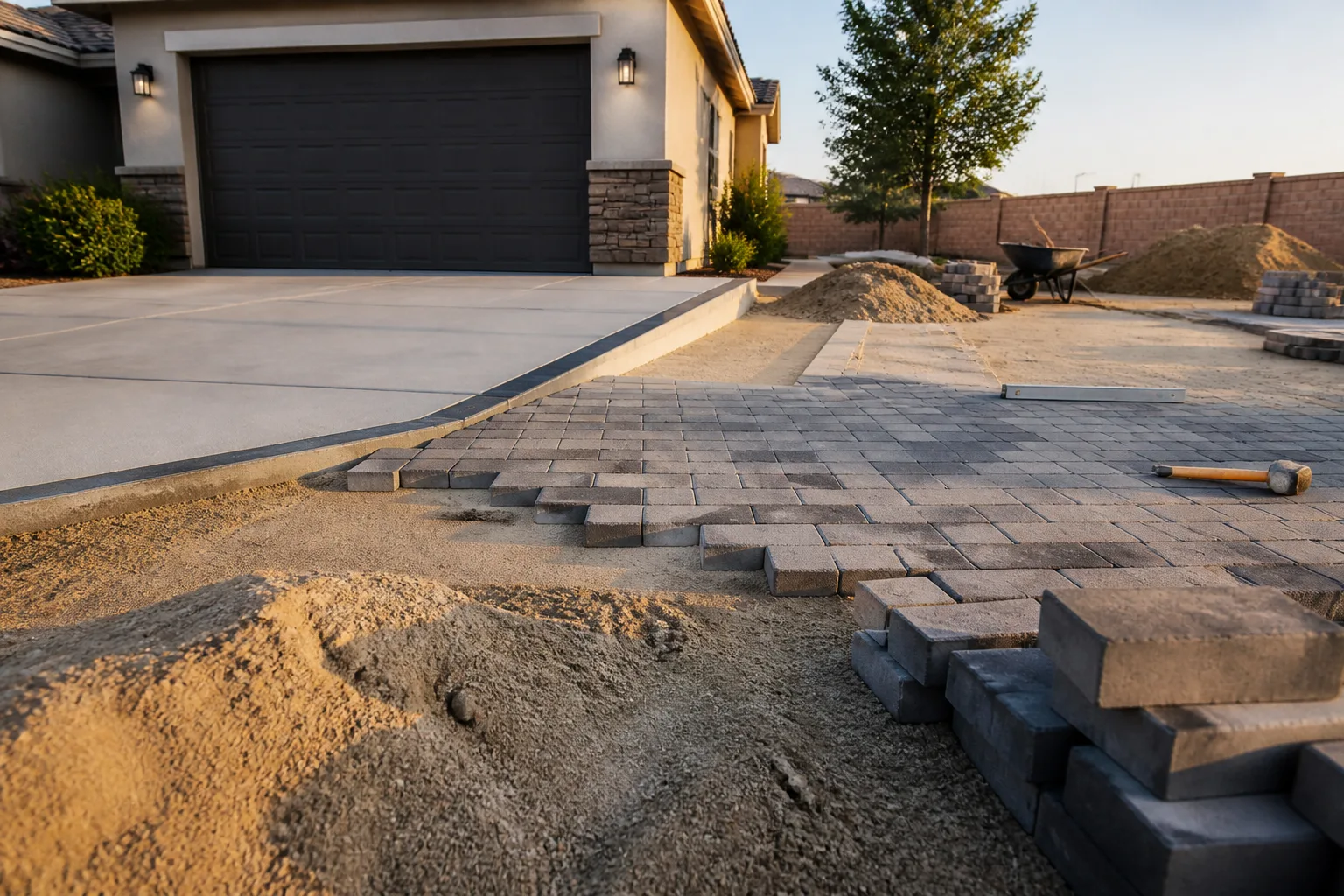
If a Lancaster paver quote says “4 inches of base” and stops there, the number isn’t wrong – it’s incomplete. Loose aggregate and compacted aggregate are not the same thing. Four inches of loose gravel will compact down to roughly 2.5 to 3 inches once a plate compactor has done its work. If the crew quotes 4 inches loose and installs the pavers on top, you’ve effectively paid for a shallower base than the driveway needed, and the failure will show up as rutting and settlement.
A proper spec names three things: the finished depth of compacted aggregate, the compaction standard it’s built to (usually 95% of maximum density, verified with a density test), and the aggregate type itself, which in Lancaster’s heat is typically a crushed, angular base like Quikrete’s high-performance paver base or an equivalent, not rounded river gravel that never locks together.
This is the mistake that produces base failure 18 to 36 months down the line, and by then the fault is invisible: the paver units are fine, the color is fine, and the driveway is still shifting. If your quote leaves the compaction standard out, ask for it in writing. A contractor who builds to a spec will put the spec on paper.
Mistake #2: Picking your paver material before confirming its load rating
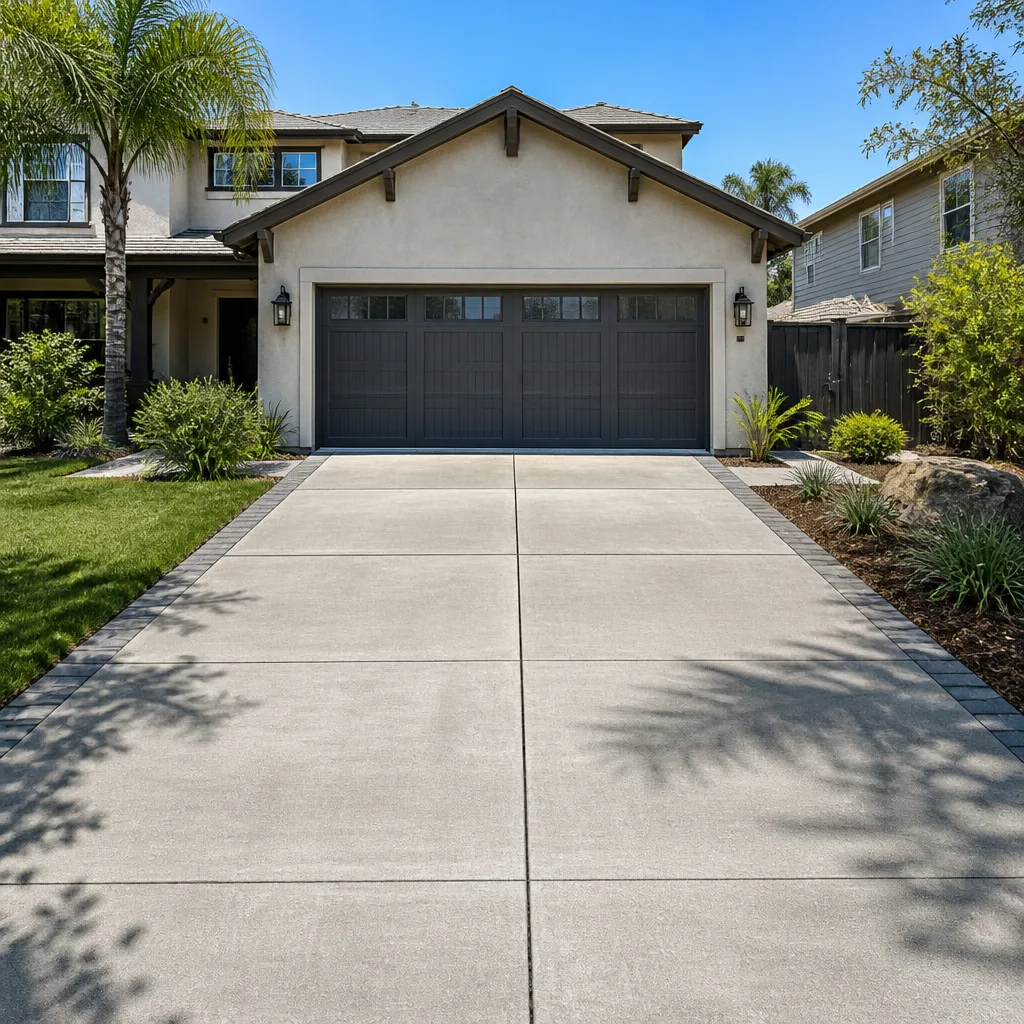
Pavers look beautiful in a catalog sample, and a lot of homeowners pick the unit before anyone asks the question that actually matters: what’s going to park on it? Every paver is rated by compressive strength, and the threshold you need depends on the load.
- Passenger vehicles and light SUVs: a paver rated around 3,000 PSI or higher will generally hold up for a residential driveway under normal use.
- Pickups, work vans, campers, or regular heavy loads: spec closer to 8,000 PSI to handle the point loads, especially in Lancaster afternoons where pavement surface temps can push well past 100°F and soften marginal material.
- When in doubt, go up a tier. The cost premium per square foot is small compared to pulling pavers in two years.
Not every common paver SKU falls at the same rating, and the only way to know is to read the manufacturer’s spec sheet and match it to the trade. Belgard and Techo-Bloc pavers we source through come with published ratings, and we hand those numbers to the homeowner before the unit is chosen. That’s the point where load rating should be checked – at selection, not after delivery.
Mistake #3: Skipping a written change-order clause in the contract
This one isn’t a vague mistake. It’s a specific omission, and it typically enables scope creep that runs anywhere from a few hundred dollars up to the low five figures on a large driveway. Without a signed change order, “we found some extra work” becomes a moving number, not a fixed one.
Here’s what happens on a driveway job. The crew excavates and discovers that the existing subgrade has pockets of soil that need to come out and get replaced with aggregate – routine in parts of the Antelope Valley. Or they hit a sidewalk section that needs rework, or the grade has to change to move water away from the foundation after a winter rain. Those are real issues and they should be resolved, but they are not free and they should not be handled with a verbal “we’ll take care of it and settle up at the end.”
The fix is a contract clause stating that no change proceeds until a written change order is signed, itemizing the additional line and the price. The Haven Standard has made this Clause 1 of the discipline: the price is written before any tool gets picked up, and no change happens on a handshake. That’s why our projects come in within a few percent of the number agreed at the start. In our experience, the homeowner who asks for a written change-order clause at the quote stage is the homeowner who isn’t arguing about the final invoice.
Mistake #4: Installing without an edge-restraint system rated for the soil type
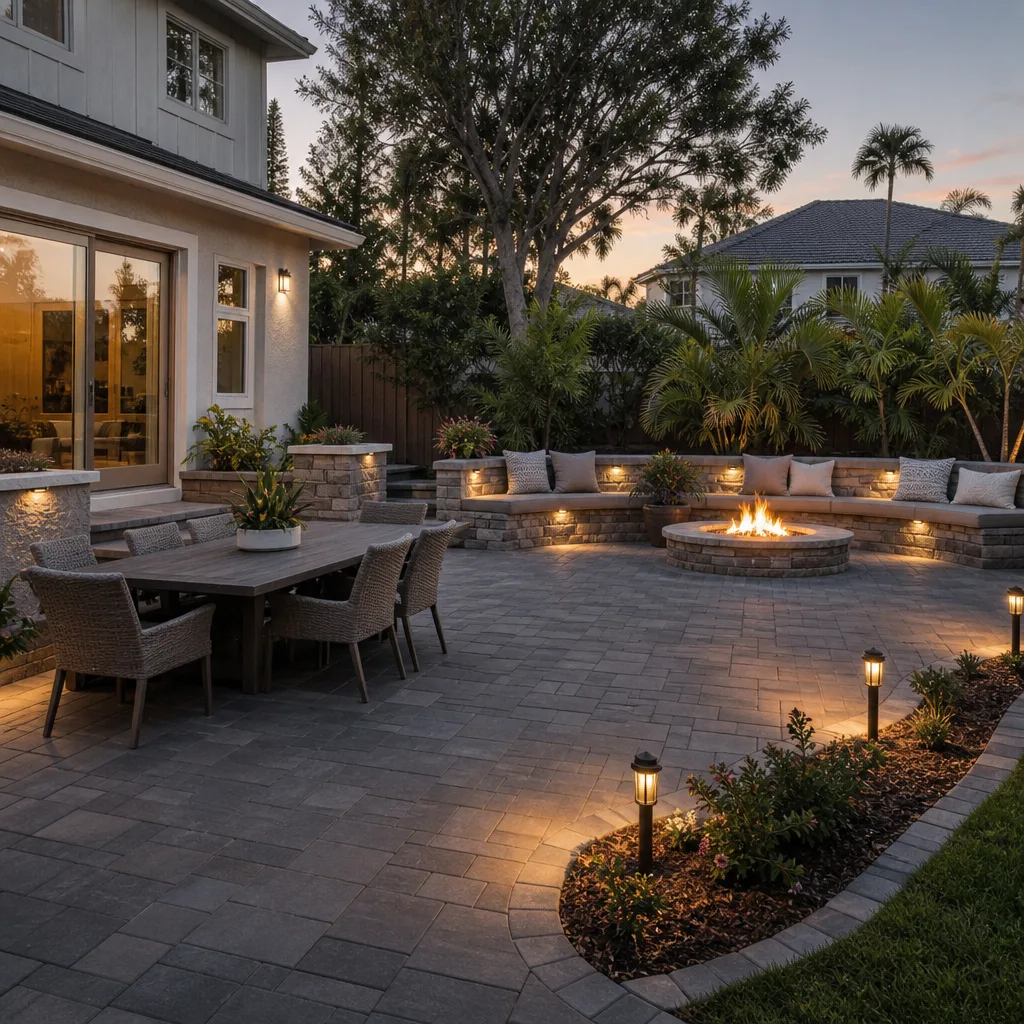
Pavers don’t stay in place by friction. They stay in place because the edge restraint holds them together as a unit, and in Lancaster the ground under that restraint is not one thing. The Antelope Valley has caliche in patches – that hard, cemented layer that resists a shovel and turns a trench into a fight – and in other areas the soil is sandy loam or alluvial material that holds moisture differently.
Caliche under a restraint behaves like a rock shelf and can crack a rigid edge if the installer uses hardware rated for soft soil. Sandy loam can let the edge move laterally if the base course under it isn’t compacted properly. Different soils, different hardware, different fastening depth. Sakrete makes edge-restraint adhesive products we use where the spec calls for it, and where a mechanical edge is the right answer we lean on steel or aluminum systems built for the soil at hand.
If the contractor has not walked the subgrade and noted the soil type before quote, they can’t honestly spec the edge. In Lancaster, that walk is the difference between a driveway that stays tight at its borders for a decade and one that starts fanning out at the curb within a couple of seasons.
Mistake #5: Sealing before the polymeric sand has fully cured
This is the mistake that gets made least visibly and does the most damage to joint integrity. Polymeric sand is what fills the gap between pavers and locks the units together once it hydrates. Sealer is what protects the surface and keeps sand from washing out. Both are necessary. Doing them in the wrong order or too close together breaks the joint system.
The cure window depends on the product. Most high-performance polymeric sands on the market need the joints to hydrate thoroughly, and then to dry, before any sealer touches the surface. In Lancaster’s warm, low-humidity air that window can be shorter than it is on the coast, but it is not zero. Rushing it in the name of a one-day turnaround traps moisture under the sealer film, interferes with the sand’s final set, and turns a clean joint into a soft, sandy void that fails the first time a heavy vehicle rolls across it or the first winter rain the driveway sees.
The honest answer to “when can you seal it?” is “when the sand is done curing.” Not when the schedule says. Not before the homeowner’s open house. A crew that will wait on the sand is a crew that isn’t going to rush the base either.
When to call a pro
Some of what we’ve covered here is checkable by a homeowner with a spec sheet and a determined afternoon. Diagnostic work on base depth, load rating, and soil conditions is not – it involves walking a subgrade, reading the existing driveway’s failure pattern, and matching the paver selection to the vehicle sitting in your garage. When we run a free second opinion on a written estimate, we go line by line: does the base spec name a compaction standard, does the paver rating match the load, does the contract have a change-order clause, does the edge hardware match the soil, and is the seal timeline honest. You bring a competitor’s quote, and we review it at no charge. You’ll walk away knowing more whether or not you hire us.
Related services in Lancaster: if your project reaches the yard beyond the driveway, our Fence Installation in Lancaster work and Home Additions & ADU in Lancaster are the natural next conversation. You can also start at the Rowan Construction Group Lancaster home page.
The Bottom Line
The five mistakes that cost the most money on a Lancaster paver driveway happen on paper before they happen in the ground. Base depth needs to be specified as compacted density, not raw inches. Paver selection has to match the load rating to what actually parks on the driveway. The contract needs a signed change-order clause to keep scope creep honest. Edge restraint has to be specified for the soil type – caliche and sandy loam are not interchangeable. And sealer has to wait for polymeric sand to finish curing. Get all five right at the quote stage and the driveway you install is the driveway you keep.
If you’d rather have a written quote in hand before anything starts, Rowan Construction Group Lancaster offers free estimates with a flat written price and a written scope, a change-order requirement, and a documented photo record on every visit. Call (844) 797-3312 to schedule yours.
Frequently Asked Questions
A residential paver driveway in Lancaster typically needs 6 to 8 inches of finished compacted aggregate below the pavers, built in lifts and compacted to around 95% of maximum density. Some residential specs accept less, but 4 inches loose and 4 inches compacted are not the same number. If a quote doesn’t state the compaction standard, ask for it in writing before signing.
Match the paver’s compressive strength rating to the load. For a standard passenger vehicle or light SUV, a rating around 3,000 PSI and up is generally adequate. For regular pickup, van, or camper traffic, spec closer to 8,000 PSI to handle point loads, particularly in Lancaster’s high summer surface temperatures. Always confirm the published rating on the manufacturer’s spec sheet.
It depends on the product, but the joints need to fully hydrate and then dry before any sealer goes down. Most high-performance polymeric sands require the joints to be thoroughly set before sealing. Lancaster’s dry heat can shorten the visible cure time, but it does not eliminate the need to wait. Ask the installer how the cure window for the specific product will be confirmed before the sealer is applied.
Yes. A change-order clause in your contract is a written statement that no additional work proceeds without a signed order listing the added scope and the added price. Without it, discoveries during excavation (soil pockets, subgrade issues, or grade corrections) can become verbal agreements that inflate the final invoice. Ask to see the clause before signing, and if it’s missing, ask for it to be added.
Written by the team at Rowan Construction Group Lancaster.
Need Construction Help?
Call Rowan Construction Group Lancaster - licensed & insured, here with fast after-hours help in Lancaster.
(844) 797-3312