
5 Mistakes to Avoid With Fence Installation
The five most expensive fence installation mistakes in Lancaster aren’t about style or even material choice. They’re documentation and site-condition errors that sit quiet for 6 to 18 months, then surface as a leaning post, a neighbor dispute, or a failed inspection that stalls a home sale. Most homeowners skip a property survey before layout, and they find out why when a neighbor pulls a permit for their own fence. At that point, moving an installed 6-foot block wall in Lancaster runs $3,800 to $7,200 in labor and materials. Here are the five errors we see most, each with its dollar cost and the one-sentence fix.
1. Laying Out Posts With No Property Survey
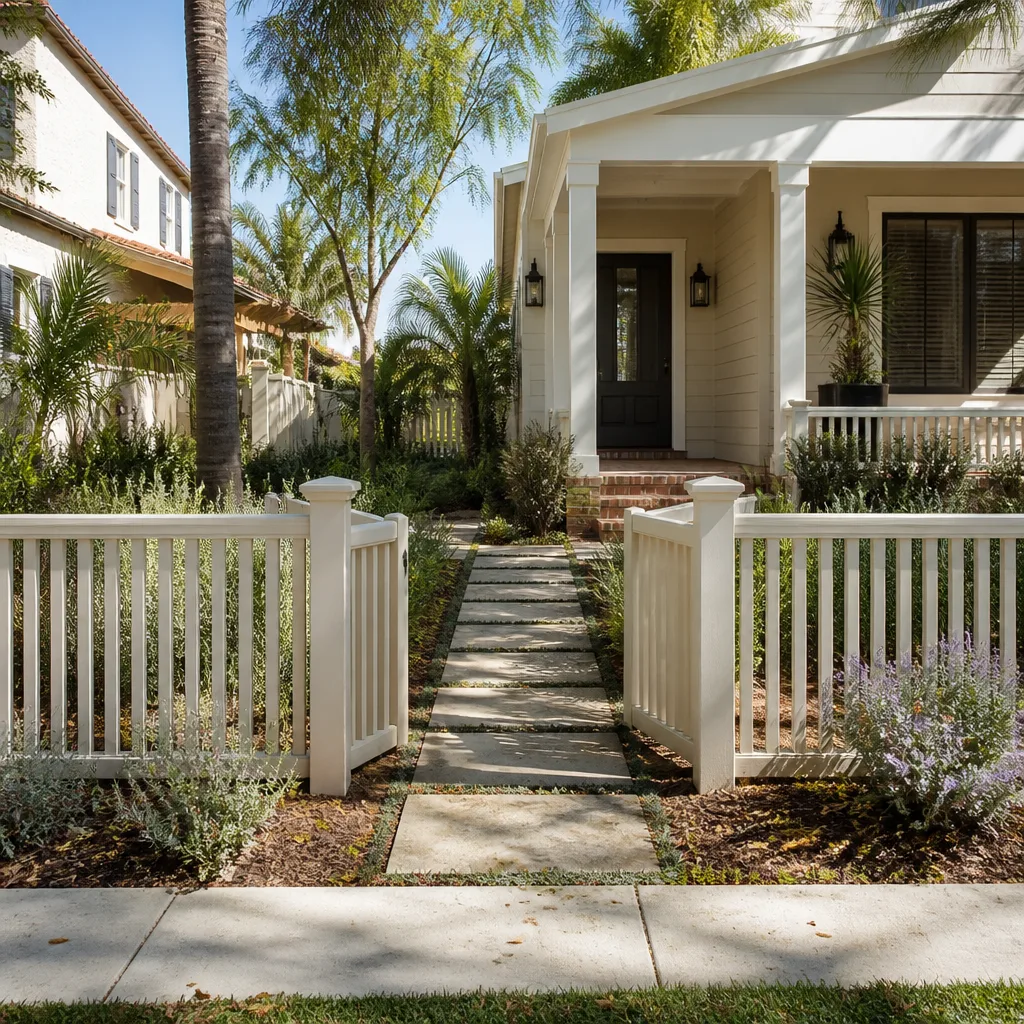
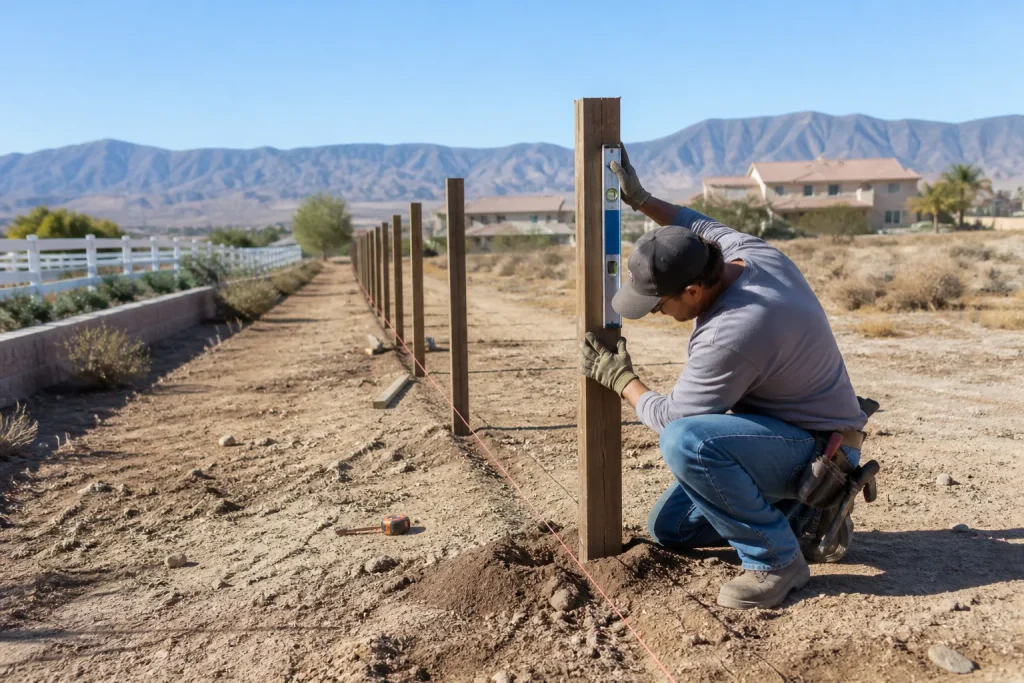
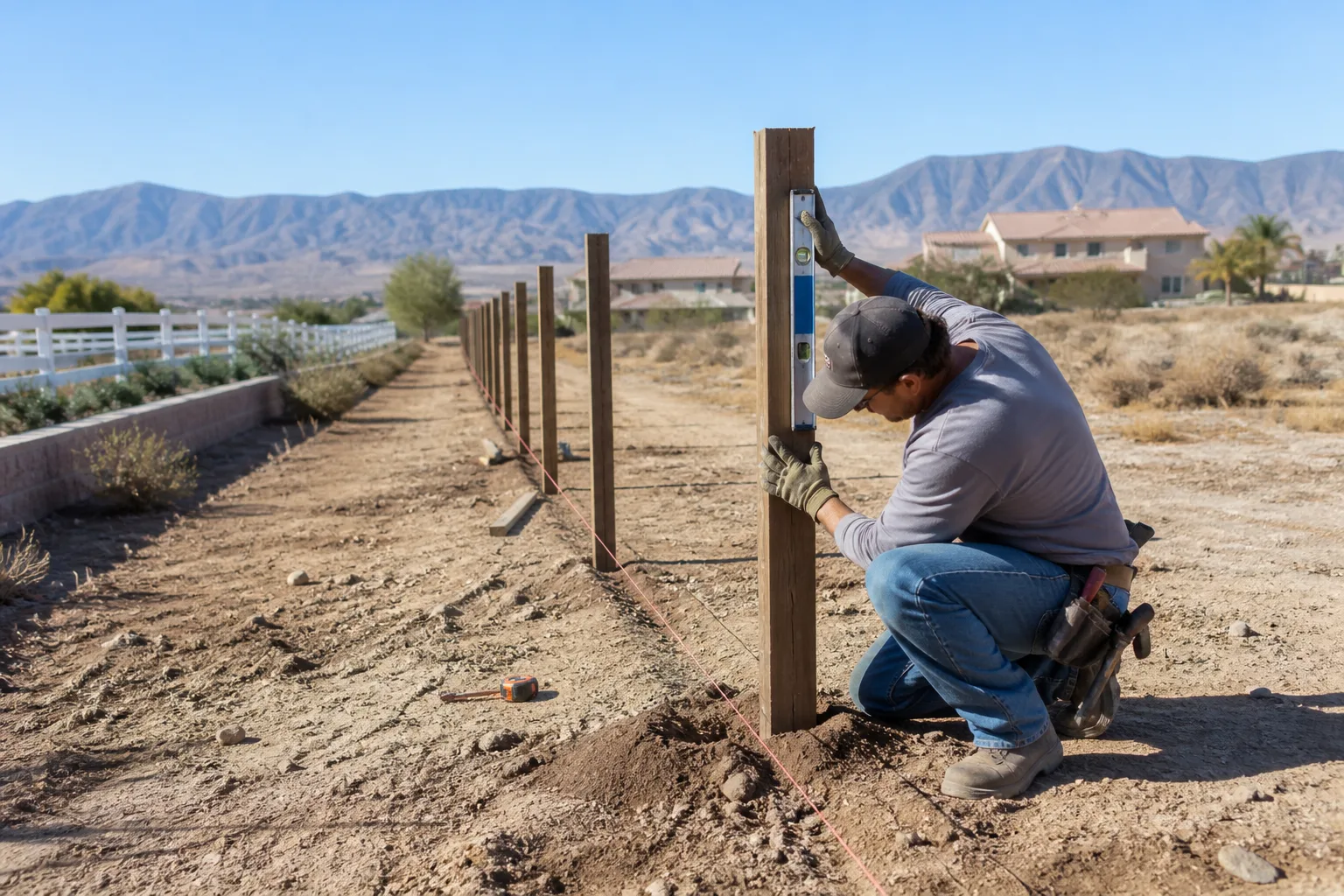
A fence built 6 to 12 inches over a property line is the most avoidable loss in this trade. You don’t discover it on install day. You discover it when a neighbor files for their own permit, and the county plan check flags the encroachment on the plat map.
What it costs in Lancaster:
- Boundary survey, done first: $450 to $900 for a typical residential lot.
- Moving an installed chain-link run: $1,400 to $2,600 in labor plus new posts and concrete.
- Moving a 6-foot block wall: $3,800 to $7,200, because masonry doesn’t come apart cleanly.
- Adverse possession exposure: if the fence sits over the line long enough, the neighbor can argue a claim to that strip. Legal fees start at $2,500 and climb.
We’ve seen this on corner lots in Quartz Hill and older parcels near the Antelope Valley foothills, where original lot markers have been buried or moved by decades of grading. The fix is one sentence: hire a licensed surveyor and stake the line before a single post hole is dug. A survey costs less than a tenth of what moving a block wall does, and it settles the boundary question in writing.
2. Undersized Footers for Lancaster’s Expansive Soil
Lancaster sits on soil with a high clay content, and clay swells when it takes on water and shrinks when it dries. The Expansion Index (EI) here commonly comes in above 50 under ASTM D4829, the standard test for soil expansiveness. That number matters because California Building Code minimums for fence footers assume less-reactive soil.
When a footer is poured to the bare CBC minimum on EI-50-plus ground, the post works loose as the soil cycles through wet winters and dry summers. You get the classic Lancaster symptom: a line of posts that lean the same direction after the first rainy season, or a gate that drags because the hinge post heaved.
What deeper footers actually add:
- Footer depth: going from 24 inches to 30 or 36 inches on a 150-linear-foot fence adds roughly 1 to 1.5 cubic yards of concrete, or $250 to $450 in material.
- Rebar and wider bell: another $150 to $300 across a typical run.
- Repairing a settled 150-foot fence: $2,200 to $4,500, because every affected post has to be dug out and repoured.
The fix: have the soil’s Expansion Index confirmed and spec footer depth to it, not to the code floor. That extra few hundred dollars up front is the difference between a fence that stands straight at year ten and one you’re re-setting at year three.
3. Calling It a “Repair” to Skip the Permit
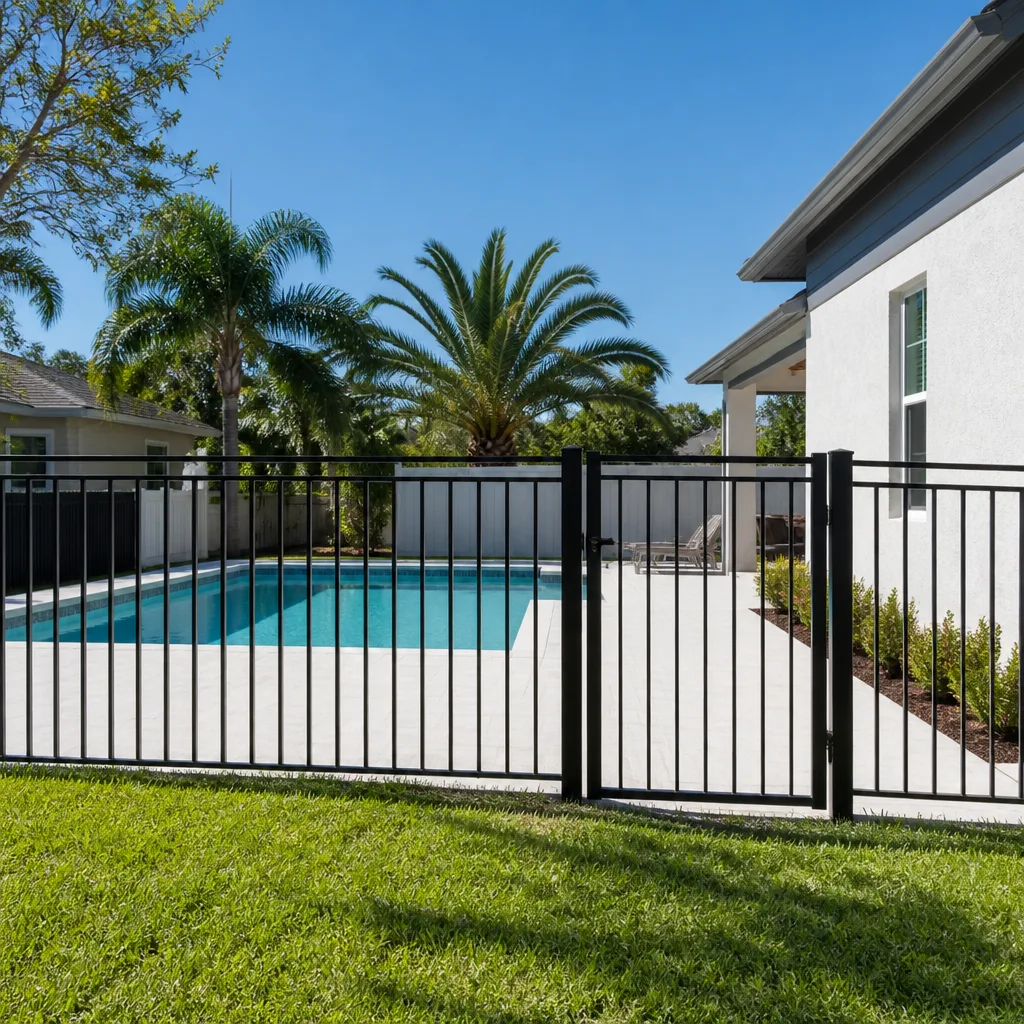
Replacing a fence more than a certain percentage of its length, or building anything new, is construction, not maintenance. Skipping the permit to save a few hundred dollars creates a problem that follows the house. Under California Civil Code 1102, a seller has to disclose known permitted-work status in the Transfer Disclosure Statement. An unpermitted fence is a material fact, and buyers’ agents find it during due diligence.
What it costs to skip the permit and get caught:
- Permit and inspection fees (the money you saved): $150 to $600 depending on linear footage and height.
- After-the-fact permit and possible demo: $800 to $2,500, and the county can require the fence come down and go back up to code.
- Sale price leverage: buyers routinely ask for a $3,000 to $8,000 credit when unpermitted work shows up in a disclosure.
In our experience, the permit is the cheap part. The fix is one sentence: pull the permit for any new fence or major replacement, and keep the final inspection sign-off in your records. It’s the single document that turns a resale question into a non-issue.
4. A Verbal “Gate Included” That Never Made It Into Writing
This one bites on high-end installs. The original estimate says “gate included,” and everyone nods along. Then the conversation turns to an automated operator, and the number moves. Without a signed change order, that $1,200 to $2,800 swing becomes a dispute where nobody can prove what was promised.
Here’s how it usually plays out: the buyer assumed “gate” meant a full automated driveway gate with a keypad and safety sensors. The installer meant the leaf and frame. The operator, the low-voltage wiring, and the sensor pair are add-ons. On a Lancaster install near the Antelope Valley country-club communities, we’ve seen homeowners stuck paying twice because the scope was vague.
The fix: put every gate component in the written scope, line by line, and sign a change order before any add-on gets built. If it’s an automated operator, the scope should name the unit, the power source, the sensor spec, and who pulls the electrical permit. Have a competitor’s quote you want checked? Our free second opinion reviews it line by line at no charge, and we’ll tell you what’s missing so you can compare honestly.
5. No Wind-Load Specification in the Contract
Lancaster is a high-desert wind corridor. The ASCE 7 design wind speed here is 110 mph at Exposure C, which accounts for open terrain like the stretches along the west side of the valley. A fence contract that doesn’t specify post embedment and panel bracing to that standard is, practically speaking, unenforceable if the fence blows over.
When a wind-loaded fence fails, the installer points at “normal wear” and the homeowner points at the contract. If the contract never named 110 mph, post depth, or bracing method, there’s nothing to hold anyone to.
What a wind-rated build should specify:
- Design wind speed: 110 mph, Exposure C, written into the scope.
- Post embedment: depth and concrete volume per post, matched to soil type.
- Panel bracing: the method and spacing, especially on solid-panel and block fences that catch full wind.
- Hardware rating: hinges, latches, and brackets rated for the load.
The fix: require the wind-load spec, post embedment, and bracing method in writing before signing. If a contract is silent on all three, treat that as a red flag, not a formality.
When to Call a Pro
Some of these mistakes are cheap to avoid and expensive to fix. A survey, a soil-based footer, a permit, a written gate scope, and a wind-load spec all cost a fraction of the repair. If your fence is going up on expansive soil, runs a long distance, or includes an automated gate, this is work worth handing to a crew that documents the site conditions first. For the full scope of what a properly built fence looks like, see our Fence Installation in Lancaster page.
Related services in Lancaster: if the project pulls in grading or a new hardscape, our Driveway & Pavers in Lancaster team handles the site prep, and for larger parcel changes our Home Additions & ADU in Lancaster group can review setbacks before you build.
The Bottom Line
The five mistakes that cost Lancaster homeowners the most money aren’t cosmetic. They’re documentation and site-condition gaps: no survey, a footer that ignores the soil’s Expansion Index, a skipped permit, an unwritten gate scope, and no wind-load spec. Each has a dollar figure attached, and each has a one-sentence fix that belongs in the contract before a post goes in the ground.
If you want a written price before anyone starts, with the scope, the permit, and the wind-load spec spelled out, that’s how we work. Rowan Construction Group Lancaster quotes every fence with a flat written price and a written scope, and no change proceeds without a signed change order. Call (844) 797-3312 for a free estimate, and if you’re ready to start, you can review our Lancaster home services first.
Frequently Asked Questions
Yes. A survey costs $450 to $900 and prevents the most expensive mistake on the list: building over the property line. Moving an installed block wall runs $3,800 to $7,200, and an encroachment can drag a neighbor into a legal claim. Call (844) 797-3312 to talk through your lot before layout.
Deeper than the bare code minimum, because the soil’s Expansion Index commonly exceeds 50 under ASTM D4829. That means footers at 30 to 36 inches rather than 24, with proper rebar and a wider bell. The extra concrete adds roughly $250 to $450 on a 150-foot run and prevents the leaning-post repair that costs $2,200 to $4,500.
Any new fence or major replacement typically does. Permit and inspection fees run $150 to $600, and skipping them can trigger an after-the-fact permit, forced demo, and a resale credit of $3,000 to $8,000 under California Civil Code 1102 disclosure. Pull the permit and keep the final inspection sign-off.
110 mph at Exposure C, per ASCE 7. A contract that doesn’t specify the design wind speed, post embedment, and panel bracing to that standard gives you nothing to enforce if the fence fails. Ask for all three in writing before you sign.
Written by the team at Rowan Construction Group Lancaster.
Need Construction Help?
Call Rowan Construction Group Lancaster - licensed & insured, here with fast after-hours help in Lancaster.
(844) 797-3312