
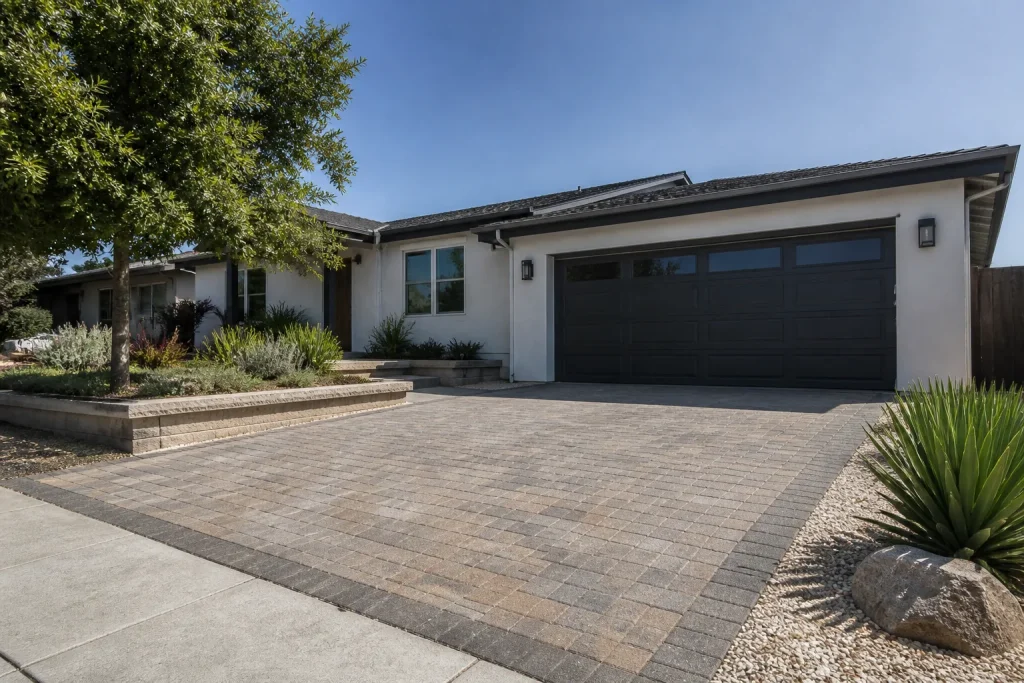
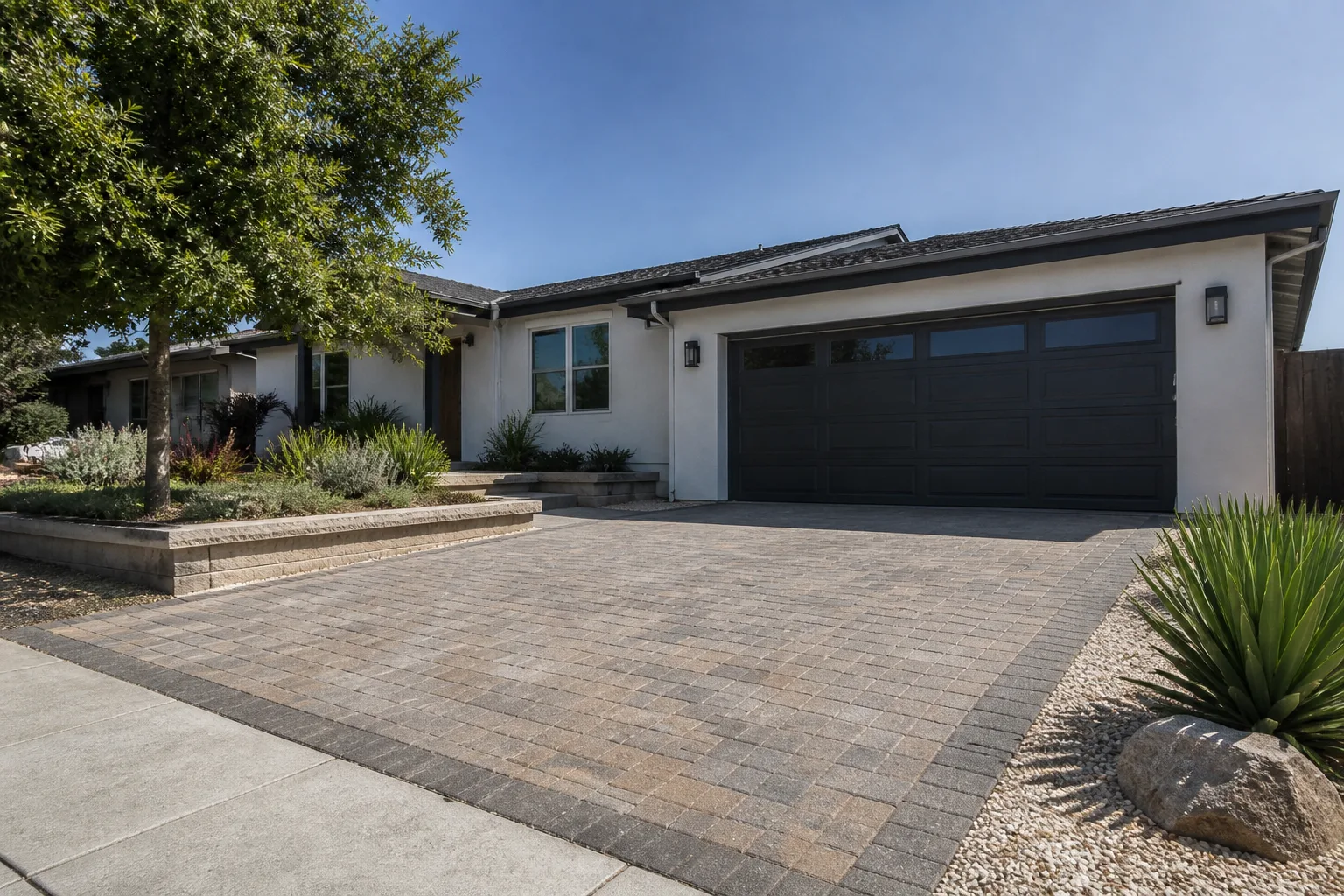
American Standard Driveway & Pavers in Lancaster: A Homeowner’s Guide
A Lancaster driveway slopes about 1 – 2% toward the street, but a single monsoon-season downpour here can drop 0.8 inches of rain in under an hour. That’s fast enough to overwhelm any paver field that wasn’t spec’d with a matching channel drain. The homeowners who avoid the flooded-garage call are the ones who treated American Standard’s hardscape drainage accessories as the backbone of the driveway, not an afterthought to the pretty surface on top. This guide is about that drainage system first, and the pavers second.
If you’d rather hand the math to someone who does it every week, call (844) 797-3312 and we’ll walk your slope with you.
Key Takeaways
- American Standard is known for plumbing fixtures, but its drain bodies pair with paver-compatible hardscape drainage accessories that set your minimum paver thickness.
- Vehicles need square-top, heavy-load drains; pedestrian aprons can take slot-top bodies. Mixing them up cracks the field edge.
- Lancaster’s 284 sunny days a year and 90°F+ surface temps demand a UV-rated sealer or the joint sand washes out inside two seasons.
- A signed scope should lock the drain elevation, the slope tolerance (±1/8 inch over 10 feet), and who pays if grading shifts after permit.
Why does American Standard matter for a Lancaster driveway’s drainage?
American Standard built its name on toilets and faucets, so when a Lancaster homeowner hears “American Standard driveway pavers,” the first reaction is usually a raised eyebrow. Fair. But the company also makes a small line of hardscape drainage components – drain bodies, grates, and channel accessories – that are designed to accept a paver field flush to the grate top. The point of specifying them isn’t brand loyalty. It’s that the drain body’s outside dimensions dictate how thick your pavers and bedding layer must be to sit level with the surrounding surface without leaving a lip that catches tires, heels, and runoff.
Here’s the practical difference. A standard 4-inch round drain body can’t accept a paver cap cleanly, so the field has to step down to meet it – and that step is exactly where water pools and cracks start. A square or rectangular American Standard body with a matching frame lets the pavers finish right up to the grate. No step, no pool, no cracked edge after the first hot summer in Lancaster.
The other factor is Lancaster’s climate. Our average of 284 sunny days a year means the surface of a dark paver driveway can hit 140°F in July. The drain body, the grate, and the bedding all expand and contract at different rates. When the components are sized to work together, that movement stays harmless. When they’re mismatched, the field edge shears. We’ve pulled up driveway sections in the Quartz Hill area where a cheap round drain and a thick paver had been forced together – every one of them had opened a crack along the same line within two summers.
How do American Standard drain dimensions set your minimum paver thickness?
This is the number most homeowners never ask about, and it’s the one that decides whether your driveway edge survives the first decade. The drain body has an outside depth and a grate frame thickness. Your paver thickness plus your bedding sand plus your base course has to equal that depth at the drain location, so the grate sits flush with the pavers on all four sides.
A quick line-item view of how that stack works:
- American Standard drain body and frame: typically sets the target finished depth; the body depth is your controlling dimension.
- Paver thickness: 2-3/8 inches (60mm) is the common minimum for residential driveways; 3-1/8 inches (80mm) where the driveway takes regular truck loads.
- Bedding sand: 1 inch compacted, not loose.
- Base course (aggregate): 6 to 8 inches compacted in lifts, depending on soil and load.
If your American Standard drain body comes in shallow, you can’t just use a thin paver to match it – a 1-1/2 inch paver will crack under a Silverado. You either select a deeper body, or you raise the finish grade at the drain and re-slope. In Lancaster, where a lot of lots were graded decades ago and haven’t been touched since, the second option is usually the honest one.
The safe rule: never let the paver thickness drop to meet a shallow drain. Solve the depth at the drain body, not at the paver. Ask for the American Standard model number in writing before anyone pours base.
Square-top vs. slot-top drains: which American Standard model fits your Lancaster driveway?
American Standard’s square-top and slot-top drain bodies serve two different jobs, and the load rating in pounds per square foot (psf) is where the decision lives. Match the wrong style to the wrong zone and you’ll either crack a grate or watch your drainage whisper at the one moment you needed it to shout.
- Square-top (with cast iron or heavy-duty grate): built for vehicle-load zones – the main driveway lane, the apron at the garage door, anywhere a car rolls. Look for a grate rated for AASHTO H-20 class loads (roughly 16,000 lbs per wheel) if trucks visit. The open square top catches leaves, so plan on cleaning it after every Santa Ana wind event, or specify a dome or grate cover.
- Slot-top: better for pedestrian aprons, walkway transitions, and the strip where the driveway meets the sidewalk. The narrow slots keep debris out and handle a sheet of water across a walkway without a grate that wants to trip a guest. They’re not the right choice under a vehicle tire.
- Channel bodies: where a long stretch of drive has to shed water fast, a linear channel with American Standard-compatible top grate gives you far more intake than a single point drain.
Vehicle-load zones get the square-top or a heavy channel with a rated grate. Pedestrian aprons get the slot-top. Every Lancaster driveway we spec has at least one of each, and the number matters – a single point drain on a 20-foot-wide drive will lose to a monsoon downpour no matter how good the grate is.
Why does Lancaster’s heat and UV require a specific sealer?
Joint sand is what holds a paver field together. In Lancaster, it also gets baked, washed, and blown out on a cycle that starts the first summer and doesn’t stop. With 284 sunny days a year and summer surface temperatures that can push past 140°F on dark pavers, a sealer rated only for cooler climates will fail early – the film chalks, the joint sand loosens, and by the second or third Santa Ana wind event you’ve got a driveway full of loose sand and a garage full of it too.
Specify a sealer that’s rated for sustained surface temps above 90°F and carries a UV-stability claim – a solvent-acrylic or a water-based polyurethane with a documented UV rating. Ask to see the product data sheet, not the marketing page. Some brands (Quikrete and Sakrete both carry joint-stabilizing products) make it easy to check because their spec sheets list the temperature range. A few notes from our side:
- Seal within 30 – 60 days of install, after the pavers have had a full cure and one rain cycle.
- Re-apply every 2 – 3 years in Lancaster, more often if the drive faces full afternoon sun.
- Skip the cheapest sealer. It looks great in month one and hazy in month eight.
If your sealed driveway is already showing sand washout in the first two summers, the sealer isn’t rated for Lancaster heat, period. That’s a redo, not a top-up.
What does an American Standard drainage-and-paver driveway cost in Lancaster?
Here’s the line-item breakdown in 2024 Lancaster market dollars. Treat these as typical ranges, not quotes – your slope, base depth, and drain count will move the numbers.
| Line item | Typical range (Lancaster, 2024) |
|---|---|
| American Standard drain body and frame | $90 – $260 each |
| Heavy-duty cast iron grate (vehicle zone) | $60 – $180 each |
| Pavers, mid-grade concrete (Cambridge Pavers, Oldcastle) | $4.50 – $8.50 per sq ft |
| Base aggregate and compaction | $3.00 – $5.50 per sq ft |
| Bedding sand and setting | $1.50 – $2.75 per sq ft |
| Labor (demo, base, set, cut around drains) | $8.00 – $14.00 per sq ft |
| Sealer | $0.80 – $1.60 per sq ft |
| Permit (Lancaster) | varies with scope and impervious surface |
A typical 400-square-foot Lancaster single-car apron with one square-top and one slot-top drain runs $7,200 – $13,000 all-in. A full two-car drive with a channel drain and a long run to the street can push $20,000 or more. The drainage accessories are a small fraction of the total – usually under 5% – but they’re the line item that decides whether the rest of the job survives.
The detail we always flag: if a contractor’s line-item price for the American Standard drain body comes in suspiciously low, ask for the model number. Off-brand substitutes are cheaper and don’t always have the same outside dimensions, which puts you right back at a cracked field edge.
What should a signed scope say about drainage before you sign?
This is where Lancaster homeowners get burned, and it’s not about the pavers. It’s about what happens three weeks after the permit is pulled and the grading changes. A scope that leaves the grading and the drain elevation ambiguous turns into a change-order fight at the worst possible moment.
Here’s the documentation checklist we write into every scope:
- Drain elevation, in feet and inches, nailed to a benchmark. Not “drain will be set to shed water” – the actual finished elevation of each drain body, referenced to a fixed point (the garage slab, a survey pin, a mark on the foundation).
- Slope tolerance, written out. ±1/8 inch over 10 feet is the working tolerance most crews hold. It should be in the scope, and it should say who re-does the work if the finished grade misses it.
- Responsibility if grading changes after permit. The sentence that matters: who’s on the hook if the city changes the impervious-surface requirement or an inspector asks for a different flow path after the base is already compacted.
- Drain count and model. Square-top here, slot-top there, model numbers listed. Not “drains as needed.”
- Written price and no-change-without-signature clause. Under our standing process, no work proceeds on a change until the change order is signed – that’s the discipline that keeps a project close to the number the homeowner agreed to.
If a Lancaster contractor won’t put those items in writing, that’s your answer. The scope is the cheapest part of the job and the one that saves the most.
When to call a pro
We’re not going to tell you that laying pavers is rocket science – plenty of homeowners in Lancaster get a few courses down and feel like heroes. But the drainage side is a different job. Setting an American Standard drain body flush with a paver field, holding a slope tolerance of ±1/8 inch over 10 feet, and getting the base compaction right on a lot that hasn’t been regraded since the 1980s – that’s where the amateur job shows up. We’ve seen a DIY American Standard setup in the Antelope Valley where the field edge was left a quarter-inch proud of the grate; it looked fine for a season, then the first monsoon peeled the sand and cracked two rows of pavers along the drain line.
If the drainage is already in and correct, and you’re just laying pavers over a prepared base, more power to you. If the drain location, the slope, or the elevation of the base is in question, get eyes on it before you compact.
Related services in Lancaster: our Driveway & Pavers in Lancaster page covers full hardscape scopes; if you’re also addressing the perimeter, take a look at Fence Installation in Lancaster, and for any build-out attached to the project, our Home Additions & ADU in Lancaster pages walk through the plan-and-permit side. You can see how we handle the other six trades on the Rowan Construction Group Lancaster home page.
The Bottom Line
American Standard driveway pavers in Lancaster work best when the American Standard drain bodies are chosen first and the pavers sized to match them – not the other way around. Get those dimensions right, use a square-top body and rated grate in the vehicle zone and a slot-top in the pedestrian apron, seal with a UV-rated product built for 90°F+ surface temps, and write the drain elevation, the ±1/8 inch slope tolerance, and the post-permit change responsibility into a signed scope. Do those four things and a Lancaster driveway survives the monsoon season it was built for.
Every project we quote gets a flat written price before anyone lifts a tool, a documented photo record from every visit, and the 365-Day Done Right Promise in writing – if it’s not done right, we make it right. If you’re in Lancaster and need help, Rowan Construction Group Lancaster offers free estimates – call (844) 797-3312. We’ll also review any competitor’s written quote line item by line item at no charge, if you’d like a second opinion before you sign.
Frequently Asked Questions
Yes – “American Standard driveway pavers” doesn’t refer to a proprietary paver; it means the drain body is an American Standard unit and the pavers around it are sized to its depth. Cambridge Pavers and Oldcastle both make pavers in the 60mm and 80mm thicknesses that pair cleanly. The critical check is that your paver stack (paver + bedding + base) matches the drain body depth so the grate sits flush. Call (844) 797-3312 for an exact quote – estimates are free.
A single American Standard drain body and frame typically runs $90 – $260 in the 2024 Lancaster market, with heavy-duty cast iron grates for vehicle zones adding $60 – $180. On a full driveway job, the drain assemblies usually come in under 5% of the total cost. The bigger variable is how many drains your slope needs and whether the base has to be rebuilt to hit the elevation. Call (844) 797-3312 for an exact line-item quote – estimates are free.
Not on our jobs – our standing process is that no change proceeds until a change order is signed, and the written price is delivered before any work starts. The place prices actually move is when the original scope left grading ambiguous and the permit later forced a different flow path. That’s why we write the drain elevation, slope tolerance, and post-permit responsibility into the scope before anyone signs. Call (844) 797-3312 to schedule a free estimate.
Yes – permits are part of the scope on any Lancaster driveway project that triggers the city’s impervious-surface review, and the scope states who’s responsible if the requirement changes after the permit is pulled. Permits add time to the schedule; they don’t add surprise to the price when the scope is written correctly. Call (844) 797-3312 for a free estimate and a written scope.
Written by the team at Rowan Construction Group Lancaster.
Need Construction Help?
Call Rowan Construction Group Lancaster - licensed & insured, here with fast after-hours help in Lancaster.
(844) 797-3312