Last updated November 17, 2026

Free written scope consultation - allowances, timeline, and change-order rules on paper before a single trade is scheduled
DIY vs Professional Bathroom Remodeling: What’s Safe to Do Yourself
Painting a bathroom yourself is legal and low-risk. Installing a new shower valve yourself in Lancaster is a permit-required plumbing alteration, and doing it unpermitted can void your homeowner’s insurance on a water-damage claim. That gap – between what feels easy and what the code treats as licensed work – is where most bathroom remodels go wrong. This guide draws the line in practical terms: which tasks in a Lancaster bathroom fall below the permit trigger, which cross it, and where the real cost comparison sits between a licensed tile setter at $12-$18 per square foot installed and a DIY material bill of $3-$7 per square foot once you factor rework risk. You’ll finish knowing exactly which weekend jobs are yours and which ones put the house at risk.
Quick Answer
In Lancaster, the safe DIY zone is cosmetic and surface-level: painting, caulking, hanging mirrors and accessories, swapping a vanity top or a light fixture where the wiring already exists. Anything that moves water or electricity inside the wall – a new shower valve, relocated supply lines, added outlets near the tub, a drain relocation, or a structural wall change – requires a permit and a licensed trade. Doing that work unpermitted can void your homeowner’s insurance water-damage rider and complicate resale. Everything cosmetic is yours to own; everything behind the tile is a professional’s job.
Styles & brands we work with
- Kitchen remodeling
- Bathroom remodeling
- Home additions & ADU
- Roofing
- Windows & doors
- Driveway & pavers
- Fence
Table of Contents
- Where Lancaster’s Permit Line Falls in a Bathroom
- Why Unpermitted Work Voids Your Insurance
- The Real Cost: Licensed Tile vs DIY Tile
- The Narrow DIY Window That Works
- Moisture and the Antelope Valley Climate
- What Documentation to Demand From a Contractor
- Common Mistakes to Avoid
- Frequently Asked Questions
Where Lancaster’s Permit Line Falls in a Bathroom
The single most useful question when you’re planning a bathroom project in Lancaster is not “can I do this?” but “does this trigger a permit?” Lancaster’s building department follows California’s permit thresholds, and for a bathroom the line is drawn at the rough-in – the plumbing and electrical that sit inside the wall before finishes go on. Surface work that leaves the rough-in untouched is generally permit-exempt. Anything that alters or adds to the rough-in, the framing, or the electrical circuit is not.
Here’s how the tasks sort out:
- Below the permit trigger: Repainting walls and ceiling, re-caulking the tub or shower surround, swapping a vanity cabinet and top using the existing plumbing hookups, replacing a faucet or showerhead (the fixture, not the valve body behind the wall), changing a light fixture on an existing circuit, hanging a mirror or shelving, replacing a toilet with the same rough-in dimension.
- Crosses the permit line: Replacing or relocating the shower valve, moving a supply line or drain, adding a GFCI outlet or any new circuit in the wet zone, cutting into a structural wall, adding a window, moving a toilet’s drain location, or converting a tub to a walk-in shower with a new pan.
- Always a licensed trade: Waterproofing a new shower pan and tiling it – the membrane work that fails first – plus any electrical inside a wet zone, which in California means GFCI protection installed by a licensed electrician.
The vanity swap is the clearest example of a task that looks bigger than it is: pull the old cabinet, set the new one on the existing supply and drain stubs, connect it, and you’re done – no permit. But if the new vanity moves the drain location by even a few inches, that’s a plumbing alteration, and you’ve crossed into permit territory. This is the kind of detail worth pricing out in writing before you buy a single tile. Our Rowan Construction Group Lancaster home page lays out the trades we quote, and bath work sits squarely among them.
Why Unpermitted Work Voids Your Insurance
Homeowner’s insurance policies carry water-damage riders that assume the plumbing behind your walls was installed to code. When an unpermitted shower valve fails – a slow leak that rots the subfloor and molds the framing over a season – the insurer’s adjuster may trace the leak to non-compliant work and deny the claim. That’s the scenario that turns a $200 weekend valve swap into a $14,000 remediation, because you’re paying for demolished tile, replaced subfloor, mold treatment, and the finished shower you’ll have to rebuild from scratch.
This isn’t hypothetical hand-wringing. In our experience across thousands of remodels, the calls that hurt most are the ones where a homeowner did the plumbing correctly on paper but couldn’t prove it to an insurer because no permit, no inspection, and no photo record existed. The permit is the documentation. The inspection is the proof.
Two insurance details matter specifically:
- The water-damage rider. Most standard policies require plumbing work to meet code; unpermitted alterations give the carrier grounds to dispute a claim tied to that work.
- The resale disclosure. California sellers must disclose known unpermitted work. A bathroom that can’t produce a permit for a shower valve or drain relocation becomes a negotiation liability at sale.
If you’re going to move water or electricity in a Lancaster bathroom, the permit and the licensed trade aren’t a formality – they’re the record your insurance company will ask for. This is the same logic behind our Home Additions & ADU in Lancaster work, where every structural change is permitted and inspected as a matter of course.
The Real Cost: Licensed Tile vs DIY Tile
Tile is the task people most want to DIY, so let’s put real numbers next to each other. A licensed tile setter in the Lancaster market runs $12-$18 per square foot installed, which includes the substrate prep, the waterproof membrane, and the labor. Doing it yourself drops the cost to a material-only bill of roughly $3-$7 per square foot. On a 60-square-foot shower surround, that’s the difference between about $720-$1,080 installed and $180-$420 in materials – a gap that looks like easy money until you price the rework.
- Material-only (DIY): $3-$7 per sq ft for tile, thinset, membrane, and grout – call it $180-$420 on a 60 sq ft surround.
- Licensed installed: $12-$18 per sq ft – $720-$1,080 for the same surround, with waterproofing done to spec and a written warranty behind it.
- Rework risk: A failed shower pan – the most common DIY tile failure – typically costs $1,500-$3,000 to tear out and rebuild, and that’s before any water damage to the framing beneath.
Run the arithmetic: one failed pan wipes out any savings from 20 successful DIY tiling jobs. Tile failure is a moisture problem, not a visual one – the thinset and grout can look perfect while the membrane underneath is wrong, and you won’t know until the smell starts. If the shower pan is already built and waterproofed by a professional, tiling the walls above it is a more forgiving job than it looks. A written price before work starts means you can compare the $12-$18 number against the DIY material bill and the rework exposure side by side rather than guessing.
The Narrow DIY Window That Works
There’s a real set of bathroom tasks where DIY is the right call: fast, cheap, low-risk, and legal. The trick is using the correct products so the job actually holds up. Here’s what’s genuinely yours:
- Repaint the walls and ceiling. Use a bath-rated paint with a mold-resistant additive, and prime over any patched drywall. Ventilation runs high in a Lancaster bathroom, so pick a sheen that wipes clean – a satin or semi-gloss holds up better than flat.
- Re-caulk the tub and shower surround. This one matters more than people think. Near wet zones, use paintable silicone or a silicone-based caulk rated for bathrooms – not standard latex caulk, which shrinks, cracks, and grows mold within months. Latex is fine for trim against drywall, not for the seam where the tub meets the tile.
- Hang mirrors and accessories. Towel bars, mirrors, and shelving into studs or with proper anchors are safe and reversible. Measure the stud locations before you drill.
- Swap a light fixture on an existing circuit. Turn the breaker off, and if the wiring is already run and the box is rated for the fixture’s weight, this is a straightforward replacement.
- Replace a toilet with the same rough-in. Same drain location, new wax ring and supply line, no drain movement – a legitimate DIY job.
The pattern: if the work is surface-level, reversible, and touches no water line or wire inside the wall, it’s yours. The moment you’re cutting into the substrate to move a supply line, you’ve left the safe zone.
Moisture and the Antelope Valley Climate
Lancaster’s dry air and big summer temperature swings shape how a bathroom fails. The desert climate means less ambient humidity than a coastal city, which lulls people into skipping proper ventilation – but a hot shower creates it locally regardless of how dry the outside air is, and the moisture has nowhere to go if the fan is undersized or the window never opens. In our experience, the bathrooms in older homes around the central Lancaster neighborhoods with added-on or undersized exhaust fans are the ones that grow mold behind the tile, because the wall cavity stays damp.
The other climate factor is the temperature swing itself. Tile and grout expand and contract with the heat, and a DIY caulk job using the wrong product at the tub seam will crack within a season as the joint flexes. That’s why the product choice matters so much: paintable silicone flexes with the joint; latex doesn’t. If you’re re-caulking as a DIY task, getting the product right is the entire job. If you’re installing a new shower and the membrane work is being done, that’s the layer you can’t see that decides whether the bathroom lasts 20 years or 3. This is exactly the kind of upgrade that partners naturally with a Driveway & Pavers in Lancaster project when a homeowner is reworking the exterior at the same time – moisture management, done in one documented pass.
What Documentation to Demand From a Contractor
When a licensed contractor does the work you shouldn’t, the paperwork is what protects you. A bathroom remodel passes through several hands – plumber, electrician, tile setter, finish carpenter – and the homeowner’s job is to demand the record at each stage. Here’s what we mean by “documented”:
- A written scope and flat price before work begins. Not an estimate on the back of a business card – a written scope that names the membrane system, the tile, the fixtures, and the labor, with a flat number attached.
- Rough-in inspection sign-off. The permit inspection that happens after the plumbing and electrical are in but before the walls close – this is the proof-of-code your insurer will want if a valve ever fails.
- Signed change orders. No work on a change proceeds until the change order is signed. This is the discipline that keeps a project within a few percent of the agreed price rather than drifting into a surprise.
- A photo record. Photos of the rough-in, the waterproofing, and the finished install – dated and delivered to you, not buried on someone’s phone.
- A written warranty. What’s covered, for how long, and who honors it. A verbal promise isn’t documentation.
These are the terms we build every project around: pricing in writing, a signed change order before any change, and a documented record when the crew leaves. The free second opinion on any written estimate is there for the moment you have a competitor’s quote in hand and want it reviewed line by line before you sign. Fence, pavers, and additions all follow the same sequence – if you’re also planning a Fence Installation in Lancaster alongside the bath work, the documentation standard shouldn’t change.
Common Mistakes to Avoid
- Swapping the shower valve without a permit. This is the number-one mistake we see – it feels like a fixture replacement, but it’s a plumbing alteration, and it’s the one most likely to void your water-damage coverage.
- Using latex caulk at the tub seam. Standard latex shrinks and cracks within a season as the joint flexes. Near wet zones, paintable silicone is the correct product; latex is for trim only.
- Skipping the waterproof membrane on a DIY shower pan. The tile and grout look fine over a failed pan while water quietly rots the subfloor beneath. The membrane is the work you can’t see and can’t skip.
- Moving the vanity without checking the drain. A vanity swap on existing hookups is permit-exempt; shifting the drain a few inches makes it a plumbing alteration that needs a permit and a licensed hand.
- Undersizing the exhaust fan. In Lancaster’s dry climate it’s easy to assume ventilation isn’t needed, but a hot shower loads the local air regardless, and an undersized fan leaves moisture trapped behind the tile.
- Trusting a verbal quote. A price that isn’t in writing isn’t a price – it’s a starting point that drifts. Demand a written scope with a flat number before any work starts.
- Starting a structural change without engineering. Cutting into a load-bearing wall in a bathroom remodel requires a permit and often a structural review; doing it blind can compromise the floor above.
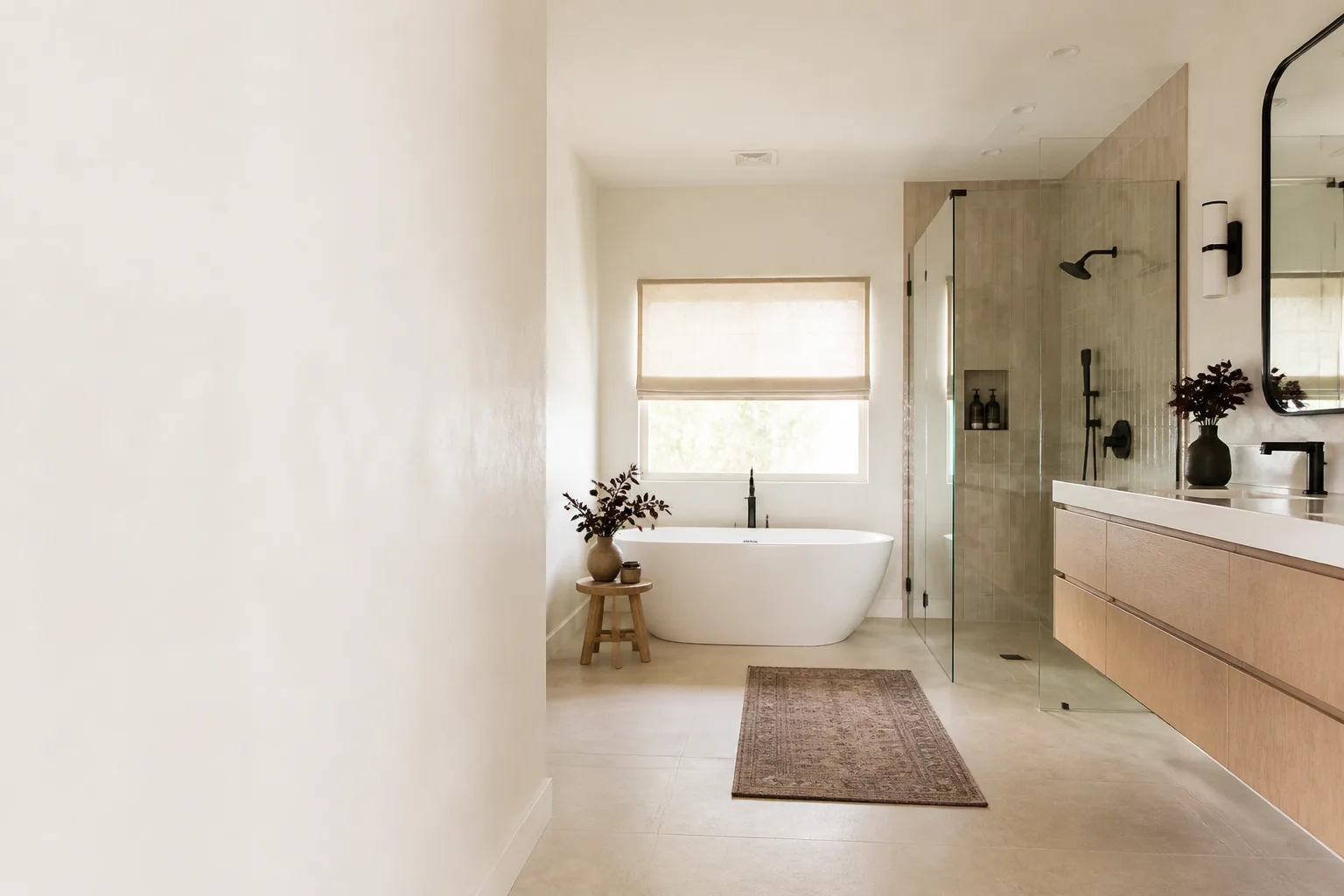
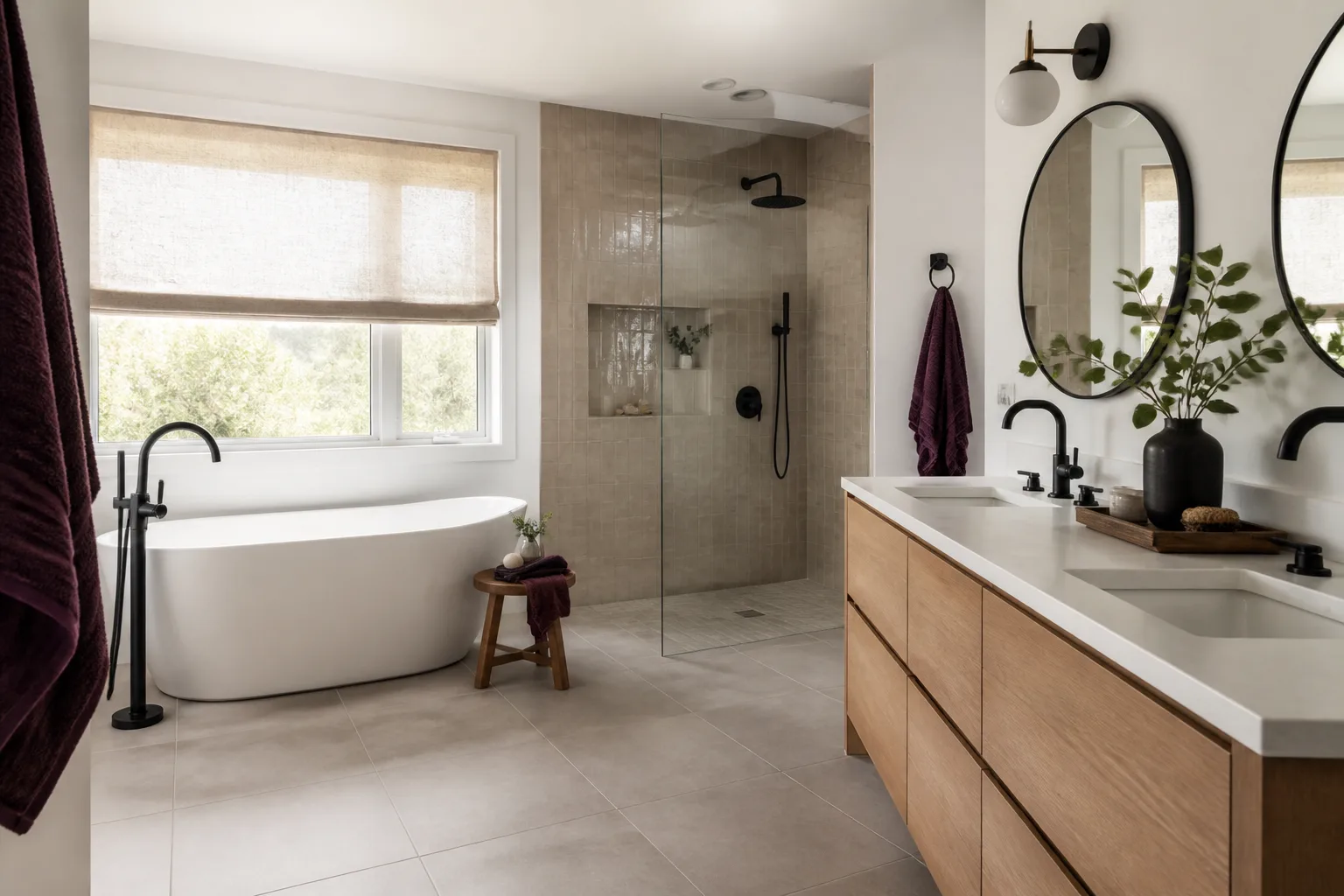
See the difference
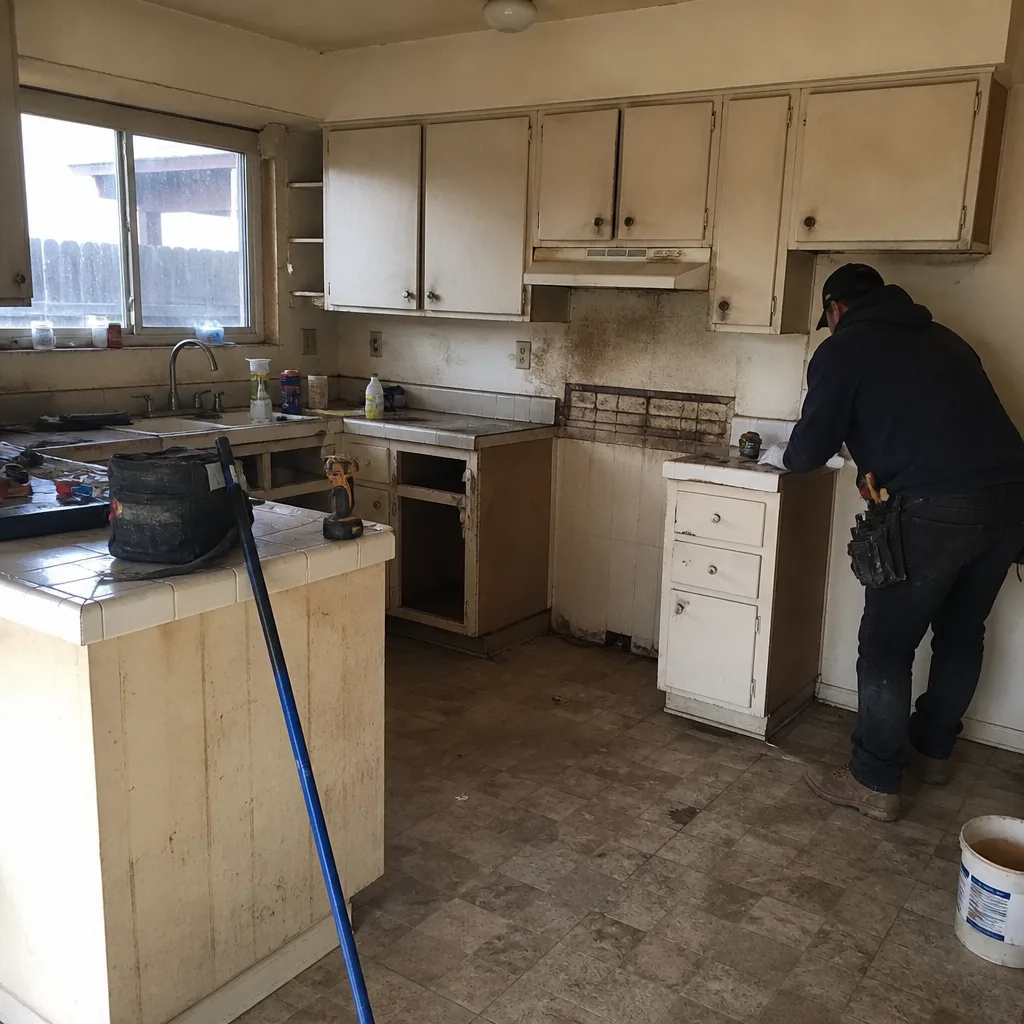 Before
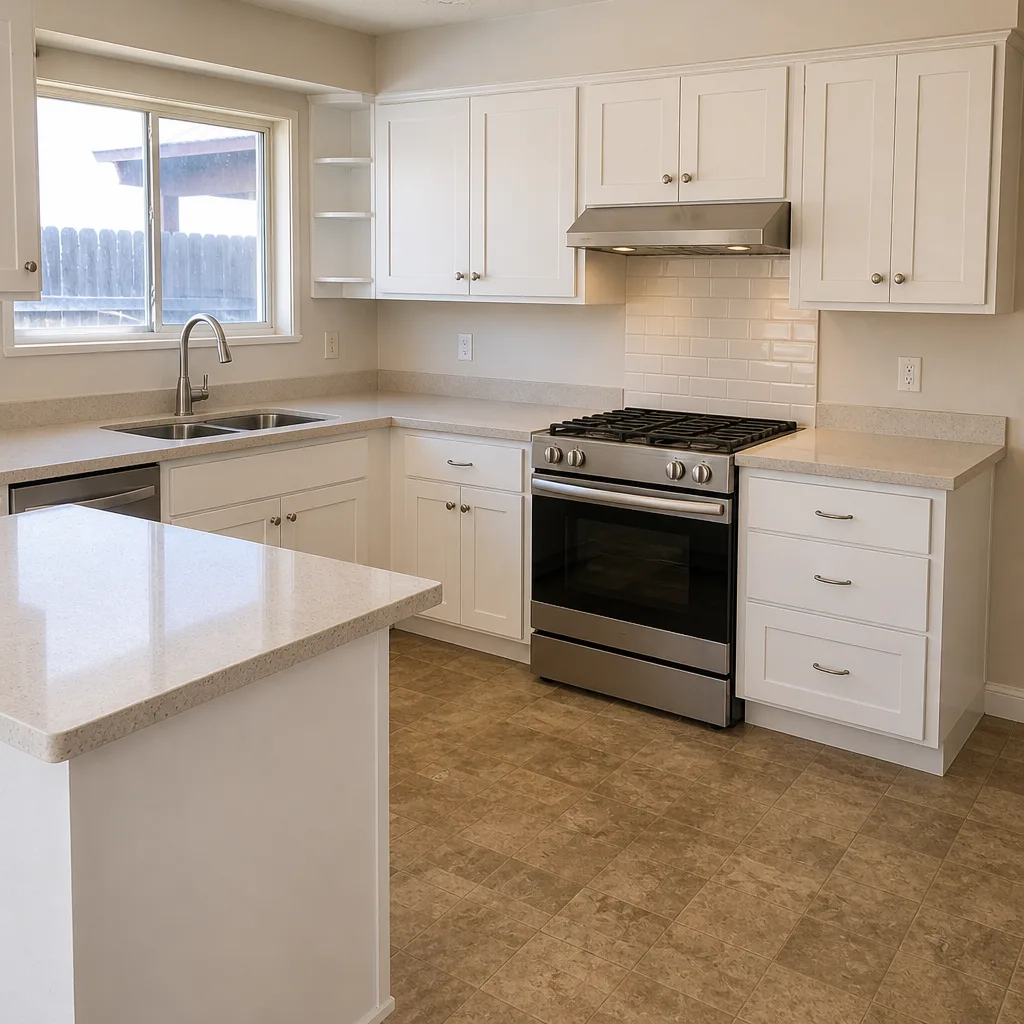 After
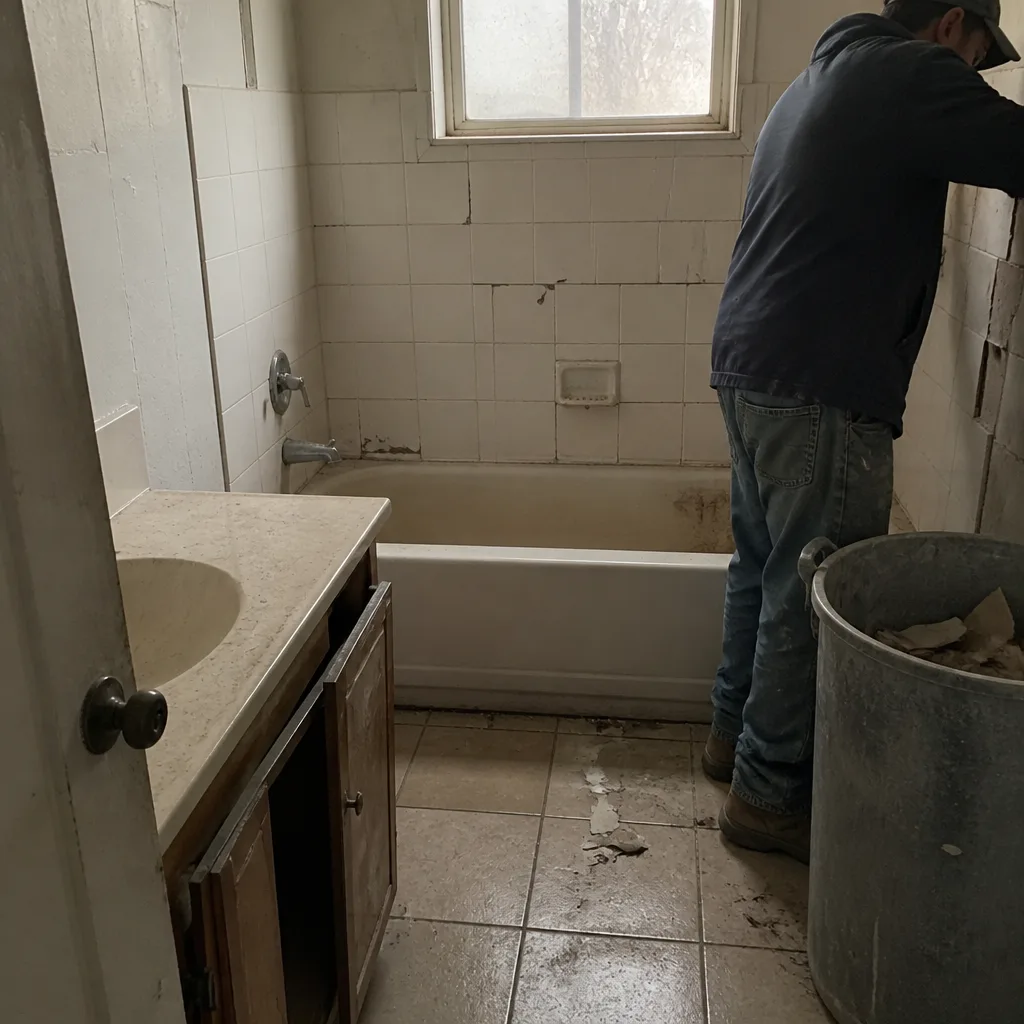 Before
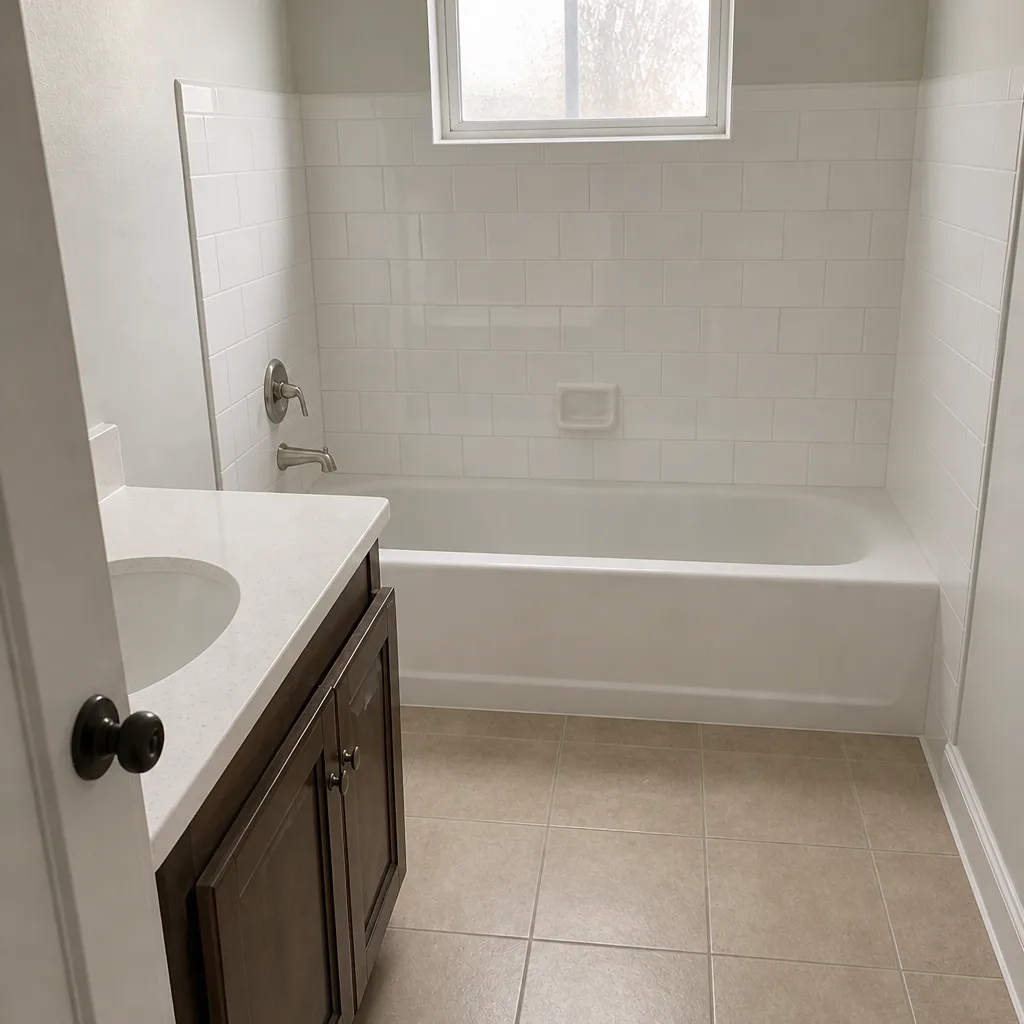 After
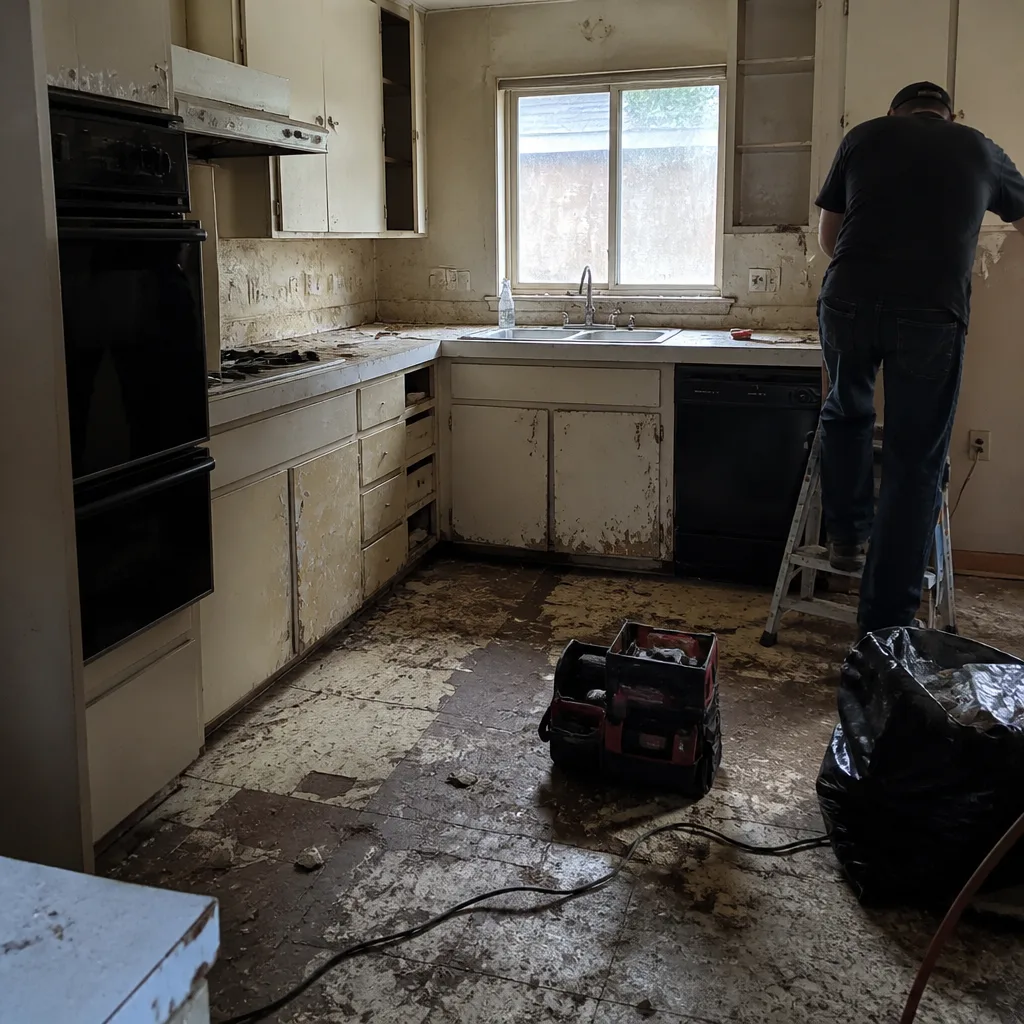 Before
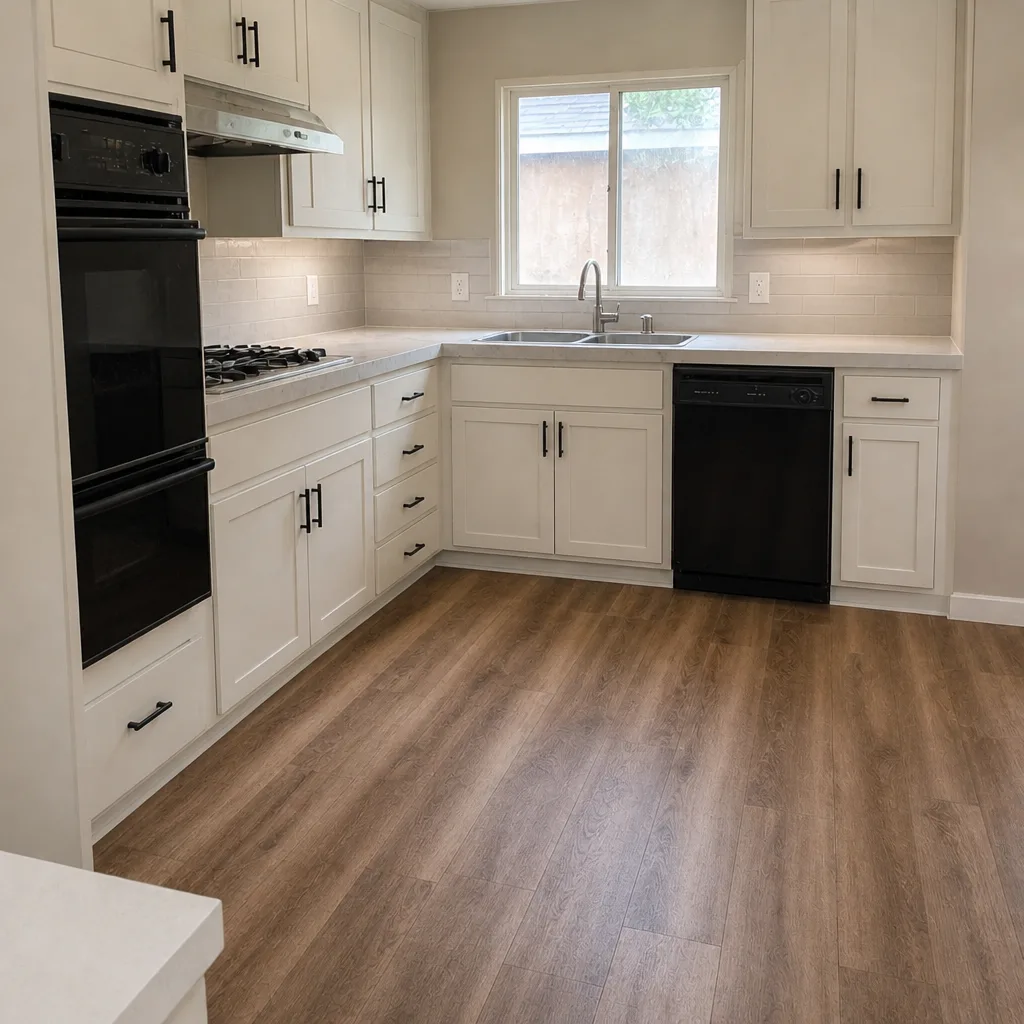 After
When to Call a Professional
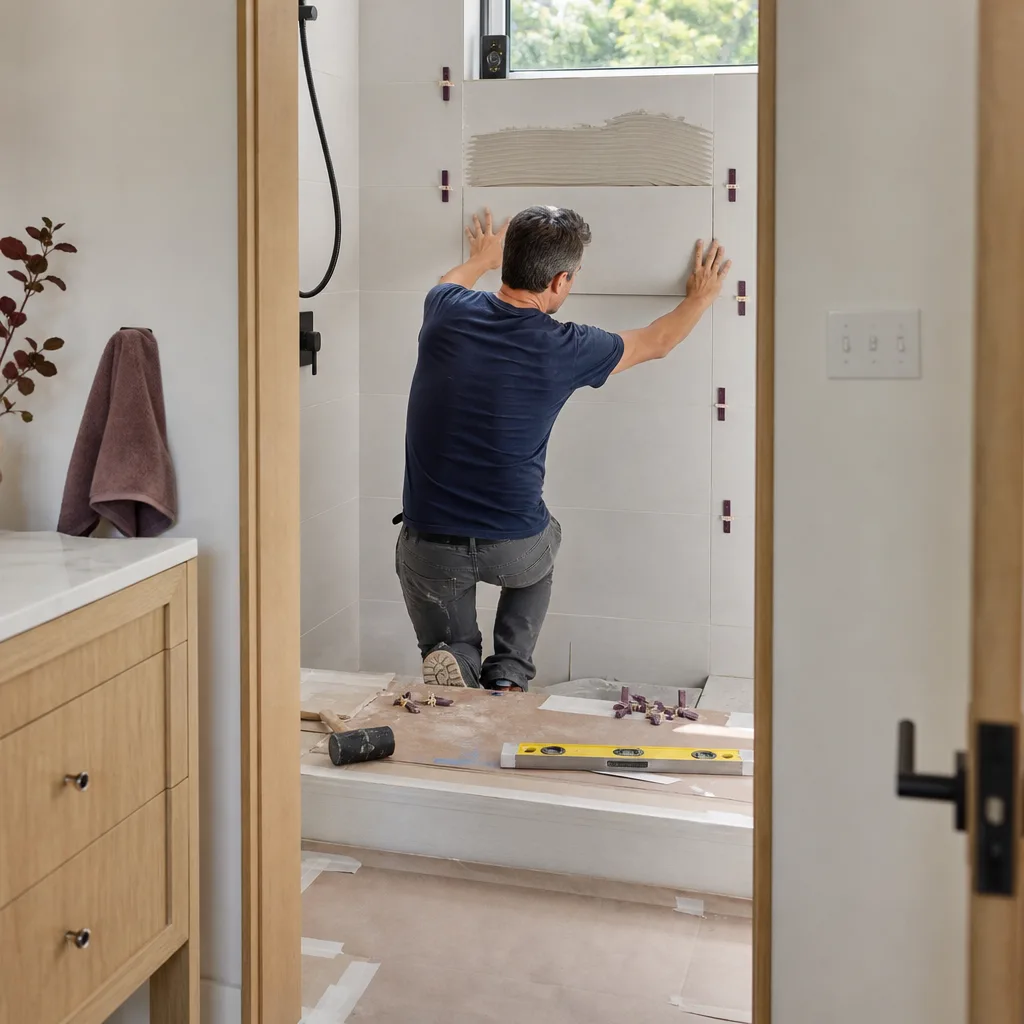
Call a licensed professional the moment your project crosses any of these lines: replacing or relocating a shower valve, moving a drain or supply line, adding electrical in the wet zone, waterproofing a new shower pan, cutting into a structural wall, or converting a tub to a walk-in shower. Those are the tasks where a code violation can void your insurance and where the rework cost – $1,500-$3,000 for a failed pan, more if water damage is involved – dwarfs the labor saving. The cosmetic jobs stay yours. Everything behind the tile doesn’t. Rowan Construction Group Lancaster offers free written estimates in Lancaster, with a flat price and a written scope before anyone picks up a tool. Call (844) 797-3312 to schedule yours.
Frequently Asked Questions
No. Replacing the shower valve is a plumbing alteration, which requires a permit in Lancaster and a licensed plumber. Doing it unpermitted can void your homeowner’s insurance water-damage rider and complicate resale disclosure. Call (844) 797-3312 for a written quote – estimates are free.
Tiling the walls above a professionally built shower pan is a more forgiving DIY job, but building the pan and waterproof membrane yourself is where most failures happen. A licensed tile setter runs $12-$18 per sq ft installed versus $3-$7 per sq ft in materials, and a failed pan costs $1,500-$3,000 to rebuild. Call us for a line-item quote and compare honestly.
Painting, caulking, swapping a vanity on existing hookups, replacing a faucet or showerhead, changing a light fixture on an existing circuit, hanging a mirror, and replacing a toilet with the same rough-in are generally permit-exempt. Moving the drain, adding an outlet, or altering the rough-in crosses the line. Call for a free second opinion on any quote you’re holding.
It can. Unpermitted plumbing or electrical work in a wet zone gives an insurer grounds to deny a water-damage claim, because the policy assumes code-compliant installation. The permit and rough-in inspection are the proof they’ll ask for. If you’re unsure where your project sits, call (844) 797-3312 for a straight answer.
An unpermitted shower valve replacement. It feels like a fixture swap, but it’s a plumbing alteration that most often voids coverage when a leak appears later. The second most common is latex caulk at the tub seam, which cracks within a season in Lancaster’s temperature swings. Our technicians have up to 19 years of experience spotting both before they become remediation jobs.
Demand the permit paperwork before work starts and the rough-in inspection sign-off before walls close. A written scope, a flat price, signed change orders, and a photo record are the marks of a documented job. Rowan delivers all four as standard, with a 365-Day Done Right Promise printed on every agreement. Call (844) 797-3312 to get yours in writing.
The Bottom Line
The DIY-versus-hire question in a Lancaster bathroom isn’t about how handy you are – it’s about permit exposure and moisture liability. Painting, caulking with the right paintable silicone, hanging a mirror, and swapping a vanity on existing hookups are legally and safely yours. Moving water or electricity inside the wall, waterproofing a new shower pan, or changing a structural wall is permit-required work that protects your insurance claim and your resale. Use the cost arithmetic honestly: $12-$18 per sq ft installed against a $3-$7 material bill, with $1,500-$3,000 of rework risk factored in. The cosmetic jobs save you real money. The plumbing jobs can cost you the house.
If your project crosses the line, Rowan Construction Group Lancaster will put the price in writing before anyone starts. Call (844) 797-3312 for a free estimate, and bring any competitor’s quote for a line-by-line second opinion at no charge.
Written by the team at Rowan Construction Group Lancaster.