
Driveway & Pavers: Repair or Replace? How Lancaster Homeowners Decide
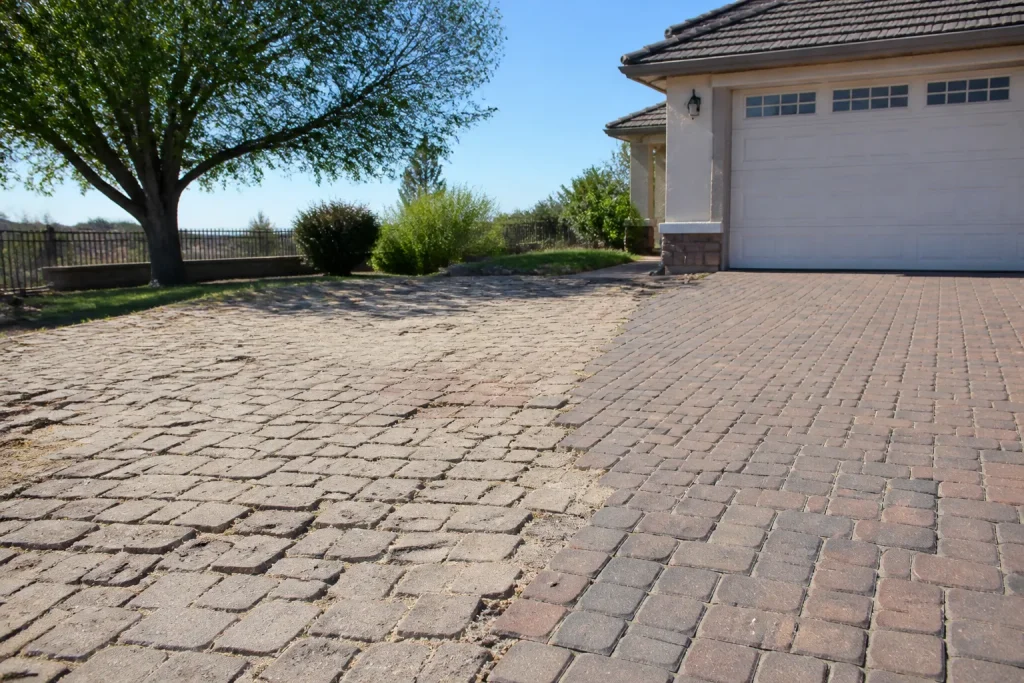
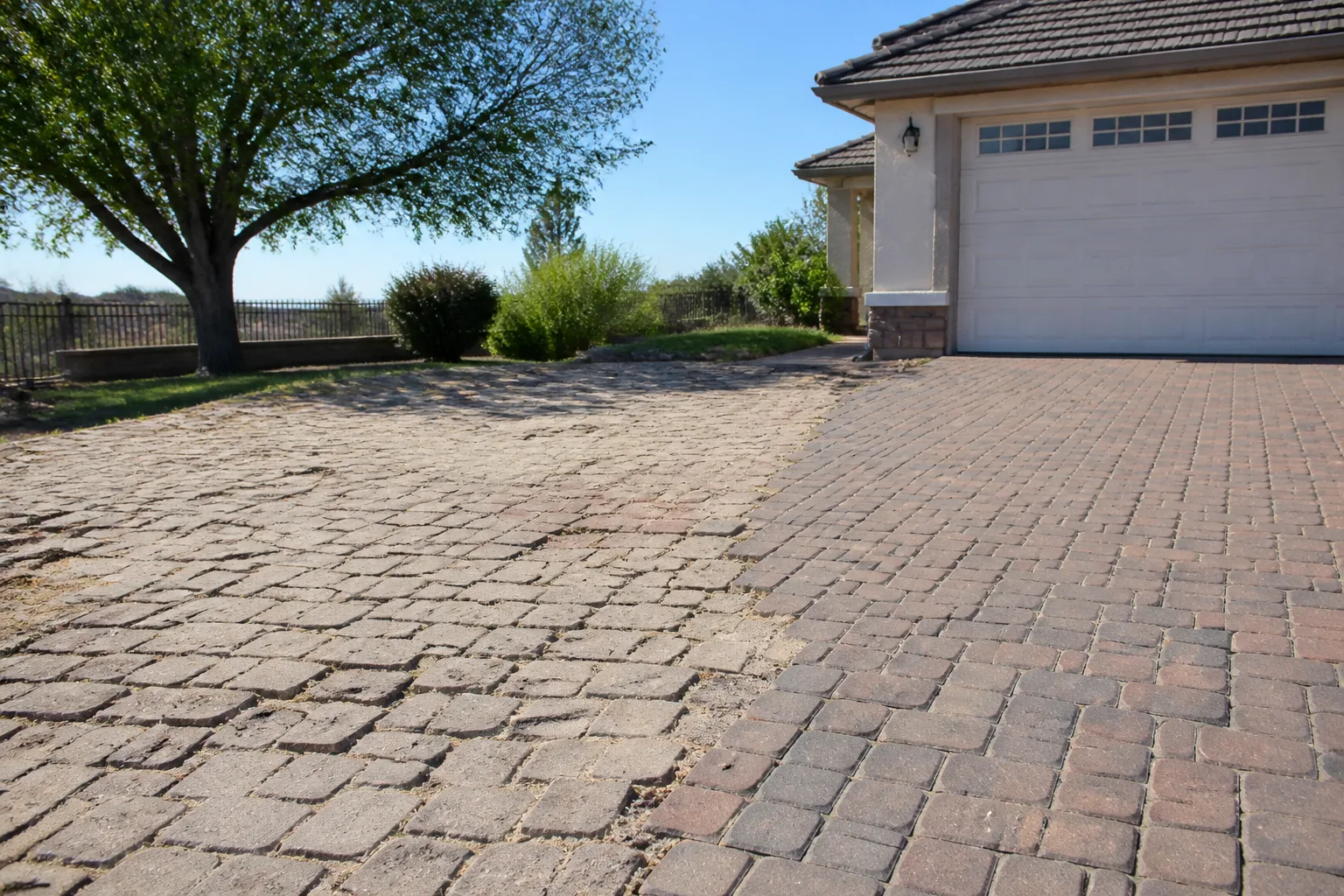
If a contractor recommends full driveway replacement without lifting at least two pavers to inspect the base aggregate and compaction layer, they are quoting a conclusion before completing the diagnosis. That shortcut costs Lancaster homeowners an estimated $1,800 – $3,400 in unnecessary replacement work per occurrence. Most driveways that look finished are not. Most that look destroyed are, in the right conditions, still repairable. The visible surface tells you almost nothing until the base underneath has been examined.
Why the surface never tells the whole story in Lancaster
Pavers, concrete, and asphalt are all a wearing course. They sit on a compacted base of crushed aggregate that spreads the load of your car across the soil beneath. When a driveway cracks, heaves, or settles, the failure is almost always in that base, not in the pavers you can see. A paver can be perfectly intact and still be sitting over a base that has lost its compaction or washed out entirely.
This matters more in Lancaster than in most markets because of what sits under the Antelope Valley. The soil across much of the west and north sides of the city carries significant caliche content – a cemented, calcium-carbonate layer that behaves differently from the expansive clay soils you’d find closer to the coast. We’ve watched homeowners in Quartz Hill and west Lancaster spend five figures on a full tear-out when a targeted base repair and re-set would have solved the same problem for roughly half the cost. The surface looked catastrophic. The base, once exposed, was a 12-foot section of failed aggregate and nothing more.
The base inspection protocol: what a real assessment looks like
A repair-or-replace recommendation is only as good as the inspection behind it. Before any contractor tells you which direction to go, they should physically examine the layer under your pavers or slab. Here’s what that inspection should include, in order:
- Sample removal. At least two pavers lifted (or a core sample pulled from concrete) in the worst-affected zone, plus one sample from a zone that looks healthy. If a contractor only inspects the failed area, they can’t compare it to a working section.
- Base depth measurement. The aggregate base under a residential driveway should be 4 – 6 inches compacted, depending on load and soil. Too thin a base is a replacement trigger; an adequate base under a failed surface is a repair candidate.
- Compaction check. A simple probe or hand test reveals whether the aggregate is still locked or has loosened. Loose, shifting aggregate means water infiltration or a failure of the compaction on install.
- Drainage evaluation. Where does water go when it leaves the driveway? If it pools against the edge or runs under the slab, no amount of surface repair will hold.
- Subgrade assessment. Below the aggregate is native soil. Caliche layers, in particular, can trap water against the base and cause the edge heave many Lancaster driveways show before the center ever sags.
A contractor who skips the sample removal is guessing. Guessing on the diagnostic end is what produces the replacement quote you didn’t need.
Three conditions that always mean full replacement
Some driveways should be replaced. Attempting to repair these is a waste of money that fails within two seasons. The tell is always in the base or the structure, not the surface.
- Base depth under 4 inches across the majority of the driveway. A shallow base can’t be repaired piecemeal – you’d be patching pavers over a foundation that will fail again. Full replacement with a properly built base is the only durable fix.
- Failure across more than 60% of the total surface area. When the majority of the drive has lost base integrity, the cost of piecemeal repairs stacks up past the replacement cost within a few years. Replacement is the honest call.
- Subgrade soil failure or drainage that can’t be corrected without tear-out. If the native soil under the base is expanding, collapsing, or channeling water into the base from below, the fix has to go deeper than the pavers. A tear-out with subgrade correction is the only way to stop the cycle.
We’ve turned down repair work on driveways where the homeowner wanted to save money, because every one of those three conditions was present. Fixing the pavers would have been a two-year delay on an inevitable replacement, and the homeowner would have paid twice.
Three conditions that look total-loss but are fully repairable
Conversely, we’ve seen driveways that looked like a demolition site and were repairable within days. Surface appearance is misleading. These conditions are almost always repair candidates once the base is confirmed sound.
- Localized edge heave with a healthy center. Caliche soil in Lancaster specifically produces edge heave – the driveway lifts at the perimeter while the center stays relatively flat. Once the caliche is broken up and the edge base is rebuilt, the pavers can be re-set with a proper edge restraint. Replacement isn’t necessary if the center base is intact.
- Individual paver settlement or damage isolated to one zone. A car parked in the same spot for years, or a single tree root lifting a section, produces a failure pattern that stays local. Lift, re-compact the base underneath, and re-set. Replacement here costs 40 – 60% more than the repair and gains nothing.
- Cosmetic surface wear – efflorescence, faded color, weed joints. These are maintenance items, not failure signals. Re-sanding joints, cleaning efflorescence, and re-sealing costs a fraction of replacement and extends the life of the pavers by years.
The 10-year cost comparison, with Lancaster numbers
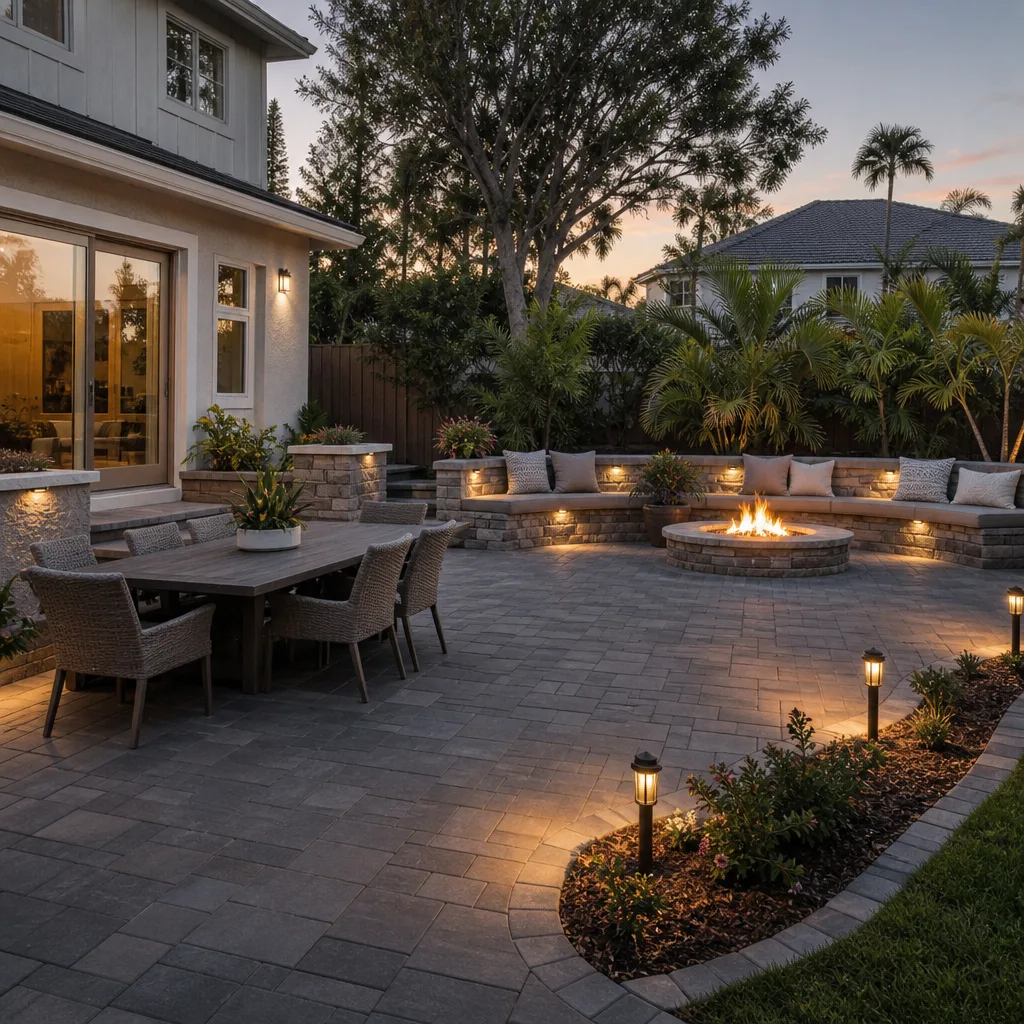
Replacement wins on sticker price every time you compare it to a single repair. It doesn’t win on a 10-year basis unless the base conditions demand it. Here’s how the two paths compare on a typical 600-square-foot Lancaster driveway using Belgard or Tremron pavers, which are what we most commonly specify for our Lancaster work.
| Option | Upfront cost | Expected re-repair | 10-year total |
|---|---|---|---|
| Targeted base repair + re-set (single zone) | $2,400 – $4,800 | One re-repair likely at year 6 – 8: $1,200 – $2,400 | $3,600 – $7,200 |
| Full paver replacement with new base | $9,000 – $14,500 | No re-repair expected; joint re-sanding at year 8: $400 – $800 | $9,400 – $15,300 |
| Full concrete replacement | $7,500 – $11,000 | Crack sealing at year 5: $300 – $600 | $7,800 – $11,600 |
The repair path only wins the long game if the initial diagnosis was honest. A repair done on a base that should have been replaced fails within 2 – 3 years, and you’re back to a full replacement having spent the repair money twice. That’s why the sample removal matters so much. The difference between the $4,000 path and the $12,000 path is often whether a contractor took 20 minutes to lift two pavers before writing the quote.
Under Clause 1 of the Haven Standard, the price we quote is the price you pay – flat, in writing, with a scope that names the zones and the base depth and the compaction spec. No change proceeds until the change order is signed. That matters most on repair jobs, where a contractor who discovers halfway through that the base is worse than expected has an obvious incentive to balloon the price. We don’t do that. But we also won’t quote repair on a driveway we know will fail.
How caliche soil changes the repair scope
Antelope Valley caliche creates a specific failure pattern that contractors from outside the region tend to miss. In clay-soil markets – the San Fernando Valley, much of Orange County – drivways typically fail from the center out. The expansive clay pushes the middle up, and the cracking radiates outward. Repair scopes in those markets are built around center remediation.
In Lancaster, the pattern is reversed. Caliche is a cement-like layer that forms under the soil profile and generates hard, impermeable surfaces. Water that should drain through the subgrade pools on top of the caliche, then pushes sideways – which means the driveway edge takes the brunt of the water pressure before the center ever shows distress. The result: edge heave, edge settlement, and joint separation at the perimeter while the center remains sound. A contractor who quotes a full replacement because “the driveway is failing everywhere” probably hasn’t noticed the center is intact. A repair scope on a Lancaster caliche driveway should center on edge restraint replacement, caliche breaking and removal in the affected zone, and re-compaction with a proper base spec before the pavers go back down.
We’ve also seen repair scopes on the east side of Lancaster – the neighborhoods approaching the foothills – where caliche is heavier and the effect is more pronounced. Those jobs sometimes require more edge zone work than a comparable driveway closer to downtown.
When to replace the pavers along with the base – and when to re-use them
One more decision point: even if the base needs work, the pavers themselves may be reusable. Good-quality Belgard or Unilock pavers can typically be lifted, cleaned, and re-set for a fraction of a replacement material cost. The pavers themselves don’t wear out; they’re decorative and durable. What wears out is the base and the joint sand.
Re-use makes sense when the pavers are under 15 years old, the color and finish are still acceptable to you, and less than about 10% of the pavers show cracking or chipping. Replacement pavers make sense when you’re already going to the trouble of new base and edge – the incremental cost to upgrade the surface at the same time is usually modest, and the driveway performs better and looks right for the next two decades.
What a written assessment should include after the base inspection
Under the Haven Standard, every Rowan assessment after a base inspection is delivered in writing with three things: findings by zone, a recommended scope with an explanation, and a priced alternative. That structure is the deliverable – not a verbal summary at the end of the visit. Here’s what we mean by that on a driveway and pavers job:
- Findings by zone. The driveway is divided into zones (front 10 feet, mid-drive, apron, edges) and each zone is described in trade terms – base depth measured, compaction status, PAver condition, joint sand condition, drainage pattern observed. No adjectives, no verdicts – findings.
- Recommended scope with explanation. The primary recommendation, priced flat, with a written explanation of why. If we’re recommending repair, the assessment states the base depth and compaction we confirmed and the zones that require work. If we’re recommending replacement, it states the conditions that triggered that call.
- Alternative priced alongside. The other path, priced, so you can see the delta. On a repairable driveway where replacement was also feasible, you get both numbers in writing. Then you decide.
A documented photo record on every visit is standard – not an upgrade. That means photos of the lifted base zone, the compaction test, the aggregate depth against a tape measure, and the completed work. You should never need to take a contractor’s word for what the base looked like after the pavers went back down.
If you’d rather not DIY the diagnosis, call (844) 797-3312 for a free estimate and a written assessment.
The Bottom Line
The repair-or-replace decision on a Lancaster driveway is a base-layer question, not a surface question. Before you accept any recommendation, ask the contractor to lift at least two pavers – one in the failed zone, one in a healthy zone – and to measure the base depth and check compaction on the record. Any recommendation that skips that step is a guess, and a guess on a Lancaster driveway with caliche-heavy soil typically runs $1,800 – $3,400 more than the correct call.
Repair makes sense when the base is sound and the failure is localized – common in Lancaster edge heave cases once the caliche is addressed. Replacement makes sense when base depth is under 4 inches, when failure covers more than 60% of the drive, or when subgrade conditions demand tear-out. A linear 10-year cost comparison favors repair by a wide margin when the diagnosis is honest, and it fails to favor repair when the base was already compromised.
If you’re in Lancaster and need help, Rowan Construction Group Lancaster offers free estimates – call (844) 797-3312. A written scope and a flat price before any work starts, a documented photo record on every visit, and the 365-Day Done Right Promise on the work itself – those aren’t upcharges. They’re how we do the job.
Related services in Lancaster
The pavers trade overlaps with a few others often enough that it’s useful to plan them together. If your driveway borders a property line, our Fence Installation in Lancaster work is frequently scheduled alongside a paver job. If you’re considering widening the driveway or adding a carport, our Home Additions & ADU in Lancaster team can scope the site plan. And for the full picture of driveway materials and options, see our Driveway & Pavers in Lancaster page. You can also start at our Rowan Construction Group Lancaster home page to see the trades we run under the Haven Standard.
Frequently Asked Questions
Targeted driveway paver repair in Lancaster typically runs $2,400 – $4,800 for a single failed zone on a 600-square-foot drive, including base repair and re-set. Full replacement runs $9,000 – $14,500 for the same driveway. The gap is why the base inspection matters: a repair performed on a base that should have been replaced typically fails within 2 – 3 years and costs more overall. Call (844) 797-3312 for a written estimate – free, with the base findings in writing.
Repair your paver driveway if the base is sound and the failure is localized to edges, a single zone, or cosmetic surface wear. Replace it if base depth is under 4 inches across the majority of the drive, if failure covers more than 60% of the surface, or if subgrade soil or drainage conditions can’t be corrected without tear-out. The surface appearance is not the deciding factor – the base inspection is. Call (844) 797-3312 to schedule a base inspection with a written assessment.
Yes. The base aggregate and compaction layer are physically under the pavers and can’t be evaluated without lifting at least a sample. A contractor who claims to assess the base without lifting pavers is guessing from surface appearance. A proper inspection lifts a minimum of two pavers – one in the failed zone, one in a healthy zone – and measures base depth and compaction on the record. Call (844) 797-3312 for a free base inspection and a written photo record of what was found.
Not without a signed change order. Under Clause 1 of the Haven Standard, Rowan quotes a flat price with a written scope before any work starts, and no change proceeds without a signed change order. The scope names the zones, the base depth spec, and the compaction target – which is why the base inspection has to happen before the price is quoted, not after. Call (844) 797-3312 for a written estimate and to review our terms page for the full commitment.
Caliche soil in Lancaster typically produces edge heave and perimeter joint separation while the center stays sound; clay soil in coastal markets typically fails from the center out. That means a Lancaster repair scope centers on edge restraint, caliche removal in the affected zone, and re-compaction of the perimeter – not the center remediation a clay-soil contractor would default to. Call (844) 797-3312 to get an inspection tuned to Antelope Valley soil conditions.
Written by the team at Rowan Construction Group Lancaster.
Need Construction Help?
Call Rowan Construction Group Lancaster - licensed & insured, here with fast after-hours help in Lancaster.
(844) 797-3312