
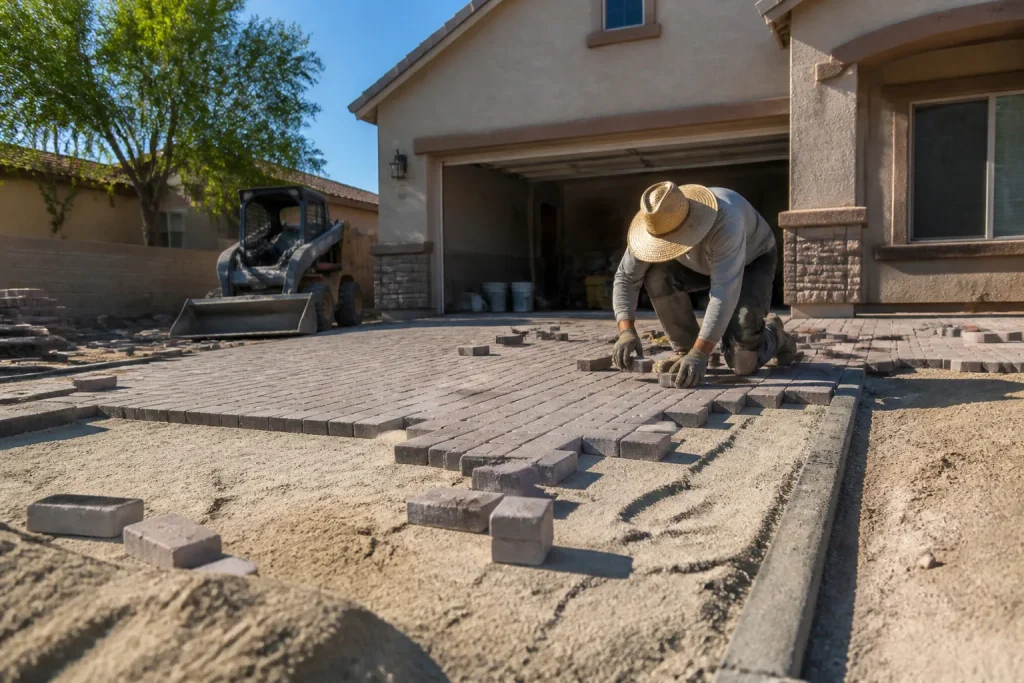
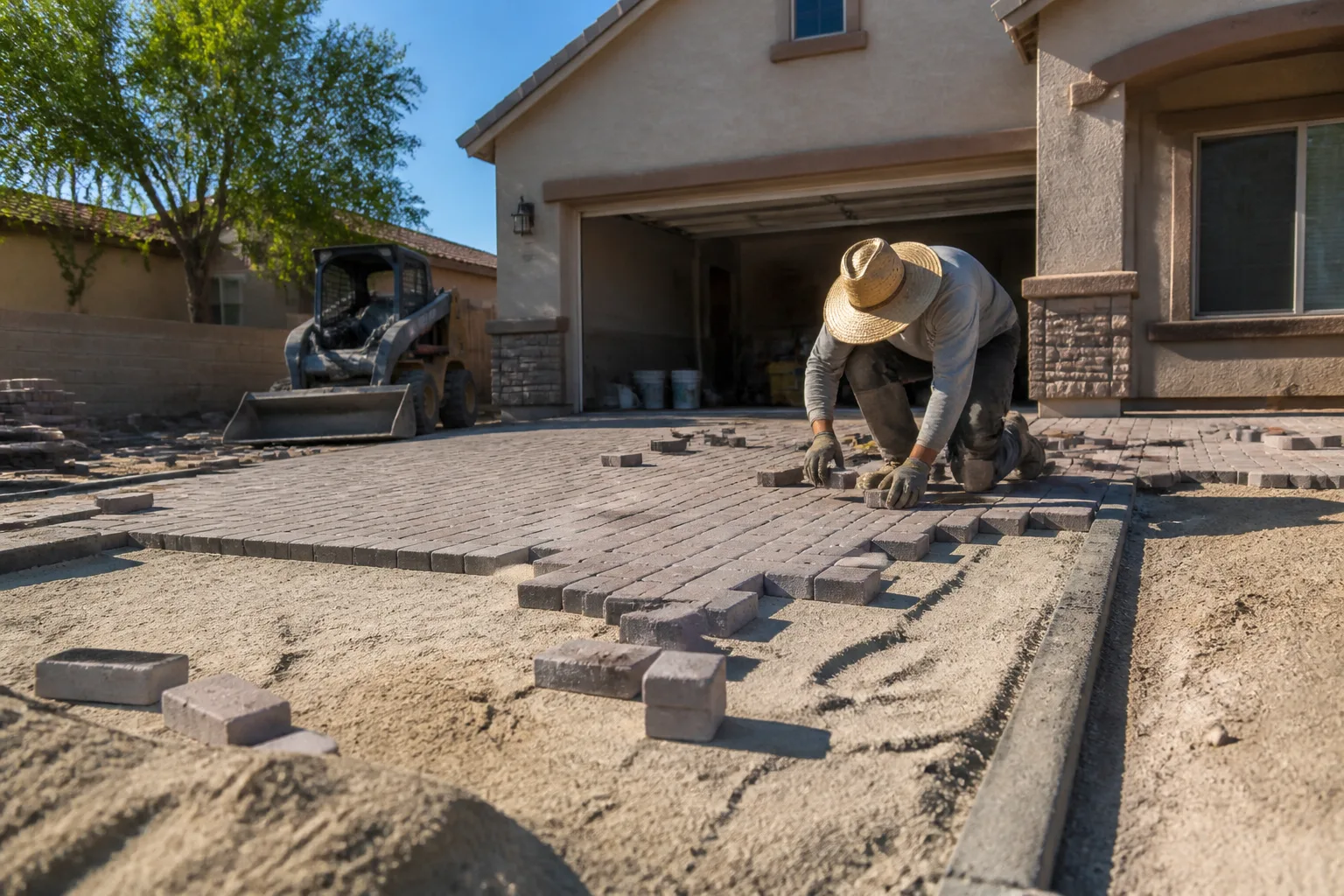
Emergency Driveway & Pavers Near Me: What Lancaster Homeowners Should Do First
If a section of your driveway has dropped, a paver edge has heaved, or the apron at the garage is cracked, you don’t need a contractor tonight. You need a triage decision. Most driveway failures in Lancaster are urgent but not immediate, and the first 30 minutes you spend measuring, photographing, and slowing water will save you more money than the fastest callback you can find at 7 p.m. That hour is where the difference gets made, not in the dispatch queue.
If you’d rather skip the self-assessment and get a real read on it, call us at (844) 797-3312. The estimate is free, and it’s in writing.
Before anything else: no driveway is worth a sprained ankle. If a piece of concrete or a paver edge is sticking up more than an inch and a half, rope or tape it off tonight and keep people away from it until someone’s looked at it. Tonight’s job is containment and documentation. Tomorrow’s job is diagnosis.
Is Your Driveway Failure Actually an Emergency? A Four-Question Test

Answer these four questions with a tape measure and a flashlight, not with your gut. The answers tell you whether you’re making a call right now or making a call in the morning.
- How high is the trip hazard? Measure the lip or rise in inches. Anything over 1.5 inches at a walking path or garage threshold is a safety concern, especially for older residents and delivery drivers. That’s a same-day or next-morning fix, even if it’s a temporary one.
- Which way does the water run? Pour a gallon of water from the hose at the low spot and watch it. If it pools, or if it flows toward the house rather than the street, you’ve got a drainage problem that matters more than the crack. Water that reaches the foundation is the expensive version of this problem.
- Is the failure spreading? Mark the ends of a crack with a pencil tonight and check it tomorrow. A crack that grows overnight means the substrate under the slab is moving, and that changes the repair.
- Is the hazard visible to people who don’t live there? A raised edge in the middle of the drive is one thing. A lifted paver at the garage apron, where a guest steps out of a car in the dark, is another. If it’s on a walking path, treat it as a hazard regardless of size.
If you answered yes to the height question or the water question, that’s a real priority. If you answered yes to none of them, you have a cosmetic issue with a three-day runway – which is exactly when a careful contractor earns their fee.
What to Document in the First 30 Minutes
We pulled a repair out of a garage apron over in Quartz Hill last month where the homeowner had a photo of the exact crack width and a hose test video, and the insurance conversation took ten minutes instead of two weeks. The photos matter, and they matter more than most people realize.
- A photo with a reference object. Lay a tape measure or a coin alongside the crack or the lifted paver so the scale is in the frame. A phone photo of a crack with nothing next to it tells a claims adjuster nothing.
- The hose test, filmed. Thirty seconds of video showing where the water pools and where it runs. Sound on, narrating what you’re doing.
- Panoramic shots of the whole driveway. Wide shots establish context, and context is what a contractor and an adjuster both need.
- The date and time stamp. If a dispute comes up later about when a failure started, a timestamped photo is the only thing that settles it.
- Any visible substrate. If a paver is loose, lift it and photograph the sand or base beneath it. That’s the part a homeowner can safely check. Anything under a slab or near a garage door spring or cable is not – leave that to a trained professional.
Two or three shots, taken correctly, do more for you than a folder of blurry close-ups. If you’re in Lancaster and the damage touches the base under a slab, don’t excavate to photograph it. That’s a job for the crew, and it’s the sort of thing we document as part of the visit anyway.
Temporary Stabilization vs. a Permanent Repair
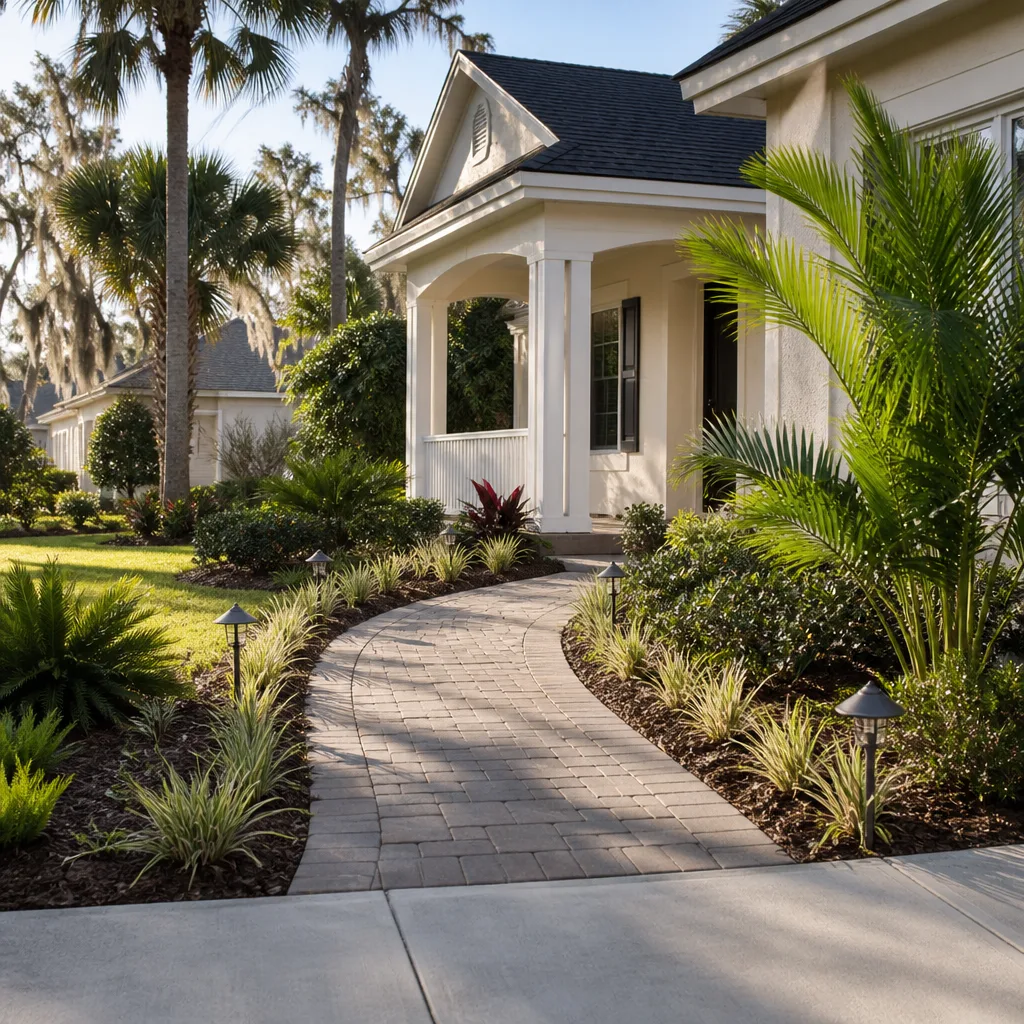
Here’s the distinction that quietly separates a straight contractor from one who’s upselling you: a temporary stabilization is a fix that keeps the driveway safe and stable for roughly 30 days while you decide on the permanent repair. A permanent repair restores the base, resets the pavers or slab, and comes with a written warranty.
A reputable contractor will offer the temporary fix first, in writing, when the situation calls for it – and won’t pressure you into the permanent one on the spot. If the base under a failing paver section is sound and the problem is one heaved edge, a reset-and-relay is a fraction of the cost of a full replacement, and we’ll tell you if that’s the honest answer. If the substrate is failing, the temporary fix is a bridge, and only a bridge.
Where the driveway ties into a fence line or a garage apron, failures often aren’t isolated. If you’re seeing movement near the fence posts too, that’s worth a look at our Fence Installation in Lancaster page, because the same base and drainage problem usually shows up in both places. And if the driveway work is part of a larger planned project – say, an ADU with its own approach – it’s worth reading up on Home Additions & ADU in Lancaster before you sequence the work.
Red Flags in an Emergency Quote
Name the price in dollars before anyone picks up a tool. That’s not a preference, it’s the standard we hold ourselves to under our written-pricing commitment, and you should expect the same from anyone else you call. Here’s what an emergency quote should never look like:
- No written scope. If the scope is verbal and the number is verbal, you have nothing. You want the scope in writing, describing exactly what’s being fixed and what isn’t.
- No material specification. Are you getting Belgard or Techo-Bloc pavers, or an unnamed paver? Is the base compacted aggregate, and to what depth? The material should be named, not described as “premium pavers.”
- “We start today or the price changes.” That’s a pressure tactic, and it’s a clear sign the number isn’t grounded in anything. A written price doesn’t expire in three hours.
- No photo record. Ask what documentation you’ll get at the end of the visit. “A receipt” isn’t enough – you want photos of what was found and what was done.
- A quote that doesn’t separate the temporary fix from the permanent one. If you’re offered one lump number with no breakdown, ask for two.
We’ve watched homeowners in Lancaster get quoted “market emergency rates” that ran 40% over the normal range for the same repair, simply because they called the first number that answered at 7 p.m. That’s the trap this article exists to close.
How Rowan Handles an Emergency Driveway Call in Lancaster
We answer calls around the clock – a live person, not a voicemail box – and every crew member is background-checked and uniformed. What we put in writing even on a same-day response is the part most contractors skip: a scope, a price, a material specification, and a documented photo record of what we found. Our crews bring up to 19 years of experience to a driveway assessment, which means they can tell you the difference between a stabilized temporary fix and a real repair without a sales pitch in the middle.
Here’s what a typical emergency assessment uncovers: a raised paver edge that looks like a two-hour reset is usually a base problem under a bigger section, and the driveway apron is often where the real issue started. The assessment visit itself is a free estimate, and what it usually turns up is that the honest repair is more specific and less expensive than the emergency quote you’d get from a cold call.
We source through a vetted range of paver brands – Belgard and Techo-Bloc among them – and our written quotes reflect honest material numbers, not inflated emergency math. If you want to see how we handle non-emergency driveway work in Lancaster, the full scope is on our Driveway & Pavers in Lancaster page, and the broader picture of our seven trades is at the Rowan Construction Group Lancaster home.
When to Call a Pro (and When You Can Wait Until Morning)
Call now if: the trip hazard tops 1.5 inches on a walking path, water is running toward the foundation, or a section of slab or paver has visibly shifted overnight. Those are the real emergencies. Wait until morning, but still call, if: the crack is stable, the water drains away from the house, and nobody’s at risk of tripping. That’s the situation where three days of due diligence saves $800.
What you should never do yourself is move a heavy slab, dig out a base near a foundation, or work anywhere close to a garage door spring or cable. Those carry serious injury risk, and they’re jobs for trained professionals, not a Saturday afternoon project.
Key Takeaways
- Most Lancaster driveway “emergencies” are urgent, not immediate – triage first, contractor second.
- Measure the trip hazard. Over 1.5 inches is a safety concern; under it, you have a running start.
- Photograph with a reference object, film the hose test, and timestamp everything.
- A temporary stabilization buys roughly 30 days. A permanent repair comes with a written warranty.
- Walk away from any quote with no written scope, no named material, or a “today only” price.
The Bottom Line
The first 30 minutes of a driveway failure are worth more than the first contractor you call. Measure, photograph, and slow the water down – then get a written price before anyone starts. Since 2007, we’ve been doing exactly that across 4,000-plus projects, and every one of them started with a written quote and ended with a photo record and a written warranty. Our Free Second Opinion on any written estimate is standing policy: bring us a competitor’s number and we’ll go through it line by line, no charge.
If you’re in Lancaster and need help, Rowan Construction Group Lancaster offers free estimates – call (844) 797-3312. No urgency theatre, no pressure. Just a number in writing, and a straight answer about whether it can wait until morning.
Frequently Asked Questions
A temporary stabilization typically runs several hundred dollars, while a permanent reset-and-relay or partial replacement is priced per square foot and depends on the base condition – often a few thousand for a larger section. The exact number depends on what the assessment finds under the surface. Call (844) 797-3312 for an exact quote – estimates are free, and they’re written.
No. Under our written-pricing policy, no work proceeds on a change until the change order is signed, and that discipline is why our projects finish within a few percent of the agreed number. A written price with a written scope is the whole point.
Yes, if the trip hazard is under 1.5 inches and water is draining away from the house. If the hazard is higher, or water is running toward the foundation, treat it as a same-day priority and rope off the area. Call (844) 797-3312 if you’re unsure – a quick call costs nothing.
Many driveway repairs don’t require a permit, but structural or drainage changes often do, and permit requirements vary by project. We’ll tell you in writing what your project requires and handle the permitting through the proper channels on your behalf. Call (844) 797-3312 to find out what applies to your driveway.
Related Services in Lancaster
Driveway failures often sit alongside fence or drainage work on the same property – see our Driveway & Pavers in Lancaster and Fence Installation in Lancaster pages for the full scope of what we handle.
Written by the team at Rowan Construction Group Lancaster.
What happens when you call
- 1
A real person answersNo phone trees – you reach a local pro.
- 2
You get an upfront price rangeHonest numbers before anyone is dispatched.
- 3
A background-checked tech heads outLicensed & insured, dispatched right away.
- 4
You approve before work beginsNothing starts until you say go.
Need Construction Help?
Call Rowan Construction Group Lancaster - licensed & insured, here with fast after-hours help in Lancaster.
(844) 797-3312