
Fence Installation: Repair or Replace? How Lancaster Homeowners Decide
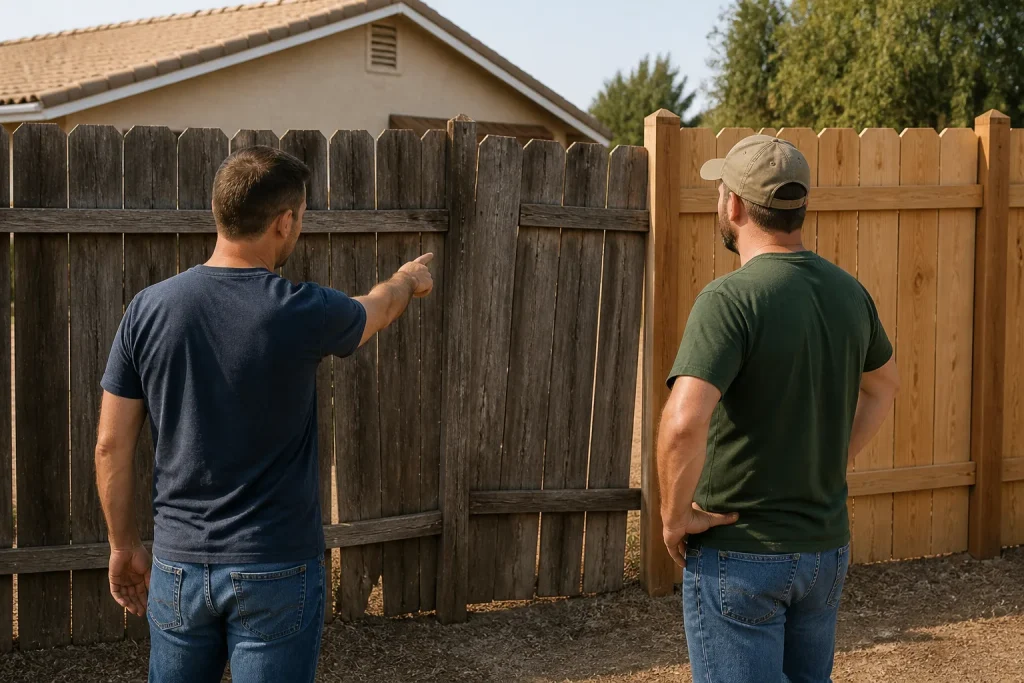
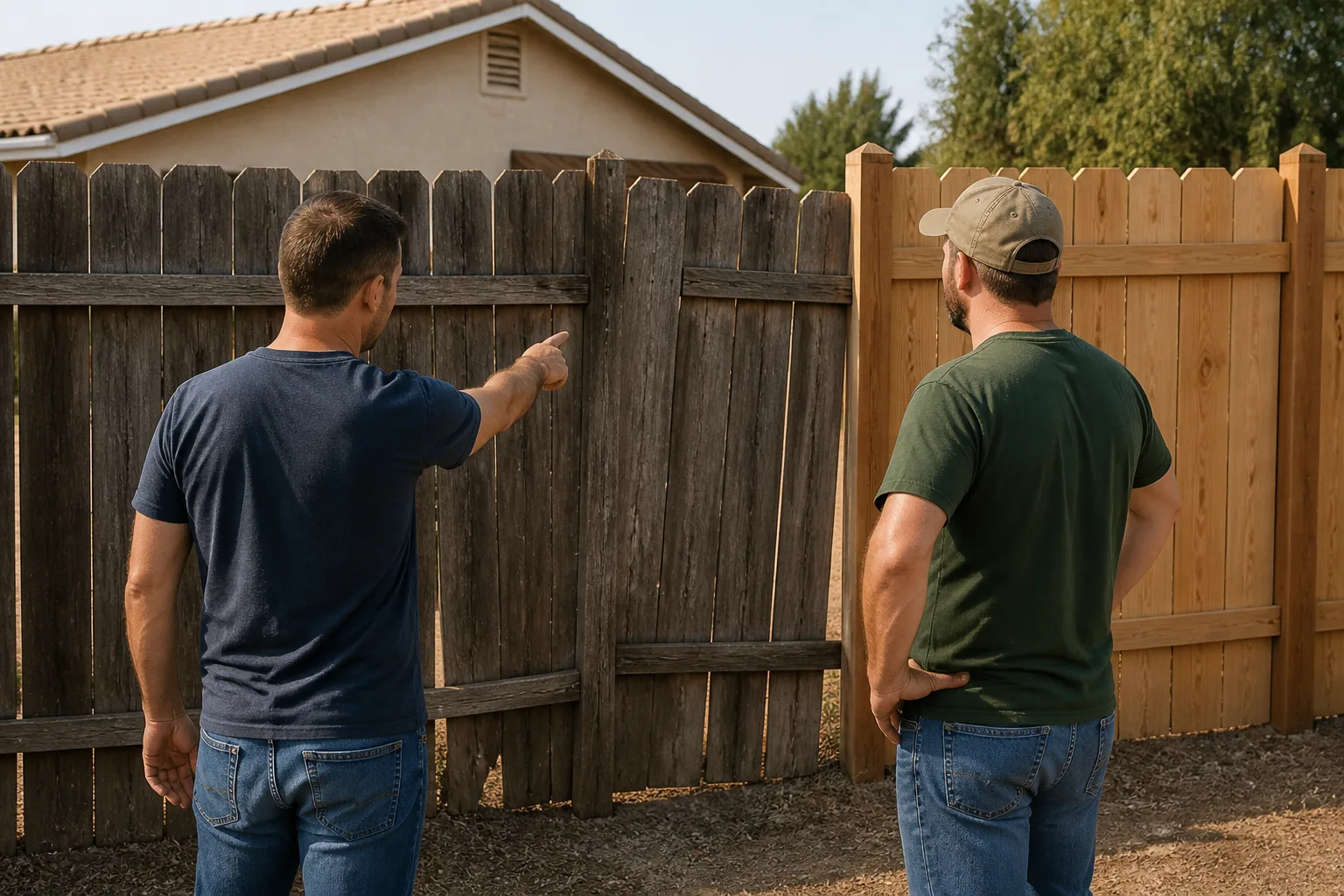
Most Lancaster fence decisions come down to three things: how the posts are holding, what the permit file says, and what the insurance adjuster will accept after the next wind event. A fence that leans in one spot is usually a repair. A fence where the posts move under hand pressure, panels have racked out of square, and footings have pushed up out of expansive soil is a replacement, and patching it just postpones the invoice. If you’d rather have someone put eyes on it than guess from the sidewalk, call (844) 797-3312 and we’ll write a flat price either way.
Why Lancaster Fences Fail Differently Than Coastal Fences
We work in Antelope Valley wind loads all year, and that changes what “worn out” means. Lancaster sits in ASCE 7 Exposure Category C, which means open terrain with scattered obstructions and sustained Design Wind Speeds that stress a fence face far harder than the same fence would see in a sheltered suburb. A fence here doesn’t just age. It gets tested, and the test comes in gusts off the foothills.
We see three failure modes repeatedly, and each one points to a different answer:
- Post pull. The post rocks in its hole, the concrete collar breaks free, and the whole run leans downwind. Single post, solid panels, no rot: repairable. Multiple posts across one run: the footer schedule was wrong from the start, and replacing the run is cheaper than re-setting posts one at a time.
- Panel racking. The fence goes out of square, pickets separate from rails, and gates drag. Racking is usually a sign that the posts moved and took the panel with them. If the rails and pickets are still sound, you can re-hang; if the fasteners have wallowed out the holes, the panel is done.
- Footer heave. The ground swells and shrinks with the season, and a shallow footing rides up out of the hole. You’ll see a gap under the bottom rail and a post that’s higher than its neighbors. This one is structural. Heaved footings mean the concrete was poured too shallow for the soil, and re-setting one post into the same shallow hole just repeats the failure.
Our technicians have up to 19 years of experience reading exactly these signals, and the honest answer is sometimes “replace two panels and re-set one post,” not a full tear-out.
When Does a Lancaster Fence Repair Legally Become a Replacement?
This is the part most repair quotes skip, and it’s the part that gets homeowners a stop-work order. Lancaster Municipal Code requires a building permit for any fence over 6 feet in height. It also requires a permit when a replacement changes the material type, meaning swapping a wood run for vinyl, or chain link for block, is a permitted scope even if the height stays the same. Straight like-for-like repair of existing damage under the 6-foot line typically does not trigger a permit.
Then there’s the California Building Code. Under CBC Section 105.2, ordinary repairs are exempt from permits, but the exemption stops the moment you remove and replace structural members. A fence post is a structural member. The moment a contractor pulls four posts and re-pours footings, you’re past “ordinary repair” and into a permitted scope, whether the contractor says so or not.
What that adds in practice:
- Plan review and inspection time. In Lancaster, budget a couple of weeks before the crew can start and a final inspection at the end.
- Permit fees that scale with linear footage and height. A full block replacement runs higher than a wood replacement at the same length.
- A documented inspection record. That record is worth real money if you ever file a wind claim, which we’ll get to below.
If a repair estimate in Lancaster doesn’t mention the permit trigger, ask why. It’s a fair question, and it’s the kind of thing we put in writing before anyone starts.
Repair vs. Replace: What the Numbers Look Like in Lancaster Right Now
Prices here reflect current Lancaster contractor pricing for typical residential runs, and they assume you’re hiring licensed work, not a truck-and-cash arrangement. Every figure below is a range, because soil and access change the number, but the ranges are honest.
| Scope | Typical Lancaster Range | What’s Included |
|---|---|---|
| Repair: one new post, re-set footer, replace 2 panels | $650 – $1,400 | Demo, new pressure-treated post, concrete footer, panels, hardware |
| Repair: re-set 3 – 4 posts, no panel replacement | $1,200 – $2,400 | Post re-set, new footings, re-hang existing panels |
| Full replace, cedar, 150 linear feet, 6 ft | $6,500 – $9,500 | Tear-out, posts, footings, rails, pickets, stain |
| Full replace, vinyl, 150 linear feet, 6 ft | $9,000 – $13,500 | Tear-out, posts, footings, panels, caps |
| Full replace, CMU block, 150 linear feet, 6 ft | $18,000 – $30,000 | Footings, block, grout, stucco finish, permit |
| Permit and inspection, replacement scope | $400 – $1,200 | Plan review, permit issuance, final inspection |
For the block and paver side of the yard, our Driveway & Pavers in Lancaster page covers the hardscape pricing that pairs with a fence line, and the full scope of a new build lives on our Fence Installation in Lancaster page. The math usually decides: if the repair number creeps past 40 percent of a full replacement, replacing is the better spend, because you get new footings, a permit, and a warranty instead of another patch.
How to Read a Fence Estimate So Nothing Is Hidden
Most bad fence outcomes start with a good-looking number that hid the expensive parts. The two line items that matter most in Lancaster are footer depth and post spacing, and if they aren’t written into the quote, they’re assumed, and assumptions go cheap.
The California Building Code calls for footings set below the frost line with adequate embedment, and in expansive soil the practical minimum most engineers and inspectors expect is 24 inches deep with a proper concrete collar. In Lancaster’s clay-heavy ground, a 12-inch hole with a bag of Quikrete and no collar will heave within a couple of seasons. Post spacing is the other tell. Standard is 8 feet on center for most residential runs. Nine or ten feet saves the contractor posts and labor and costs you rigidity in wind. Ask for it in writing.
What a complete fence estimate should contain:
- Linear footage broken down by run, with post count.
- Footer depth stated in inches, and the concrete spec named (Quikrete or Sakrete are the common packaged options, and the mix matters).
- Post spacing stated as a number.
- Material type, brand, and height.
- Whether a permit is included, and who pulls it.
- Tear-out and disposal listed separately.
- The warranty, in writing.
Under Clause 1 of The Haven Standard, that flat written price arrives before anyone starts. No work proceeds on a change until the change order is signed, which is why our projects finish within a few percent of the agreed number. If you’re sitting on a competitor’s estimate and want it read line by line, we’ll give you a free second opinion on it.
Wind Damage and Your Insurance Claim: The Documentation That Matters
Here’s the scenario that costs Lancaster homeowners real money. A fence gets repaired by a handyman after a spring wind event, the repair runs without a permit, and eight months later a bigger gust takes down the same run. The adjuster asks for the repair invoice, the permit record, and the material specs. There’s no permit. The material isn’t documented. The claim gets denied or trimmed to a fraction of the number.
A recently repaired fence in Lancaster is a stronger claim when the file contains four things:
- Permit and final inspection record for any structural repair or replacement.
- Photos of the post footings before backfill, showing depth and concrete collar.
- The material spec sheet with the brand and product name, so the adjuster can match replacement cost to what was actually installed.
- The signed scope of work, with footer depth and post spacing written in.
We include a documented photo record on every visit as standard, not as an upgrade, because the customer should leave with evidence of what we found and what we did. That same record is what an adjuster wants to see.
When to Call a Pro Instead of Patching It Yourself
Fence work is more dangerous than it looks. A post that pulls free mid-lean can take a person down with it, buried utilities run near fence lines more often than homeowners expect, and block walls are heavy work with real injury potential. If you’re dealing with more than one post, footer heave, or any block wall, that’s a trained professional’s job. Call 811 before any digging, and don’t dig near a footing you haven’t located.
The honest cut-line: if you’re re-hanging a gate or replacing a couple of pickets, that’s weekend work. If the posts move, call us. We’ll tell you plainly whether it’s a repair or a replacement, and we’ll give you the number in writing before anyone touches a shovel.
The Bottom Line
For Lancaster homeowners deciding between repair and replacement, the framework is structural and documentary, not cosmetic.
- Post pull on one post: repair. Post pull across a run: replace.
- Footer heave: replace, because the footing can’t hold in expansive soil.
- Any post replacement crosses into a permitted scope under CBC Section 105.2.
- A material change, even at the same height, requires a Lancaster permit.
- If the repair creeps past 40 percent of a full replacement, replace it.
- Keep the permit, photos, and material specs for insurance.
Across 4,000-plus projects, the discipline that keeps jobs on budget is a written price before work starts and a signed change order before any change. That applies whether you’re adding an ADU or re-setting a fence post. If you’re in Lancaster and need help deciding, Rowan Construction Group Lancaster offers free estimates. Call (844) 797-3312, and if you’re weighing a bigger backyard project while you’re at it, our Home Additions & ADU in Lancaster page covers that scope, and the Rowan Construction Group Lancaster home page lays out the full Haven Standard. Every project comes with the 365-Day Done Right Promise: if it’s not done right, we make it right.
Frequently Asked Questions
Fence repair in Lancaster typically runs $650 – $1,400 for a new post, re-set footer, and two replacement panels, and $1,200 – $2,400 to re-set three or four posts without replacing panels. The price depends on footer depth needed for the soil and how much of the run has moved. Call (844) 797-3312 for an exact quote on your fence; estimates are free.
Yes, in two common cases: any fence over 6 feet in height requires a Lancaster permit, and any replacement that changes the material type (wood to vinyl, chain link to block) requires one even if the height stays the same. Structural repair that replaces posts also crosses into permitted scope under California Building Code Section 105.2. Pass this to whoever writes your estimate and ask if the permit is included.
Often yes, if the damage is documented as a sudden wind event rather than deferred maintenance, and if the file includes the permit record, footing photos, material specs, and a signed scope of work. A fence repaired without a permit weakens a claim. Call (844) 797-3312 and we’ll review what your file needs before you file.
A 150-foot cedar replacement typically takes two to three days of crew time, plus a couple of weeks for permit review and a final inspection. Block runs take longer because of cure time. Repair work on a single post is usually a half-day. Call (844) 797-3312 to schedule a free estimate and get a written timeline.
Yes, when the failure is isolated. One post with a broken footer, or two racked panels, can be repaired and the rest of the fence left alone. When multiple posts across one run have moved, or footings have heaved out of expansive soil, replacement is the better spend and the only version that holds in Lancaster’s wind loads. Call (844) 797-3312 and we’ll tell you which one you have, in writing.
Written by the team at Rowan Construction Group Lancaster.
Need Construction Help?
Call Rowan Construction Group Lancaster - licensed & insured, here with fast after-hours help in Lancaster.
(844) 797-3312