
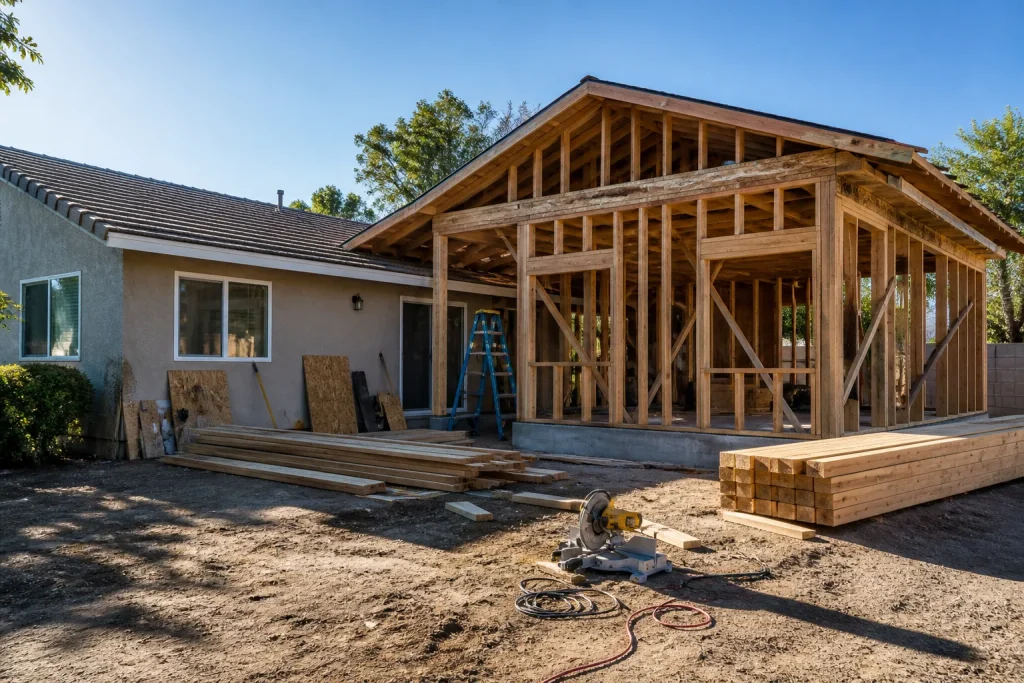
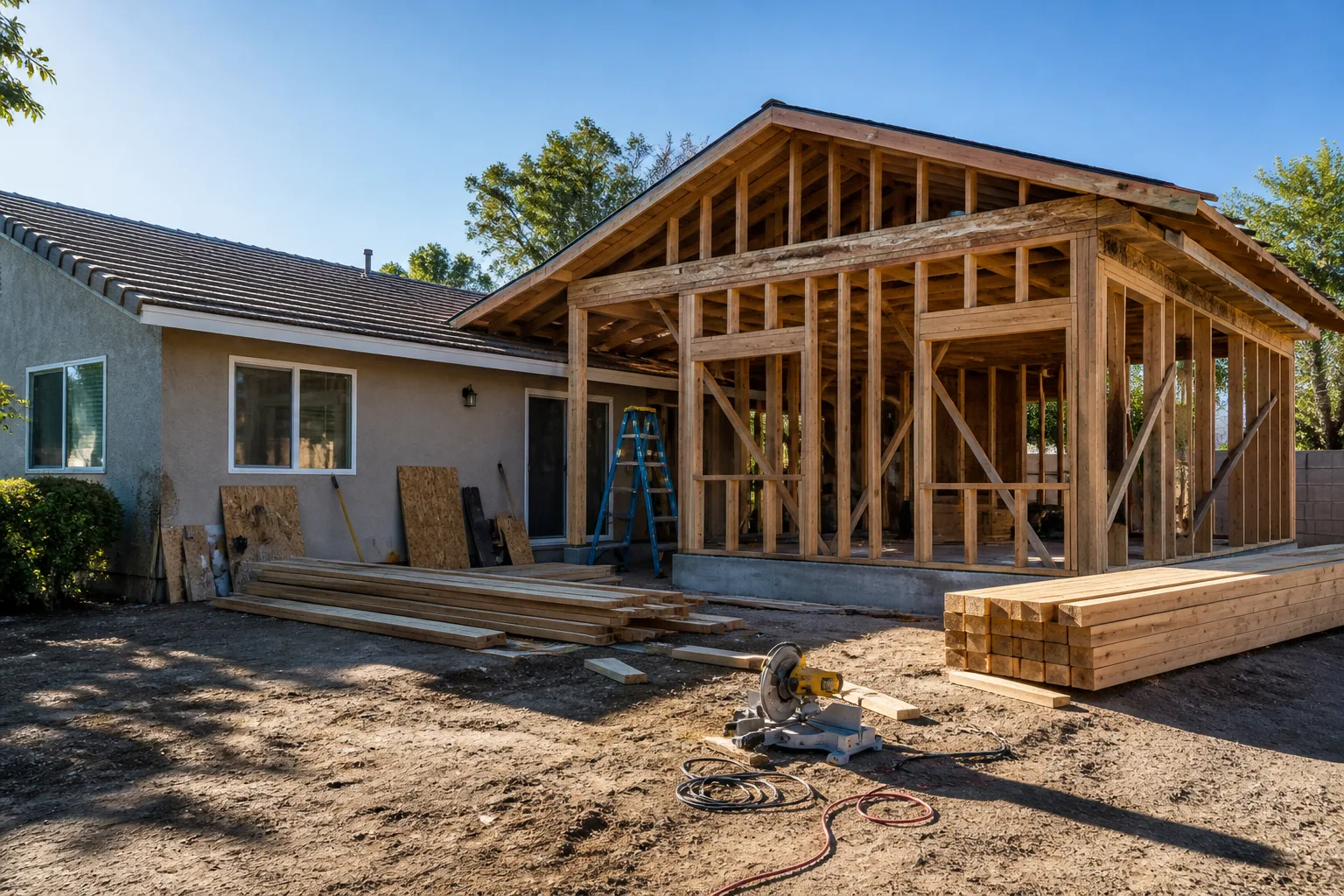
Home Additions & ADU: Repair or Replace? How Lancaster Homeowners Decide
Most Lancaster homeowners frame this as a preference: addition or ADU. It isn’t. It’s a math problem, and the deciding variable is usually invisible in every estimate you’ll collect – the Title 24 energy compliance status of the existing house. A homeowner who adds 400 square feet to a pre-2006 Lancaster house can trigger a mandatory energy upgrade on the entire existing HVAC system. That’s an add-on cost of roughly $4,500-$9,000 that appears nowhere in the addition bid but shows up on the permit correction notice. If you’d rather not untangle that alone, call (844) 797-3312 and we’ll walk the numbers with you.
Key Takeaways
- An addition past 60% of the existing conditioned floor area often triggers a full Title 24 upgrade – budget for it before you compare bids.
- A permitted, separately-metered ADU can count as rental income on a refinance appraisal. A plain addition usually cannot.
- A $400-$600 engineer’s report on the existing foundation is the first dollar spent, ahead of any contractor estimate.
- Setbacks, lot coverage, and owner-occupancy rules decide which path is even legal on your parcel.
What’s the Title 24 threshold in Lancaster, and why does it decide the project?
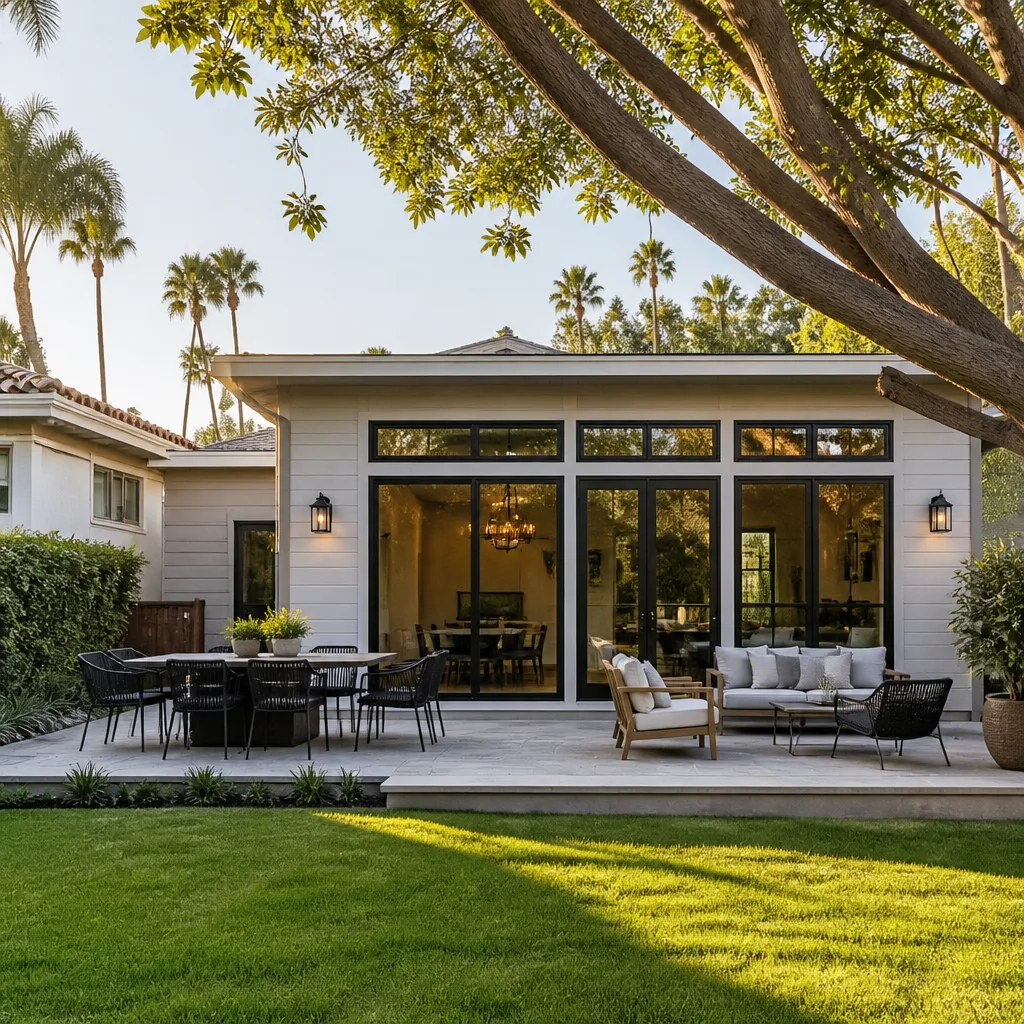
The threshold is the number most homeowners have never heard. Under California’s Title 24 energy code, when an addition exceeds 60% of the conditioned floor area of the existing structure, the whole house – not just the new square footage – has to meet current energy standards. Conditioned floor area means the heated and cooled living space, so an attached garage doesn’t count toward the existing total. Push past that line on a 1,500-square-foot Lancaster house and you’re suddenly upgrading the existing HVAC system, ducting, and sometimes the envelope to bring the old structure up to the new standard.
In Lancaster, that upgrade routinely runs $4,500-$9,000 on its own. It appears on the permit correction notice, not in the contractor’s bid. We’ve watched homeowners compare three addition estimates line by line, pick the low bid, and then get blindsided when the city comes back requiring the existing furnace and ducts to be replaced before the addition is signed off. The number was always going to be there. It just wasn’t in the paperwork.
What to check before you decide between an addition and an ADU:
- Pull the square footage of conditioned floor area from your county records, not from memory.
- Calculate 60% of that figure. Compare it to your planned addition.
- If you’re close to or over the line, get a Title 24 compliance review quoted as a separate line item.
- Add that cost to the addition side of your comparison before you weigh it against an ADU.
An ADU, by contrast, is typically treated as a new structure for energy purposes and doesn’t trigger a whole-house retrofit of the primary residence the same way. That alone can flip the math. For a fuller look at the trade-offs, our Home Additions & ADU in Lancaster page covers the build side in detail.
How does Lancaster’s zoning math separate an ADU from an addition?
On paper, an ADU looks like the flexible choice. In practice, three rules decide whether it’s possible on your specific parcel. Setbacks, lot coverage maximums, and owner-occupancy requirements vary by zone, and Lancaster’s rules have loosened over the past few years – which means older guides and forum posts are frequently wrong. Treat any advice older than the current code cycle as a starting point, not a conclusion.
The variables that matter in Lancaster:
- Setbacks. Rear and side yard clearances for a detached ADU often differ from the setback that applies to the main house. A lot that fits an addition flush to the rear wall may not fit a detached ADU in the same footprint.
- Lot coverage. Total impervious and building footprint as a percentage of the lot has a maximum. An ADU plus a wide driveway plus a garage can exceed it even when each piece looks fine alone.
- Owner-occupancy. State rules around owner-occupancy have shifted, and the local application matters. If you plan to rent both units long-term, confirm the current requirement before you commit to the design.
- Access and parking. A separately-metered ADU may need its own utility trench and address, which affects where it can physically sit.
We’ve seen plenty of Lancaster parcels where the addition is clearly feasible and the ADU is not – and vice versa, usually on a deep corner lot. The zoning check is a mapping exercise, not a guess. Do it before you fall in love with a floor plan.
Can an ADU count as rental income on a refinance appraisal? An addition usually can’t.
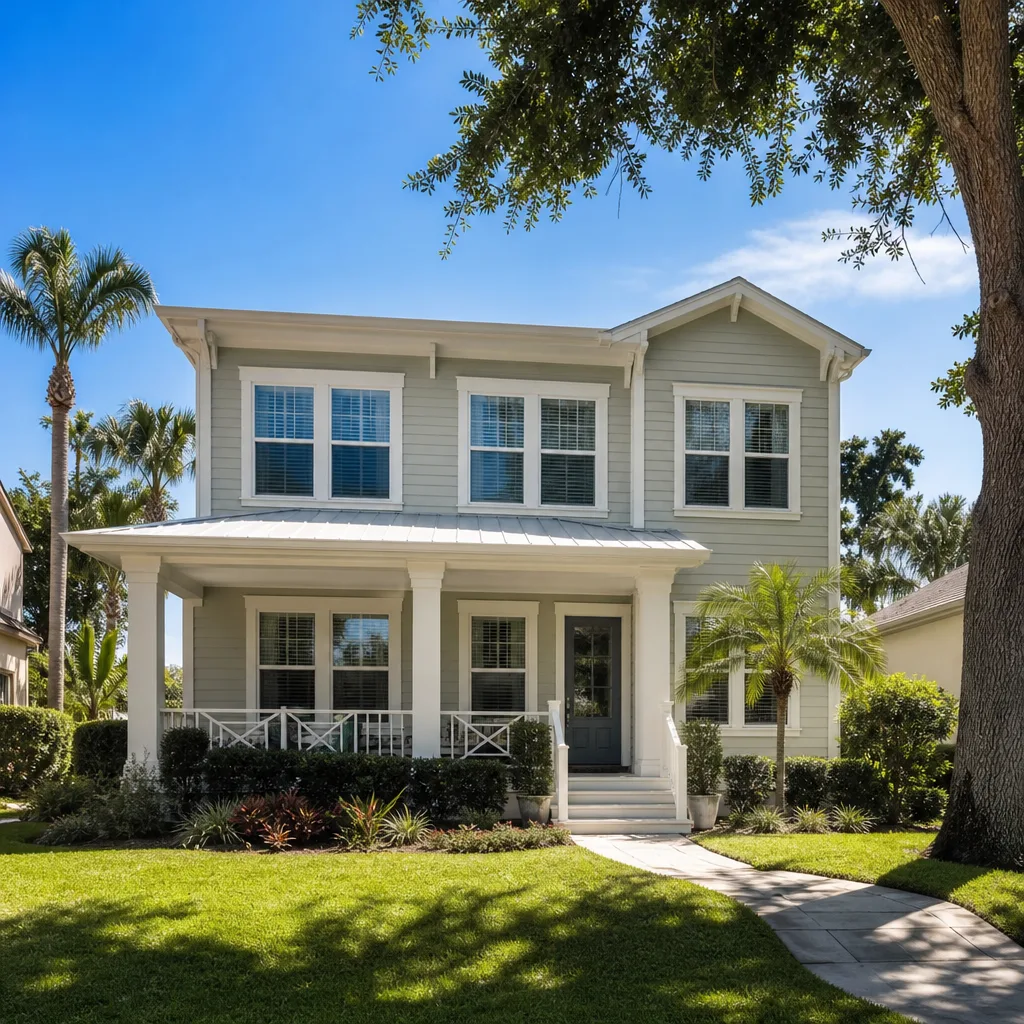
Yes, and this is the difference that reshapes the underwriting. A permitted, separately-metered ADU can qualify as rental income on a refinance appraisal, and Fannie Mae’s Selling Guide allows the appraiser to count that income under the right conditions. A home addition – a primary-suite bump-out, a bigger kitchen, a bonus room – adds value but doesn’t produce a rent check, so it doesn’t function as income on the appraisal. One path grows the house. The other grows the house and the cash flow.
The word doing the heavy lifting is “permitted.” An unpermitted ADU is not income. It’s a liability that appraisers discount and lenders flag. If you’re weighing the two paths against a future refinance or a future sale, the ADU only carries its rental value if it was inspected, signed off, and carrying its own meter. That reality pushes the entire ADU conversation back to code compliance: the same discipline that makes the structure legal is what makes the income countable.
In Lancaster, we regularly field questions from homeowners who built a converted garage or a back unit without permits a decade ago and now want it to count. The honest answer is that it doesn’t, until it’s brought into compliance – which is its own project. Budget for the compliance path from the start and the numbers hold up.
Why is a $400-$600 engineer’s report the first dollar spent?
Because no contractor’s estimate can tell you whether your existing foundation will carry what you’re proposing. A structural engineer’s report on the existing foundation and framing typically costs $400-$600 in the Lancaster market, and it answers a question that changes every bid you’ll collect: Can the existing structure take the load and the tie-in, or are you looking at a foundation upgrade before the first nail goes in? A contractor’s estimate describes the work they’ll perform. The engineer’s report describes the condition of what’s already there.
What the report actually tells you:
- Whether the existing footing and slab meet current standards or need reinforcing at the addition joint.
- Whether the existing framing at the tie-in wall can carry the new loads.
- Whether soil conditions in your part of Lancaster call for extra footing depth – the high-desert soils around the Antelope Valley behave differently than coastal California soils, and the report reflects that.
- Whether a planned ADU slab or stem-wall has a stable base, which determines how much site work the project needs before framing starts.
Spend the $400-$600 first and your subsequent bids are grounded in fact. Skip it, and you’ll collect three estimates built on three different assumptions about your foundation. The engineer’s report isn’t a luxury line item – it’s the filter that keeps you from comparing apples to assumptions.
What’s missing from most Lancaster addition contracts?
Three scope items, and their absence is where costs drift. We’ve reviewed outside estimates where each of these was left vague or absent entirely, and the homeowner discovered the gap when the work was already underway. A written price before any work starts is only honest if the scope behind it is complete.
The three line items that most often go missing:
- Utility stub-out and trenching. Water, sewer, gas, and electrical runs out to a detached ADU or the new addition require separate trenching and its own permit. If the contract says “utilities included” without a dollar figure and a trench length, that’s a placeholder, not a scope. Per-foot trenching costs should be written and signed.
- Finish allowance. “Standard finishes” means nothing. A real scope names the allowance in dollars and names the brands – a Silestone or Caesarstone countertop has a written number attached, and Kohler fixtures come with a model in the line item. When the allowance isn’t in writing, the upgrade conversation happens mid-build, under pressure.
- Inspection hold-points. An addition or ADU passes through multiple city inspections – foundation, framing, rough-in, insulation, final. If the contract doesn’t list where the schedule pauses for inspection, the timeline becomes a guess. Hold-points are the calendar, written down.
Change order discipline is the fix. No work proceeds on a change until a signed change order is in place. That single rule – the administrative backbone of how we build – keeps projects within a few percent of the agreed number rather than watching a written price quietly become a suggestion. Under Clause 1 of the Haven Standard, the price is written before anyone starts. That’s not a slogan, it’s a signature line.
We also recommend a free second opinion on any written estimate you’re holding. Bring us a competitor’s quote and we’ll review it line by line at no charge – the gaps above reveal themselves fast.
When to call a pro (and what we actually provide)
If your project involves any of the following, bring in a licensed contractor rather than chipping away at it:
- A structural tie-in between new and existing construction – this is not a homeowner task.
- Any electrical panel or service upgrade required to feed an ADU or a large addition. That’s genuinely dangerous work, and we strongly recommend a trained electrician, full stop.
- Plumbing rough-in and gas line work, which require permits and inspection regardless of who touches them.
- Title 24 compliance documentation that has to be signed by a licensed professional and accepted by the city.
Our technicians have up to 19 years of experience across additions, ADUs, and the trades that support them. Every project gets a flat written price with a written scope and a written warranty before work begins. Our crews are background-checked and uniformed, every visit includes a documented photo record as a standard deliverable, and the 365-Day Done Right Promise means if it isn’t done right, we make it right.
Related services in Lancaster while you’re planning: Driveway & Pavers in Lancaster if an addition reshapes your access, and Fence Installation in Lancaster if the ADU site plan affects your property line. Start with our Rowan Construction Group Lancaster home page for the full picture.
The Bottom Line
The ADU-versus-addition question resolves to two checks: the Title 24 status of the existing house, and the zoning math on the specific parcel. Run the energy compliance threshold first. If you’re over 60% of conditioned floor area, add the $4,500-$9,000 whole-house upgrade to the addition side of the ledger before you compare anything. Then confirm setbacks, lot coverage, and owner-occupancy before you commit to a design. Get the engineer’s report, demand the three scope items in writing, and make sure the contract carries signed change order discipline. Those steps don’t guarantee the cheaper path – they guarantee you’re comparing honest numbers.
If you’re in Lancaster and want help turning this into a written price, Rowan Construction Group Lancaster offers free estimates. Call (844) 797-3312 to schedule yours, and our team will review your existing plans, the Title 24 exposure, and the ADU math before anything is built.
Frequently Asked Questions
It can. When an addition exceeds 60% of the existing conditioned floor area, California’s Title 24 energy code requires the entire existing structure to meet current energy standards. That means upgrading the existing HVAC, ducting, and sometimes the envelope. In Lancaster, that upgrade typically runs $4,500-$9,000. Call (844) 797-3312 for a free estimate that includes a Title 24 review.
Yes, if the ADU is permitted and separately metered. A legal, inspected ADU can qualify as rental income on a refinance appraisal under Fannie Mae guidelines, while a plain addition generally doesn’t count as income. Unpermitted units don’t count until they’re brought into compliance. Call (844) 797-3312 for a free estimate on the compliance path.
Typically $400-$600. The report assesses whether your existing foundation and framing can carry an addition or support an ADU slab, and it changes every bid you collect afterward. It’s the first dollar spent on any project of this scale. Call (844) 797-3312 for a free estimate or a second opinion on a quote you’re already holding.
No work proceeds on a change until a signed change order is in place. That’s the discipline behind every Rowan project – the written price is the price, and changes require your signature before anyone picks up a tool. If a scope item like utility trenching or a finish allowance was left vague, we catch it up front. Call (844) 797-3312 for a free estimate and a line-by-line review of any other quote you bring.
Written by the team at Rowan Construction Group Lancaster.
Need Construction Help?
Call Rowan Construction Group Lancaster - licensed & insured, here with fast after-hours help in Lancaster.
(844) 797-3312