


Top Signs You Need Construction Service – Don’t Ignore These
The costliest construction problems in Lancaster homes almost never arrive without warning. They announce themselves through measurable indicators that get filed under “normal settling” for a year and a half before the repair bill doubles. A foundation crack wider than 1/8 inch that grows another 1/16 inch over 90 days isn’t settling. It’s active movement, and the gap between catching it at that stage and waiting until the interior drywall cracks runs $4,000 to $11,000 in the Antelope Valley market. Below, we name the specific thresholds where a warning sign crosses from “monitor” to “act.”
If you’d rather have a professional read the evidence than DIY it, call (844) 797-3312 and we’ll take a look.
Key Takeaways
- A foundation crack wider than 1/8 inch that grows 1/16 inch in 90 days is active movement, not settling.
- A door that no longer latches in its own frame is a structural signal, not a hinge problem.
- Water pooling within three feet of the foundation for more than 24 hours needs a fix that same season.
- White powder on the stem wall (efflorescence) over 30% of the surface means ongoing moisture migration.
- Photograph and log every indicator with a ruler, a date, and a reference point so any assessment has a baseline.
1. A Foundation Crack That Measures and Grows
Cracks are the easiest sign to misread because every Lancaster slab has a few. The question is whether the crack is stable or moving, and that’s a measurement, not an opinion.
- Monitor: Hairline cracks under 1/8 inch with no change over a year.
- Act: A crack at or above 1/8 inch, or any crack that widens by 1/16 inch over a 90-day period.
- Act now: A horizontal crack in the stem wall, a crack wider at one end than the other (stair-step), or a crack that reappears after patching.
Lancaster accelerates this more than most of Southern California. The caliche soil common across the west side and into Quartz Hill expands when it takes on winter rain, then shrinks hard through our dry months. That wet-dry cycle works slab edges and stem walls year after year. We’ve watched cracks near the Lancaster Boulevard corridor open a hair every spring and never quite close. In one home near Antelope Valley College, a homeowner had patched the same crack three times over two winters. The third patch lasted 47 days.
The measuring part is simple. Buy a cheap crack gauge or tape a 6-inch ruler next to the crack, photograph it on the same date every month, and keep the photos in one folder. If the number changes, you have evidence. If it doesn’t, you have a reason to relax.
2. Doors and Windows That Stop Fitting Their Own Frames
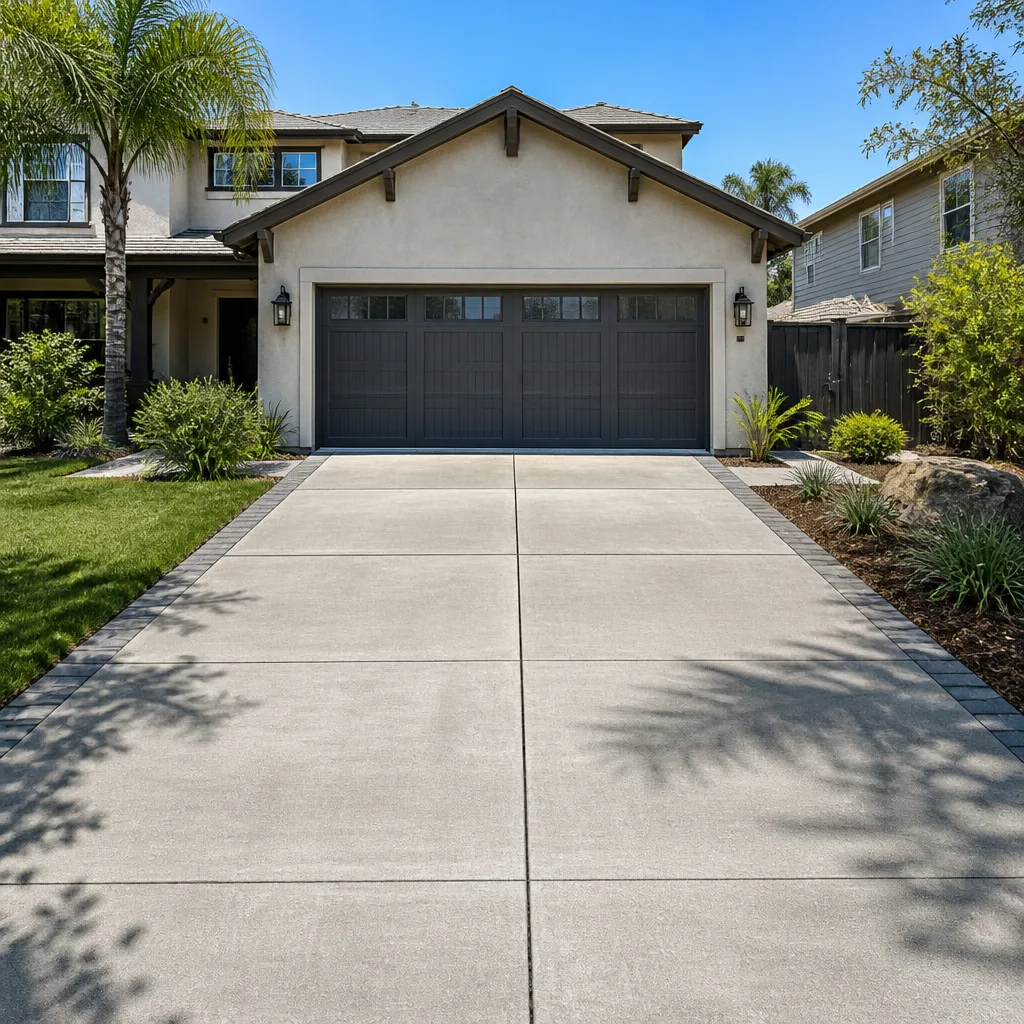
A door that rubs the jamb is telling you the frame has moved. Not the hinge, not the strike plate, not the weatherstripping. The frame.
Here’s the threshold that matters: if a door you could close cleanly 12 months ago now needs a shoulder to latch, the gap between door and frame has changed. Measure it. At the strike side, if the gap is wider at the top than at the bottom, or wider at the bottom than at the top, that’s asymmetry, and asymmetry in a door frame usually traces back to foundation or framing movement below it.
- Monitor: A door that sticks slightly in humid weather only.
- Act: A door that will no longer latch at all, or a gap that’s visibly wider at one end of the frame.
- Act quickly: Multiple doors on the same side of the house failing together, or windows that no longer sit square in their openings.
Lancaster temperature swings drive this hard. Winter nights in the valley drop to 25°F; summer afternoons push 105°F. That’s an 80-degree annual swing cycling through wood framing, stucco, and drywall every year. Materials expand and contract at different rates. Over a decade, the cumulative effect shows up first in the openings, because those are where every tolerance stacks up.
3. A Yard That Slopes Toward the House, Not Away
The soil directly around a Lancaster foundation should fall away from the wall at roughly 6 inches of drop per 10 feet of run. That’s the code expectation, and it’s also the difference between a foundation that drains and one that wicks.
You don’t need a level to check this. Stand at the wall, lay a 10-foot straight edge on the ground pointing away, and look at the gap under the far end. If it’s less than 5 inches, or if the ground is flat, or if it dips toward the wall anywhere along the run, you have a drainage problem that’s loading water into the soil right where you least want it.
The pooling threshold is measurable too. After a real Lancaster rain event, stand in the yard and watch where water sits. Any spot that holds more than a half-inch of standing water within three feet of the foundation for more than 24 hours is a drainage issue that will keep feeding the soil under the slab. We’ve fixed this most often in older tracts near the fairgrounds, where original grading has settled 15 and 20 years out and no one regraded the yard. A regrade and a properly set drainage swale typically run far less than the foundation repair that follows a decade of unmanaged pooling.
4. White Powder on the Stem Wall (Efflorescence)

Efflorescence is the powdery white salt deposit that appears on concrete, brick, or stucco when moisture migrates through the material and evaporates at the surface. It’s cosmetically ugly, but that’s not why we flag it. It’s a moisture map. The white powder tells you exactly where water is coming through.
The threshold we use: if efflorescence covers more than roughly 30% of the visible stem wall, or if it keeps returning after you scrub it off, moisture is actively migrating through the wall. That moisture is coming from somewhere – usually poor drainage on the outside, sometimes a plumbing leak on the inside, occasionally both.
- Monitor: A single patch under a downspout that clears up when you extend the downspout.
- Act: Efflorescence across 30% or more of the wall, or deposits that return within a season after cleaning.
- Investigate: Efflorescence combined with a musty smell inside, or with visible damp patches on interior drywall near the floor.
Lancaster’s dry climate makes efflorescence a reliable tell, because we don’t get enough humidity to cause it without a genuine moisture source. When we see it here, we take it seriously.
5. Roof and Siding Damage You Can Actually Measure
The visual signs of roof trouble in Lancaster look different from anywhere else in the state, because Santa Ana wind events drive debris across the valley with real force. Broken branches, palm fronds, and gravel from neighboring roofs land on shingles and tear the surface. Hail is rare here; wind-driven debris isn’t.
What to check after any significant wind event:
- Shingle granule loss: If you can see the fiberglass mat showing through on more than a few shingles, the surface is past its service life.
- Granules in the gutters: A handful of granules is normal. A full coffee can’s worth at the bottom of any gutter run means the roof is shedding.
- Soffit and fascia gaps: Any gap wider than 1/4 inch where soffit meets fascia lets wind-driven rain and pests past the weather barrier.
- Ceiling stains after rain: Even one faint ring on a Lancaster ceiling after a storm is a leak, not condensation.
We pulled one out of a garage over in the Westpark area last week where the whole south-facing slope was down to bare mat and the homeowners had assumed the “sandy” look was just desert dust. It wasn’t. The roof was two winters past a replacement, and the interior ceiling was already starting to show it.
The Cost Multiplier: What Waiting Actually Costs
Here’s the plain reason to measure instead of assume. Repairs in Lancaster don’t get cheaper with time. They get more expensive because the underlying damage keeps spreading. Three real categories, using rough Antelope Valley market ranges:
| Repair type | At first sign | 6 months later | 18 months later |
|---|---|---|---|
| Foundation crack stabilization | $1,800 – $3,500 | $3,500 – $6,500 | $7,500 – $14,000 |
| Yard drainage regrade + swale | $1,200 – $2,800 | $2,800 – $5,500 | $6,000 – $12,000 (typically now includes stem wall repair) |
| Partial roof repair (one slope) | $1,500 – $3,200 | $3,200 – $5,800 | $8,000 – $16,000 (often a full re-roof plus interior drywall) |
Those numbers are ranges, not quotes, but the shape of them is consistent: the “wait and see” option costs two to four times what acting at first sign costs. That’s the multiplier. It isn’t a scare tactic; it’s arithmetic on how water and movement travel.
One more category worth naming separately: pavers. If a driveway is sinking or a paver course has moved more than 3/8 inch out of plane, the base has failed under it. Repointing the pavers won’t hold; the base has to be rebuilt. We use Techo-Bloc and Cambridge Pavers for replacements most often, and we set them on a compacted aggregate base rather than over the old sand bed, because the second time around the customers have paid once and want it to last. If the driveway is showing these signs, our Driveway & Pavers in Lancaster page walks through the base prep and the paver lines we quote from.
How to Photograph and Log Warning Signs Correctly
Whether you call us, a structural engineer, your insurer, or all three, the same evidence makes all three conversations shorter. Here’s the protocol that actually works:
- Date-stamp every photo. Your phone does this by default. Turn the setting on if it’s off.
- Put a ruler next to the crack or gap. A crack photo without a scale is a guess. A crack photo with a ruler is a measurement.
- Take wide shots before close-ups. A close-up of a crack doesn’t tell anyone where in the house it is. A wide shot of the room, then a close-up, tells the whole story.
- Include something for scale beyond the ruler – a coin, a shoe, a hand – so the photo reads the same at any size.
- Log in a simple spreadsheet: date, location in the house, measurement, and a one-line description. Ten rows is enough.
- Keep the same reference point. If you measured from the left edge of the crack, measure from that same edge next time. Moving the reference point throws off the comparison.
This matters for a warranty or insurance dispute. If a failed repair turns into a claim, the dated record is the difference between a covered event and a “we can’t tell when it started” denial. The photo file is your baseline.
When to Call a Pro
Most of what’s in this article, a homeowner can measure and monitor. Two things they shouldn’t try to fix themselves:
- Anything involving the foundation structure itself. Underpinning, crack injection into a load-bearing wall, and stem wall repair all involve loads that can shift catastrophically if misdiagnosed.
- Roof work above the first story. Steep-slope repairs on a second-story Lancaster roof, and any work near the roof edge or a skylight, belong with a trained professional with the right fall protection. The height is the hazard, even on a moderate pitch.
If you’re in Lancaster and the sign you’re seeing is on the fence line, the driveway, or an addition you’re considering, those live on separate service pages: Fence Installation in Lancaster and Home Additions & ADU in Lancaster. If you’re not sure where to start, our Rowan Construction Group Lancaster home page lists all seven trades we cover.
What a Rowan Written Assessment Includes
When a homeowner calls about a warning sign, we don’t hand them a verbal opinion and a number. The assessment comes as a documented report: photographs of what we found, plain-language descriptions of the condition (substrate condition, shingle layer count, crack measurements, grading slope), and a flat written price with a written scope before any work begins. That’s Clause 1 of the Haven Standard. It’s not a process step; it’s the whole point.
If work does proceed and something changes mid-project, no change happens until the change order is signed. That’s the discipline that keeps projects within a few percent of the agreed price. Our crews are background-checked and uniformed, a live person answers the phone around the clock, and every visit ends with a documented photo record of what was found and what was done – not an optional add-on, a standard deliverable.
And if you’ve already got a written estimate from another contractor, bring it by. Our Free Second Opinion is a line-by-line review at no charge. We’ll tell you what the numbers mean and whether they hold up.
The Bottom Line
The warning signs in this piece are all measurable. Crack width, door-frame gap, yard slope, efflorescence coverage, granule loss, standing-water distance. None of them require guessing; all of them get more expensive with time. If you’ve been watching one of these signs for a few months and calling it normal, it’s time to get it looked at under a systematic process, not a handshake and a verbal promise.
If you’re in Lancaster and you’ve spotted one of these signs, Rowan Construction Group Lancaster offers free estimates. Call (844) 797-3312 and we’ll schedule an assessment, document what we find, and deliver a written price before any work starts.
Frequently Asked Questions
A foundation crack is serious once it reaches 1/8 inch wide or grows 1/16 inch over 90 days. Anything wider or actively growing is a structural issue rather than cosmetic settling. Measure with a crack gauge, photograph it with a ruler on the same date every month, and call (844) 797-3312 for a documented assessment if the number changes.
Lancaster’s caliche soil expansion, the 25°F-to-105°F thermal swing, and Santa Ana wind-driven debris are the three biggest accelerants. Caliche expands when wet and shrinks hard through our dry season; the annual temperature swing cycles wood framing against stucco at different rates; wind events drive debris that damages shingles and soffits. Together they push settling-looking symptoms into active deterioration faster than in coastal Southern California.
Monitoring, photographing, and measuring – yes. Structural repair, roof work above the first story, and stem wall fixes – no. Those involve loads or fall hazards that belong with a trained professional. For the safe-to-check stuff, log it and call (844) 797-3312 for a professional assessment rather than attempt the repair.
Depending on the category, we typically see $1,200 to $3,500 at first sign versus $6,000 to $16,000 if the same issue runs 18 months unmanaged. The gap is because water and movement spread. Call (844) 797-3312 for a written estimate on your specific situation – the second opinion is free if you’ve got a competitor’s quote in hand.
Written by the team at Rowan Construction Group Lancaster.
Need Construction Help?
Call Rowan Construction Group Lancaster - licensed & insured, here with fast after-hours help in Lancaster.
(844) 797-3312