Last updated November 17, 2026
Free written scope consultation - allowances, timeline, and change-order rules on paper before a single trade is scheduled
The Complete Driveway & Pavers Guide for Lancaster Homeowners
Most paver guides are written for temperate climates. Lancaster’s Mojave-edge soil expands and contracts at a rate that can shift a standard sand-set paver bed by up to half an inch in a single season, a fact most national guides never mention. Combine that with 100°F-plus summers and the occasional hard freeze in January, and you have a set of failure modes that generic advice simply doesn’t address. This guide covers the Lancaster-specific variables: the clay-caliche soil mix under your driveway, the base depth it demands, which materials survive the UV, what the City of Lancaster requires on permits, and what all of it costs in dollars per square foot.
Quick Answer
Driveway pavers in Lancaster typically cost $18 – $28 per square foot installed for concrete unit pavers and $30 – $50 per square foot installed for natural stone. The number that matters most isn’t the surface material, it’s the base: Lancaster’s expansive clay-caliche soil demands a compacted base of 6 – 8 inches, not the 4-inch standard used in milder markets, and skipping that step is why so many local driveways heave and shift within three to five years.
Styles & brands we work with
- Kitchen remodeling
- Bathroom remodeling
- Home additions & ADU
- Roofing
- Windows & doors
- Driveway & pavers
- Fence
Table of Contents
- Why Lancaster Soil Changes Everything
- Base Depth: The 6 – 8 Inch Rule
- Which Paver Materials Survive Lancaster UV
- What Pavers Cost in Lancaster, Line by Line
- Permits and the City of Lancaster Building & Safety Division
- HOA Rules in Westside Lancaster and Quartz Hill
- How a Proper Lancaster Installation Works, Step by Step
- Keeping a Driveway Healthy Through the Seasons
Why Lancaster Soil Changes Everything
The Antelope Valley sits on a mix of expansive clay and caliche, a calcium-carbonate hardpan that behaves like a layer of low-grade concrete a few feet under the surface. Expansive clay absorbs winter moisture and swells; caliche barely drains at all. When the two are layered, water pools on the caliche and pushes the clay above it, and a driveway built with a thin base rides that movement like a raft on a tide.
We’ve seen this most often in the older tracts around Lancaster Boulevard and the neighborhoods north of Avenue J, where driveways were poured or set on whatever base was already there. The symptoms follow a pattern: hairline cracks first, then rocking pavers, then depressions at the apron where the slab meets the street. By the time a homeowner calls us, the surface is doing what it was told to do by a base that was never adequate.
The fix isn’t exotic. It’s excavation to a depth that gets below the active soil zone, then a properly graded crushed aggregate base compacted in lifts. That base is what carries the load, not the pavers. A paver is a wear surface, roughly an inch and a half to two and three-eighths inches thick; the performance of your driveway is decided in the six to eight inches below it.
The same soil conditions affect other exterior work. If you’re planning fencing along the property line, the posts have to be set deep enough to get below the shrink-swell layer, which is one reason fence installation in Lancaster is a different job than it is in coastal markets.
Base Depth: The 6 – 8 Inch Rule
The industry standard base for a residential paver driveway in much of the country is four inches of compacted aggregate. In Lancaster, that’s too thin. Our soil movement will work a four-inch base loose within a couple of seasons, and the pavers above it will begin to telegraph the subgrade.
For Lancaster installations, we size the base to the traffic and the soil:
- Footpaths and patios: 4 inches of compacted base is often sufficient, since there’s no vehicle load.
- Residential driveways for cars and light trucks: 6 inches compacted, placed in two lifts.
- Driveways with heavy vehicles, RVs, or a steep slope: 8 inches, sometimes more, with a geotextile separation fabric between the subgrade and the base to keep clay from pumping up into the aggregate.
- Areas over known caliche: scarify the caliche surface first. Aggregate placed on smooth hardpan slides rather than locks.
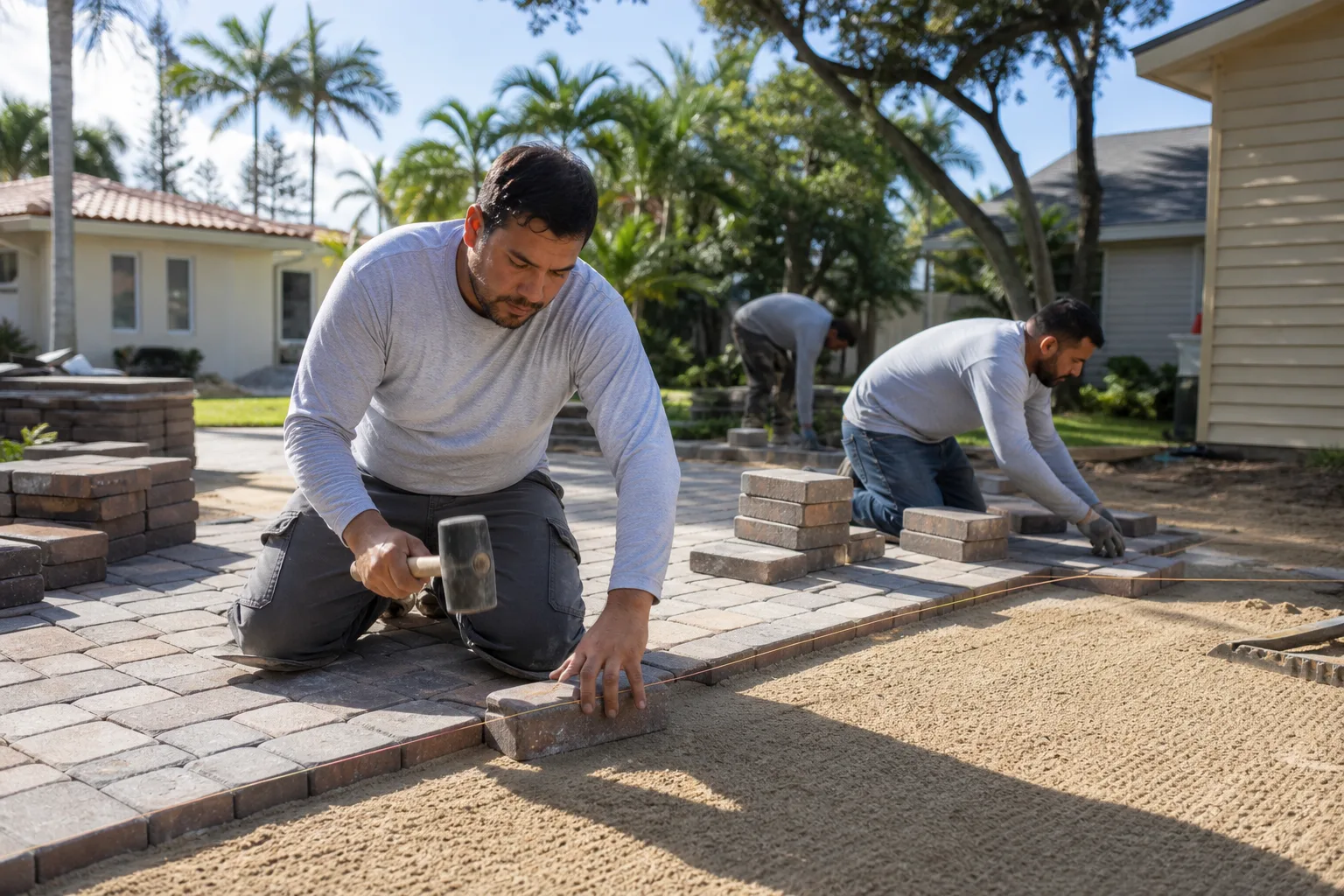
Compaction matters as much as depth. Base placed in one 8-inch lift won’t compact through its full thickness; the bottom stays loose. We place in 2- to 3-inch lifts and compact each one with a plate compactor before the next goes down. Then we check grade with a laser level to confirm a minimum slope of about 2 percent away from the structure, so water leaves the driveway instead of pooling against the garage slab.
Homeowners often ask why a neighbor’s driveway is failing when it looks identical to theirs. The answer is almost always in the layers you can’t see. Same pavers, different base, different outcome.
Which Paver Materials Survive Lancaster UV
Lancaster gets roughly 280 sunny days a year and summer surface temperatures on an unshaded driveway can push past 140°F. That combination is brutal on pigments and on materials with high water absorption. Here’s how the common options hold up locally.
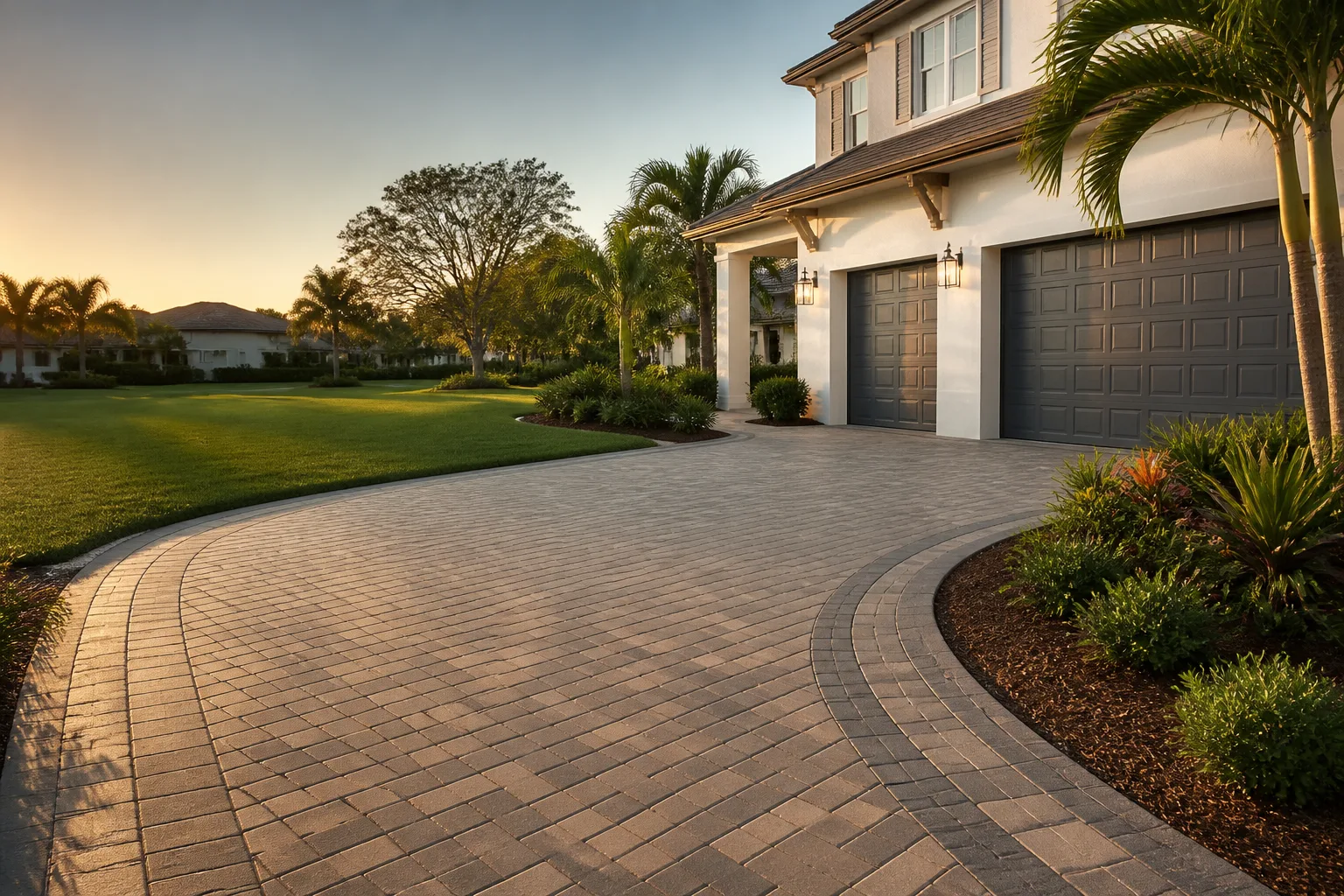
- Concrete unit pavers (interlocking pavers): The workhorse for Lancaster. Modern pavers from manufacturers like Belgard and Techo-Bloc use through-body pigments and are rated for freeze-thaw, and they hold color well under UV. Expect 20-plus years with routine care. Best value per square foot.
- Clay brick pavers: Excellent UV stability because the color is fired in, not applied. They handle heat well. The catch is that some softer bricks absorb water and can spall in a hard freeze if they weren’t rated for it, so specify a paver rated for severe weathering, not a thin veneer brick.
- Natural stone (travertine, flagstone): Genuine travertine is cooler underfoot than concrete, which matters on a Lancaster summer afternoon, but it’s porous and needs sealing. Lower-grade travertine and some imported limestones can spall within three to five years in our climate. Stone is the premium choice and priced accordingly.
- Porcelain pavers: High-density porcelain (often 20mm thick for driveways) is nearly non-absorbent, holds color, and resists staining. It’s excellent under UV. The trade-off is cost and a smaller margin for installation error, since porcelain is less forgiving of a mediocre base.
What fades or fails locally: thin stamped-overlay concrete, painted concrete, and any paver with a surface-applied color coat rather than through-body pigment. Those are the surfaces you see chalky and pale after a few Antelope Valley summers. If a bid quotes you a number well below the concrete-paver range, ask what the pigment and the base actually are.
What Pavers Cost in Lancaster, Line by Line
Here are the installed ranges we work from in Lancaster. These are complete, installed numbers: excavation, haul-off, base, compaction, pavers, edge restraint, and polymeric joint sand.
| Line Item | Typical Lancaster Range |
|---|---|
| Concrete unit pavers, installed | $18 – $28 per sq ft |
| Clay brick pavers, installed | $22 – $32 per sq ft |
| Natural stone (travertine/flagstone), installed | $30 – $50 per sq ft |
| Porcelain pavers, installed | $35 – $55 per sq ft |
| Extra base depth beyond 6 inches | $3 – $6 per sq ft, per additional 2 inches |
| Geotextile separation fabric | $1 – $2 per sq ft |
| Old driveway demolition and haul-off | $2 – $5 per sq ft |
| Sealing (natural stone or after install) | $2 – $4 per sq ft |
A typical Lancaster two-car driveway runs about 400 to 600 square feet. At concrete-paver pricing, that’s roughly $7,200 to $16,800 installed before any demo or extra base. A natural-stone driveway of the same size lands around $12,000 to $30,000. Those ranges are wide because the soil under your specific lot drives the base cost, and the base is where Lancaster projects diverge from national averages.
We put the price in writing before anyone picks up a tool, with a written scope and a written warranty, so you can compare bids line by line rather than by a single lump figure. If you have a competitor’s estimate in hand, we’ll review it with you at no charge through our free second-opinion offer. For a deeper look at the specific service, see Driveway & Pavers in Lancaster.
Permits and the City of Lancaster Building & Safety Division
Not every driveway project in Lancaster needs a permit, but the ones that do get flagged when a neighbor or a future buyer’s inspector notices the work. The dividing lines in our experience:
- Like-for-like replacement of an existing driveway at the same footprint and grade, with no change to drainage or the public right-of-way, is generally treated as routine maintenance. Confirm with the City before assuming.
- New driveway construction, widening, or a change in grade typically requires a permit through the City of Lancaster Building & Safety Division, and may require a grading permit if the work involves moving significant soil or altering drainage patterns on the lot.
- Work in the public right-of-way (the apron between your property line and the street) needs an encroachment permit, and the apron itself is often built to a City standard for thickness and slope.
- Drainage changes that send water toward a neighbor’s lot or across a property line can trigger review even when the paving itself is small.
Ask any contractor whether the City of Lancaster requires a permit for your specific scope before the quote is signed. A contractor who pulls permits and passes inspections puts that in writing. One who says “you don’t need one” without checking is telling you something about how the rest of the job will go. Under our Haven Standard, the scope is documented before work begins, permits included.
HOA Rules in Westside Lancaster and Quartz Hill
Many Lancaster-area communities have HOA architectural review, and the requirements vary enough that a paver selection approved in one tract may be rejected two streets over. The pattern we see:
- Material and color approval: Most HOAs require an architectural application with a paver sample and a color chip before installation. Quartz Hill and the newer Westside Lancaster tracts are the strictest we encounter, often specifying earth-tone palettes and prohibiting bright or high-contrast pavers.
- Setback from property lines: Driveways typically must stay a minimum distance from the side property line, and that distance sometimes differs from the zoning setback. Read your CC&Rs, not just the city code.
- Matching existing hardscape: If your HOA has a standard driveway material, changing it usually needs board approval and sometimes a neighbor-notification period.
- Apron and street-front rules: Some communities control the apron material and finish to keep the streetscape uniform.
The practical advice: get your HOA approval in writing before the first paver is ordered, because restocking a custom paver run is expensive and slower than a standard product. We build the HOA sample-and-approval step into the project schedule so it doesn’t hold up the install.
How a Proper Lancaster Installation Works, Step by Step
This is the sequence we follow on a Lancaster paver driveway. It’s written so you know what to expect on site, not so you can run the equipment yourself. Excavation and compaction are heavy, physical work with real injury risk, and a base built wrong is invisible until it fails.
- Layout and utility check. Mark the footprint, confirm it against the approved plan and HOA approval, and call 811 to locate underground utilities before a shovel enters the ground.
- Excavation. Remove the old surface and dig to finish grade minus the paver thickness and the base depth. On a Lancaster lot with clay-caliche, this is where we discover what the subgrade actually is.
- Subgrade prep. Scarify and compact the exposed soil. If caliche is present and intact, break its surface so the base can lock. Place geotextile fabric where the soil is especially active.
- Base placement and compaction. Install crushed aggregate in 2- to 3-inch lifts, compacting each lift. Check grade continuously.
- Edge restraint. Set a rigid edge (spiked or concrete-embedded) around the perimeter so the pavers can’t spread under load.
- Bedding layer and pavers. Screed a thin bedding sand, lay the pavers to the chosen pattern, and cut the edges.
- Joint sand and compaction. Sweep polymeric joint sand into the joints, then compact the field to seat the pavers and lock the sand.
- Final clean and documentation. Clean the surface and take the photo record. You get pictures of the base, the compaction, and the finished field, so the work is documented, not just promised.
If the job includes a new structure at the end of the driveway, an ADU or garage addition, the paving is often sequenced together with the build. That’s covered under Home Additions & ADU in Lancaster, and it’s a good reason to plan the driveway with the structure rather than after it.
Keeping a Driveway Healthy Through the Seasons
A well-built Lancaster driveway needs little, but a few habits extend its life:
- Replenish joint sand as needed. Polymeric sand settles over time. Top it off before winter so water doesn’t get under the pavers.
- Seal natural stone every two to three years. Travertine and flagstone are porous. Sealing slows UV fading and keeps stains from setting.
- Manage water. Keep gutter downspouts directed away from the driveway edge, and watch the apron for erosion after a hard rain. Water is the main enemy of a base.
- Inspect after winter. A late freeze can move a paver or crack edge restraint. Catch a single rocking paver before it becomes a depression.
- Keep heavy loads off the edges. A loaded trailer parked half on the driveway and half on soil stresses the edge restraint more than the field.
For a broader view of how paving fits with the rest of a home’s exterior work, our Rowan Construction Group Lancaster home page lays out the seven trades we handle under one written-price standard.
Common Mistakes to Avoid
- Using the four-inch base standard. It’s the national default and it’s wrong for Lancaster. A four-inch base over active clay-caliche will telegraph soil movement within a couple of seasons. Insist on 6 – 8 inches on a driveway.
- Skipping the geotextile fabric. Without separation fabric, fine clay particles pump up into the aggregate base and the base loses its structural integrity. It’s a small line item that protects the whole investment.
- Choosing pavers on looks alone. A paver with surface-applied color and high absorption looks great on a showroom board and chalky in an Antelope Valley summer. Ask about through-body pigment and freeze-thaw rating.
- Ignoring HOA approval until the pavers arrive. Restocking a custom color in Quartz Hill or Westside Lancaster can add weeks and cost. Get the architectural approval in writing first.
- Assuming no permit is needed. Widening a driveway or changing its grade can trigger a City of Lancaster permit or even a grading permit. Confirm the scope with Building & Safety before work.
- Compacting the base in one thick lift. A single 8-inch lift leaves the bottom loose. Proper compaction happens in thin layers, each one checked.
- Paying for a lump-sum bid with no line items. A price you can’t break down is a price you can’t compare. A written, line-item quote shows you where the base and demo money goes.
See the difference
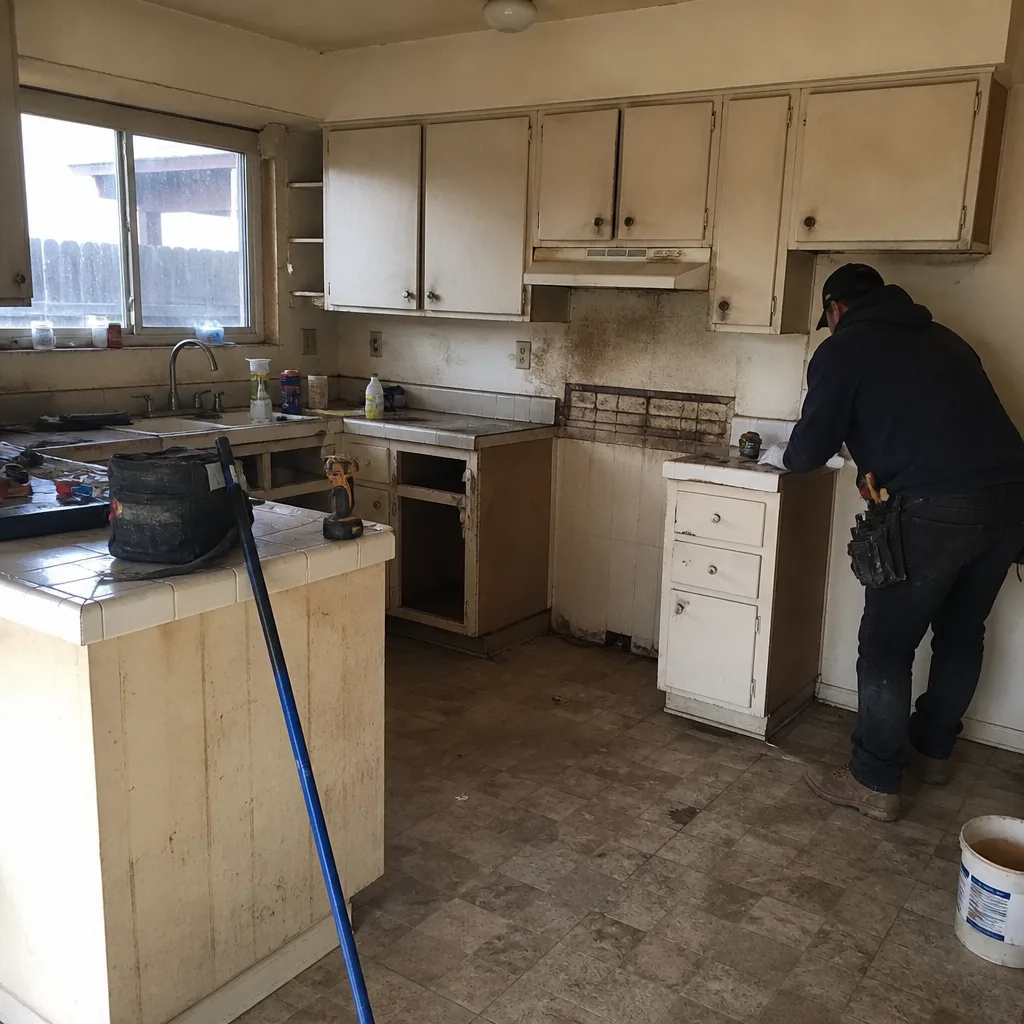 Before
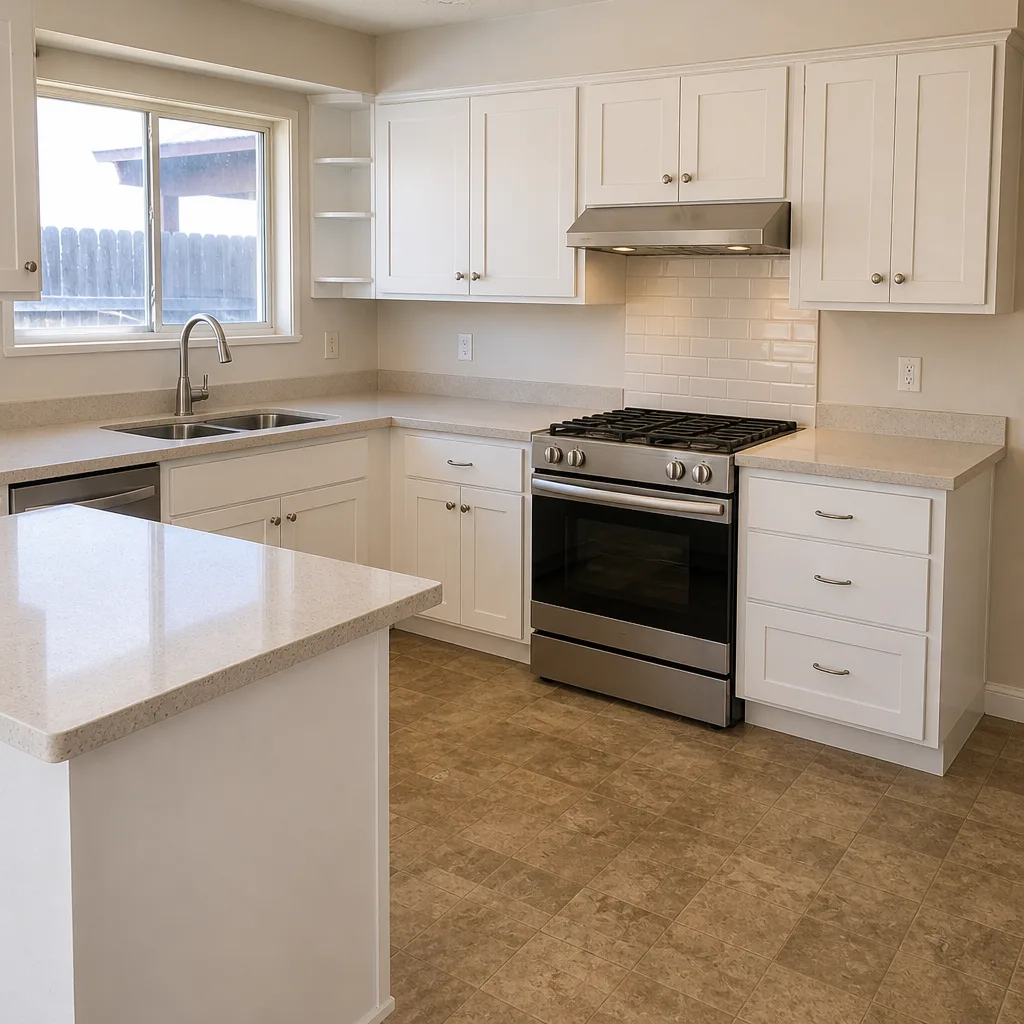 After
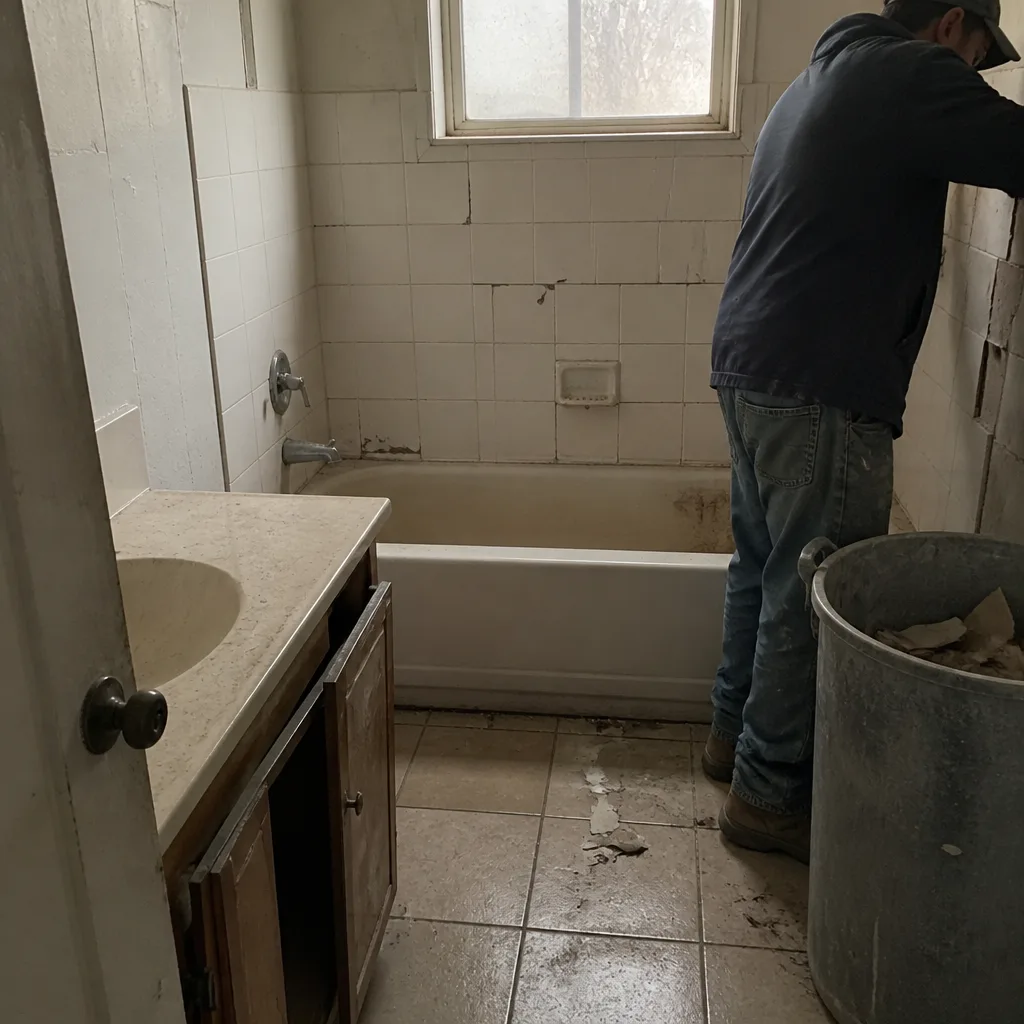 Before
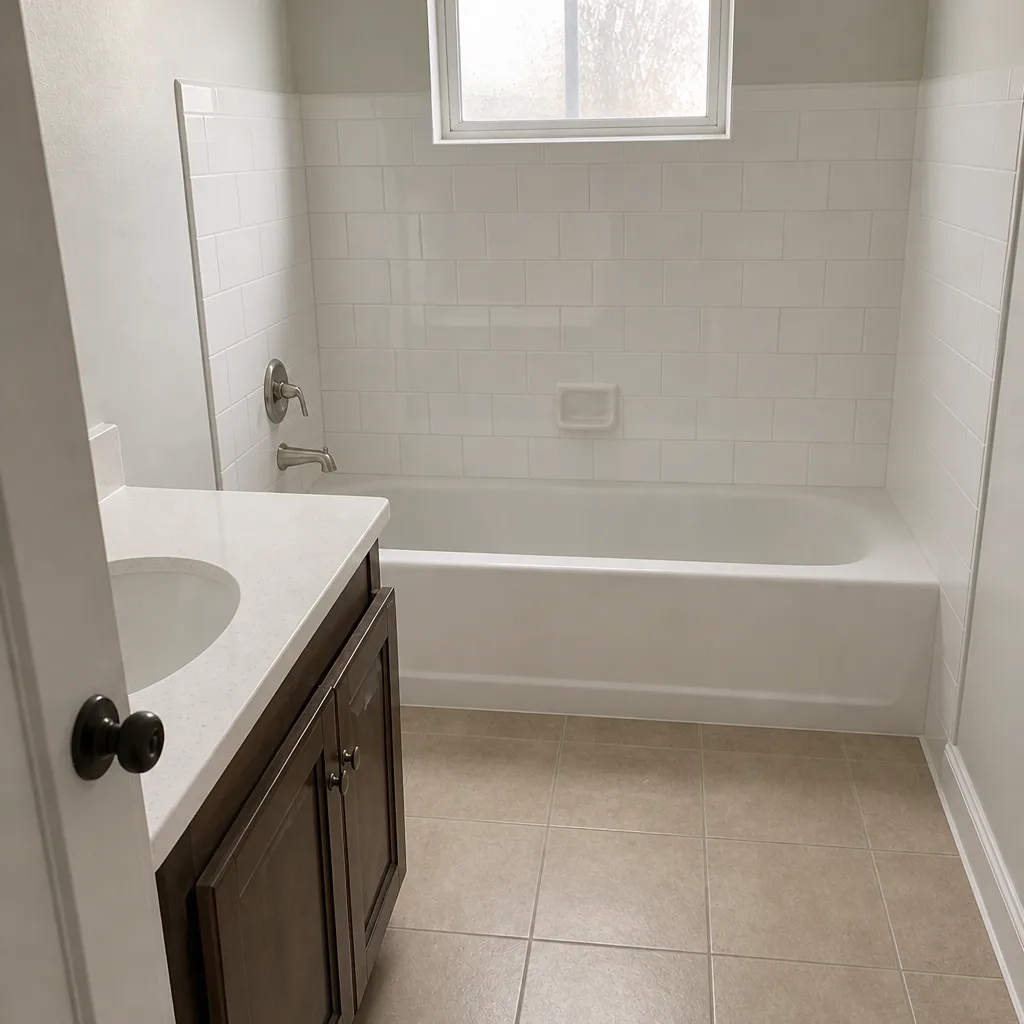 After
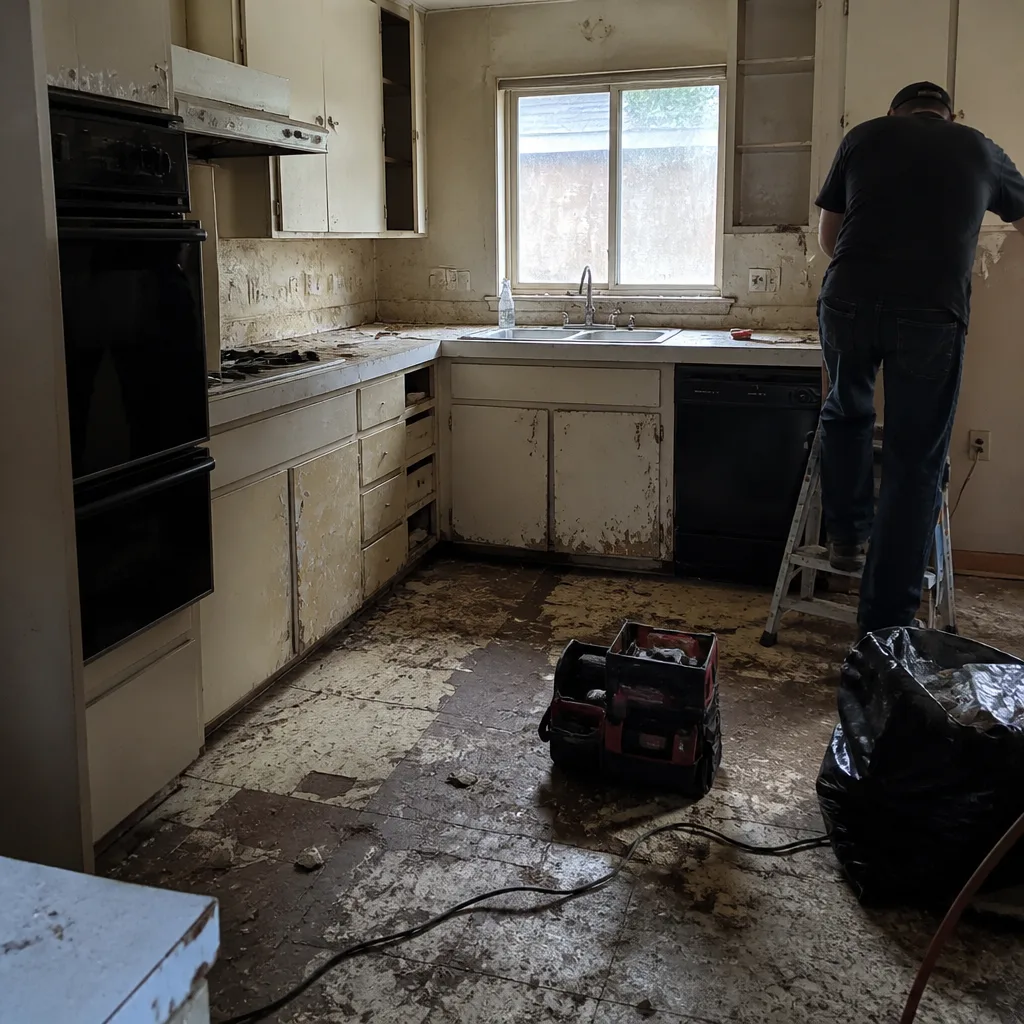 Before
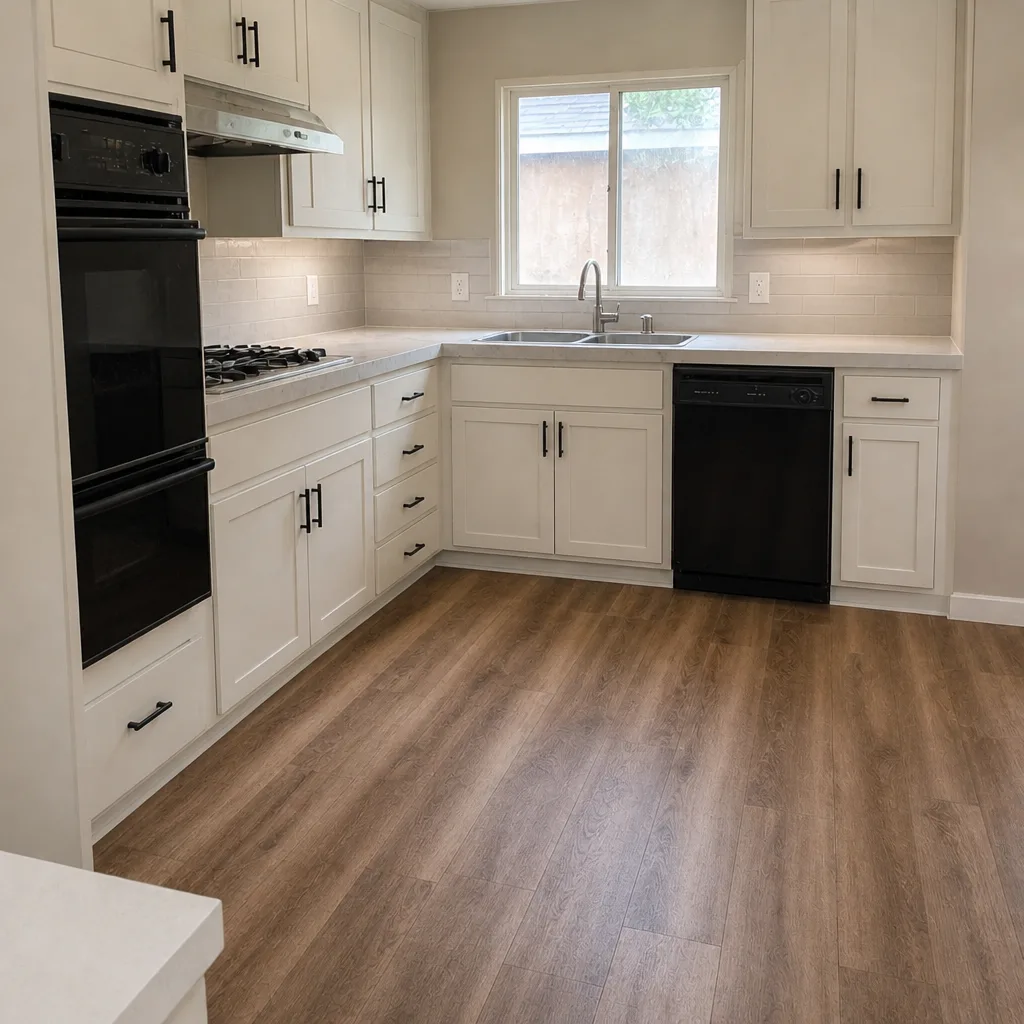 After
When to Call a Professional
Some driveway problems are cosmetic and some are structural, and the difference usually isn’t visible from the surface. Call a professional when pavers are rocking, when you see depressions that hold water, when the apron is separating from the street, or when cracks and heaving suggest the base is gone. Any project involving excavation, compaction equipment, or a change in grade is physical work with real injury risk, and a base built wrong is expensive to redo. If you’re widening a driveway, planning a garage or ADU at the end of the apron, or making a material change your HOA controls, get a pro involved before the first paver is ordered. Rowan Construction Group Lancaster offers free estimates in Lancaster, with a written price before any work starts. Call (844) 797-3312 to schedule yours.
Frequently Asked Questions
Concrete unit pavers in Lancaster run $18 – $28 per square foot installed, and natural stone runs $30 – $50 per square foot installed, with a typical two-car driveway of 400 – 600 square feet landing between about $7,200 and $16,800 for concrete pavers. The base depth your soil requires is the biggest variable. Call (844) 797-3312 for an exact quote; estimates are free.
Like-for-like replacement at the same footprint and grade is generally treated as routine, but new construction, widening, grade changes, or any work in the public right-of-way can require a permit through the City of Lancaster Building & Safety Division, sometimes a grading permit. Confirm your specific scope before work begins. Call (844) 797-3312 and we’ll walk through what your project triggers.
Pavers shift in Lancaster because the clay-caliche soil beneath them expands and contracts with winter moisture and summer heat, and a base that’s too thin or wasn’t compacted in lifts can’t absorb that movement. Expansive clay under a standard four-inch base is the most common cause we find. Call (844) 797-3312 to have a failing driveway assessed.
Concrete unit pavers with through-body pigment and clay brick pavers with a severe-weathering rating hold up best under Lancaster’s UV and heat, and high-density porcelain is excellent if the budget allows. Natural stone is cooler underfoot but needs regular sealing, and lower-grade travertine or limestone can spall within three to five years. Call (844) 797-3312 for a material recommendation based on your lot.
A typical Lancaster paver driveway of 400 – 600 square feet takes about three to five working days, with excavation and base compaction taking as long as or longer than laying the surface, and HOA approval adding time before work starts. We give you a written schedule with the quote. Call (844) 797-3312 to schedule a free estimate.
Your price doesn’t change without a signed change order. We deliver a flat written price with a written scope before work starts, and no change proceeds until you sign off on it, which is how our projects stay within a few percent of the agreed number. Call (844) 797-3312 for a written quote.
The Bottom Line
Driveway pavers in Lancaster live or die by what’s under them. The surface material gets the attention, but the 6 – 8 inch compacted base, the separation fabric, and a proper lift-by-lift compaction schedule are what survive our clay-caliche soil and temperature swings. Choose a paver with through-body pigment and a freeze-thaw rating, confirm your HOA and City permit requirements before ordering, and insist on a written, line-item price you can compare. Do those things and a paver driveway will outlast the pavement down the street. Skip them and you’ll be repairing it within five years.
The evidence is in the documentation: a written price, a written scope, a written warranty, a signed change order for any change, and a photo record of every visit. That’s what we deliver on every project. Call (844) 797-3312 for a free estimate and ask for the written number before anyone picks up a tool.
Written by the team at Rowan Construction Group Lancaster.