Last updated November 17, 2026





Free written scope consultation - allowances, timeline, and change-order rules on paper before a single trade is scheduled
Fence Installation Maintenance Schedule: What to Do and When
Applying a film-forming wood stain to a fence in July in Lancaster, when surface temperatures can push past 130°F, causes the stain to blister before it ever cures. The same product applied in October can hold for three to four years. The product isn’t the variable here. The timing is. Most maintenance guides hand you a generic list and skip the part that actually decides whether your fence lasts fifteen years or seven. This guide gives you material-specific tasks on a Lancaster climate calendar, from post-wind-season inspection in December to vegetation clearance before fire season in June, so you can stop guessing and start working with the weather instead of against it.
Quick Answer
Maintain a wood fence in Lancaster on a seasonal calendar, not a whenever-you-remember-one: inspect posts and hardware after wind season in December, apply penetrating oil or stain only in the October – November or March – April windows (never summer), tighten hardware and check latches in spring, and clear vegetation from post bases in June before fire season. Vinyl fences need an annual UV-inhibitor spray and hardware checks but must never be pressure washed above 1,500 PSI. Log every task with the date, product, and dilution ratio so you have documentation for warranty claims and accurate future repairs.
Styles & brands we work with
- Kitchen remodeling
- Bathroom remodeling
- Home additions & ADU
- Roofing
- Windows & doors
- Driveway & pavers
- Fence
Table of Contents
- Your Lancaster Season-by-Season Maintenance Calendar
- Cedar, Pressure-Treated Pine, and Redwood: Three Different Maintenance Plans
- How to Inspect Post Bases With a Screwdriver Probe
- Vinyl Fence Maintenance: What It Needs and What Damages It
- Building a Fence Maintenance Log That Holds Up
- Why Timing Beats Product Every Time in the Antelope Valley
- Common Mistakes to Avoid
- When to Call a Professional
Your Lancaster Season-by-Season Maintenance Calendar
A fence in Lancaster lives through a hard climate: punishing summer UV, spring and fall wind events that load every post and rail, and the dry, fire-prone conditions that arrive by late spring. Your maintenance calendar should follow those pressures, not a generic four-season template built for a milder place.
Here’s the schedule we recommend for Antelope Valley properties, in order of the year:
- December (post-wind-season inspection): After the fall and early-winter wind events, walk the full fence line and check every post, rail, and picket for movement, leaning, loose fasteners, and popped nails. This is when wind damage is freshest and easiest to trace.
- January – February: Make any structural repairs flagged in December while the weather is cool and wood is relatively stable. Replace cracked pickets, re-drive or replace fasteners, and reset any post showing movement.
- March – April (spring treatment window): Apply penetrating oil or stain during the cooler, moderate stretch before the heat sets in. This is one of only two safe application windows in Lancaster.
- May: Check gates, hinges, latches, and self-closing hardware before the busy outdoor season. Tighten and lubricate.
- June (vegetation clearance before fire season): Clear grass, weeds, and shrub growth away from post bases and along the bottom rail. Dry vegetation against a wood fence is a genuine fire-load concern in the Antelope Valley.
- July – September: Inspection only. Do not apply stains, sealers, or oils. Surface temperatures on sun-exposed wood in Lancaster routinely exceed 130°F, and film-forming products will blister or fail before curing.
- October – November (fall treatment window): The second and often better application window. Cooler air and lower UV load let penetrating products soak in and cure properly.
If you’d rather have a professional handle the structural side while you keep the calendar, our Fence Installation in Lancaster team builds and repairs to the same seasonal logic. And if the fence is part of a larger yard or hardscape plan, it pairs naturally with Driveway & Pavers in Lancaster work scheduled in the same shoulder seasons.
Cedar, Pressure-Treated Pine, and Redwood: Three Different Maintenance Plans
Treating cedar, pressure-treated pine, and redwood as if they’re the same wood is the fastest way to waste money on the wrong product. Each has a different density, natural oil content, and response to moisture, which changes what you apply and how often.
Cedar is naturally rot- and insect-resistant and holds a warm tone, but it greys under Lancaster’s UV load faster than anything else. Cedar does best with a penetrating oil that feeds the wood rather than a film-forming surface sealer that sits on top and peels. Plan on a penetrating oil application every two to three years, applied only in the March – April or October – November window. Expect roughly $1.50 – $2.50 per linear foot in product cost for a quality penetrating oil, depending on coverage and how porous the wood has become.
Pressure-treated pine is the workhorse and the most common choice in Lancaster subdivisions. New pressure-treated lumber needs to dry and stabilize for several weeks to months before any finish goes on, or the finish traps moisture and fails. Once dry, a penetrating oil or a breathable semi-transparent stain works well; reapply every two to three years. Product cost runs roughly $1 – $2 per linear foot.
Redwood is the most naturally weather-stable of the three and needs the least aggressive treatment. A UV-inhibiting penetrating oil every three to four years preserves its color; left bare, it weathers to a silver-grey that many homeowners actually prefer. Film-forming sealers are the wrong call on redwood because they trap moisture and can lift the grain. Expect roughly $2 – $3.50 per linear foot for a redwood-appropriate penetrating oil.
One rule cuts across all three: penetrating oils and breathable stains outperform heavy film-forming sealers in this climate, because a film traps moisture that the dry Antelope Valley air would otherwise pull out. When a fence is part of a bigger build, our Rowan Construction Group Lancaster home team can scope the fence alongside the rest of the project so the material and finish decisions stay consistent.
How to Inspect Post Bases With a Screwdriver Probe
Post bases fail from the ground up, and the failure is almost always invisible from standing height. A simple screwdriver probe tells you whether a post is sound or on its way out, and it takes about a minute per post.
- Probe at the base, just above grade. Push a sturdy flathead screwdriver firmly into the post about an inch above the soil line, at a few different points around the circumference.
- Listen and feel. Firm, sound wood resists the screwdriver and gives a solid, high-pitched tap. Soft or punky wood lets the blade sink in with little resistance and gives a dull, hollow thud.
- Check for moisture and staining. Dark water staining, visible rot, or a spongy feel around the base all point to moisture intrusion even if the wood still feels firm.
- Rock the post. A post that moves when you push it side to side, or shows a widening gap at the soil line, is already compromised at the footing.
Now the judgment call. If the screwdriver sinks in easily more than about a quarter inch, or the wood is soft across a broad patch and the post rocks even slightly, that’s a preemptive post replacement rather than watchful waiting. Soft wood at the base is a structural failure in progress, and in Lancaster’s wind events a compromised post is the one that lets go. If the wood is firm, resists the blade, and the post is solid, log it as “sound” and check again next year.
When probing turns up soft posts, professional replacement with a properly set footing solves it for good, which is why we fold it into our fence installation repair work rather than patching over a bad base.
Vinyl Fence Maintenance: What It Needs and What Damages It
Vinyl fences are sold as low-maintenance, and they mostly are, but “low” isn’t “none.” In Lancaster’s high-UV climate, vinyl needs a little care to keep its color and stay mechanically sound, and a few common habits will wreck it faster than neglect would.
What vinyl actually needs:
- An annual UV-inhibitor spray to slow the sun’s bleaching effect, which is real under the Antelope Valley sun.
- An annual hardware and fastener check, since wind vibration can loosen posts, rails, and gate hardware over time.
- Routine panel-alignment checks; a panel that has slipped or separated is easier to reseat early than after a wind event widens the gap.
- Occasional gentle washing with mild soap and water to remove dust and pollen.
What damages vinyl:
- Pressure washing above 1,500 PSI, which can gouge the surface, force water behind panels, and strip the finish. Keep it well under that, ideally a low-pressure garden spray.
- Petroleum-based cleaners and solvents, which can dull, stain, or chemically attack the vinyl surface. Stick to mild soap.
- Abrasive scrubbers that scratch the sheen and leave dull patches that catch dirt.
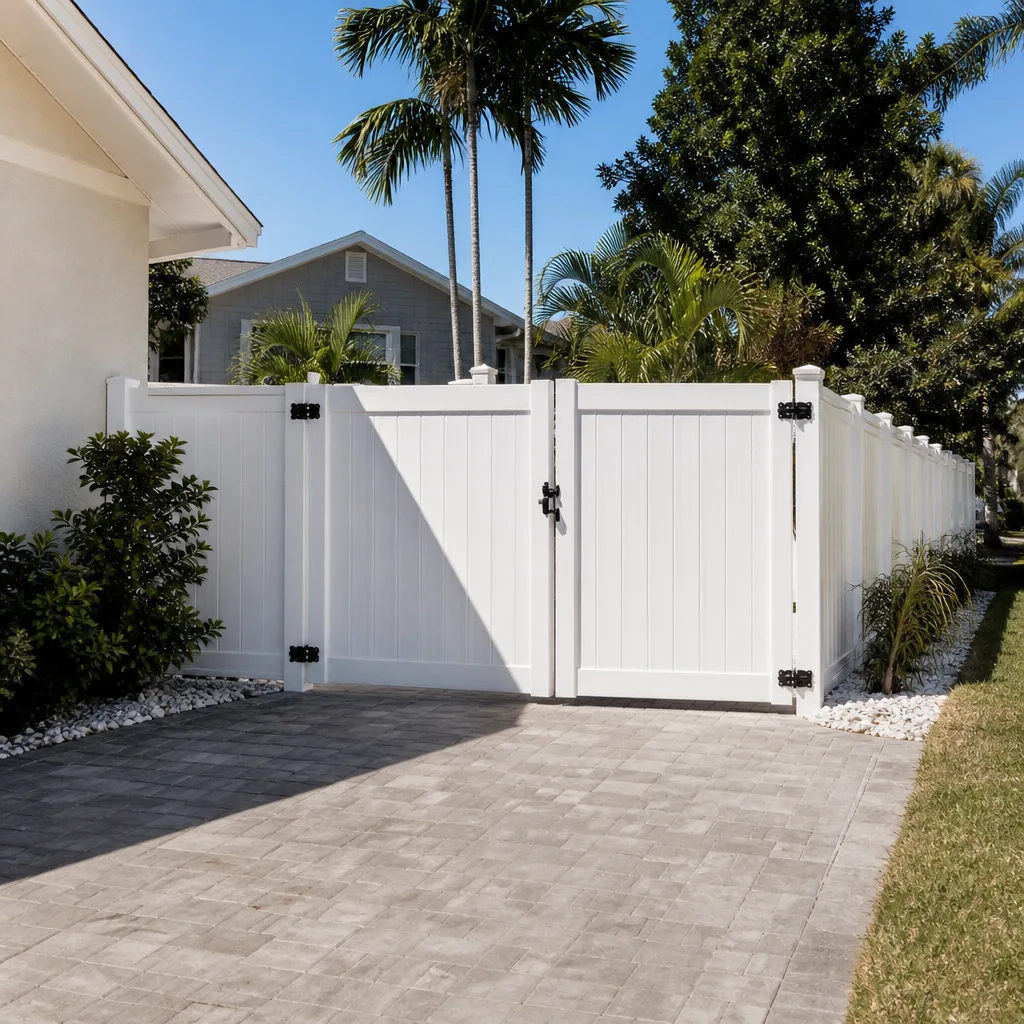
Quality vinyl systems like those from Bufftech and Ameristar hold up well in this climate when cared for this way. If you’re weighing vinyl against wood for a new build, our Lancaster fence installation team can lay out the trade-offs in writing before you commit.
Building a Fence Maintenance Log That Holds Up
A maintenance log is the one piece of documentation that turns scattered chores into a record you can actually use, whether you’re filing a warranty claim, selling the home, or scoping a future repair with a contractor. Keep it simple with three fields.
- Date. Every task gets a date. This establishes the timeline for warranty claims, which often hinge on showing that proper maintenance was performed at the right intervals.
- Task performed. Record exactly what you did: “probed post bases,” “applied penetrating oil to south run,” “tightened gate hinges,” “cleared vegetation from post bases.” Specificity is what makes the log useful later.
- Product used with dilution ratio. Name the product and mix ratio, e.g. “Penetrating oil, brand X, applied as supplied” or “mild soap solution, 1 oz per gallon.” The dilution ratio matters because a too-strong mix can damage a surface and a warranty reviewer will want to see what was applied.
Two more columns pay off: a “condition noted” field for anything you spotted but didn’t fix (a post beginning to soften, a panel starting to slip), and a photo reference number tying the entry to a dated photo. When you later hire a contractor, a log like this lets them scope accurately instead of guessing, and it’s exactly the kind of documented record that makes a repair quote honest. Our fence installation and repair work is backed by a documented photo record on every visit for the same reason: evidence beats a verbal account.
Why Timing Beats Product Every Time in the Antelope Valley
The single biggest maintenance mistake in Lancaster isn’t choosing the wrong product. It’s applying the right product at the wrong time. Surface temperatures on sun-exposed wood can exceed 130°F in July, and a film-forming stain or sealer applied under those conditions skins over and blisters before it cures, then peels within a season. The product was fine. The schedule wasn’t.
Wood also moves with temperature and moisture. Apply a finish when the wood is at one extreme of expansion or contraction and you lock in stress that shows up later as checking and peeling. The shoulder seasons, October – November and March – April, give you moderate temperatures and lower UV load, which is when both the wood and the product behave predictably. That’s why the same stain that fails in summer can hold three to four years when applied in October.
Lancaster’s wind adds a second timing layer. Wind events load posts and rails, so inspection belongs right after wind season, not months later when damage has had time to worsen. And fire season makes June the deadline for clearing dry vegetation from post bases, not an afterthought. A Home Additions & ADU in Lancaster project that shares a property line with a fence benefits from the same calendar discipline: schedule the work when the weather cooperates and the documentation holds up.
Common Mistakes to Avoid
- Staining or sealing in summer. Lancaster’s July surface temperatures blister film-forming products before they cure. Wait for the October – November or March – April window.
- Using a film-forming sealer on cedar or redwood. A film traps moisture that the dry air would otherwise pull out, causing peeling and grain lift. Penetrating oils suit these woods better.
- Finishing brand-new pressure-treated lumber too soon. It needs weeks to months to dry and stabilize. Coating wet treated wood traps moisture and fails early.
- Pressure washing vinyl above 1,500 PSI. It gouges panels, forces water behind them, and strips the finish. Use low pressure and mild soap.
- Skipping the post-base probe. Soft wood at the base is an invisible structural failure. A one-minute screwdriver probe each year catches it before a wind event does.
- Letting vegetation grow against the fence into fire season. Dry grass and shrubs against a wood fence add fire load. Clear them by June.
- Maintaining without a log. No dates, products, or dilution ratios means no documentation for warranty claims and fuzzy scoping for future repairs.
When to Call a Professional
Some tasks are simple homeowner maintenance: applying penetrating oil in the shoulder season, tightening a hinge, spraying a UV inhibitor on vinyl. Others call for a trained eye. If your screwdriver probe finds soft, punky wood at multiple post bases, if posts are leaning or rocking, if a whole fence run is failing after a wind event, or if the fence needs full replacement, that’s professional work. Post footing depth, wind load, and material selection are decisions that affect how the fence performs for the next decade, and getting them right the first time costs less than repeated repairs.
Rowan Construction Group Lancaster offers free estimates in Lancaster. Every quote is a flat written price with a written scope before any work begins, backed by our 365-Day Done Right Promise and a documented photo record on every visit. Call (844) 797-3312 to schedule your free estimate.
See the difference
 Before
 After
 Before
 After
 Before
 After
Frequently Asked Questions
Apply stain or penetrating oil in Lancaster only during the October – November or March – April windows, never in summer. July surface temperatures on sun-exposed wood can exceed 130°F and cause film-forming products to blister before they cure. The same product applied in October can last three to four years. Call (844) 797-3312 for an exact quote on professional fence work; estimates are free.
Cedar needs a penetrating oil application every two to three years, pressure-treated pine every two to three years once it’s dry and stable, and redwood every three to four years. Avoid film-forming sealers on cedar and redwood, which trap moisture. Product cost runs roughly $1.50 – $2.50 per linear foot for cedar, $1 – $2 for pine, and $2 – $3.50 for redwood.
Keep pressure washing well under 1,500 PSI on vinyl, ideally a low-pressure garden spray with mild soap. Higher pressure gouges the surface, forces water behind panels, and strips the finish. Avoid petroleum-based cleaners entirely, and apply a UV-inhibitor spray annually under Lancaster’s strong sun.
Probe just above the soil line with a screwdriver. Firm wood resists the blade and gives a solid tap; soft, punky wood sinks easily and gives a dull thud. If the blade sinks more than about a quarter inch across a broad patch or the post rocks, plan a preemptive replacement. If it’s firm, log it as sound and check next year.
Vinyl systems from brands like Bufftech and Ameristar hold up well with an annual UV-inhibitor spray and hardware checks. Among woods, redwood is the most naturally weather-stable, cedar greys fastest under UV and needs regular oil, and pressure-treated pine is the durable, economical workhorse. Call (844) 797-3312 to talk through materials for your specific lot.
No. Every Rowan project is quoted with a flat written price and written scope before work begins, and no change proceeds without a signed change order. That discipline is why our projects finish within a few percent of the agreed cost. You can also bring a competitor’s written estimate for a free second opinion reviewed line by line. Call (844) 797-3312 to schedule your free estimate.
The Bottom Line
Fence maintenance in Lancaster is a timing problem as much as a product problem. Follow a seasonal calendar keyed to wind season, fire season, and the two safe application windows; match the product to cedar, pressure-treated pine, or redwood and keep film-forming sealers off the naturally oily woods; probe post bases with a screwdriver each year and replace preemptively when wood goes soft; give vinyl its UV spray and keep pressure washing under 1,500 PSI; and log every task with date, product, and dilution ratio. Do those five things and the same product that would have failed in July holds for years.
If you’d rather have a documented, warrantied professional handle the repairs and replacements, Rowan Construction Group Lancaster is ready. Call (844) 797-3312 to schedule your free estimate, with a flat written price before any work begins.
Written by the team at Rowan Construction Group Lancaster.