Last updated November 17, 2026
Free written scope consultation - allowances, timeline, and change-order rules on paper before a single trade is scheduled
How Long Does Fence Installation Take? Timelines and What to Expect
A 150-foot wood fence can go up in two days. Getting to those two days is the part nobody quotes you. The permit at LA County, the 811 utility mark-out, the concrete cure, and the material lead time add 10 to 21 days before a single post goes in the ground. In Lancaster, there’s a fourth variable most contractors skip: the caliche hardpan under a lot of Antelope Valley yards, which can turn a post hole into a jackhammer job. This guide breaks the timeline into five phases with real day-counts, so you can schedule around reality instead of a sales pitch. It’s written for Lancaster homeowners who want the schedule in writing, not a “few days” hand-wave.
Quick Answer
Most residential fence installations take 2 to 5 days of actual construction, but the full project from signed contract to final walkthrough runs 3 to 6 weeks. That gap is administrative and material time: 3 to 10 business days for a Lancaster permit pull, 3 business days for the 811 utility locate, 1 to 3 weeks for material delivery depending on fence type, and 24 to 72 hours of concrete cure before panels go on. A two-person crew installs 80 to 120 linear feet of wood fence per day on flat, clear ground. Slopes and caliche cut that rate by 30 to 40 percent.
Styles & brands we work with
- Kitchen remodeling
- Bathroom remodeling
- Home additions & ADU
- Roofing
- Windows & doors
- Driveway & pavers
- Fence
Table of Contents
- The Five Phases of a Fence Installation Timeline
- Phase 1: The LA County Permit Pull
- Phase 2: The 811 Utility Locate
- Phase 3: Material Lead Times by Fence Type
- Why Lancaster’s Caliche Layer Changes the Schedule
- Production Rates: What a Crew Actually Finishes in a Day
- Phase 4 and 5: Concrete Cure and Final Inspection
- Weather Windows in Lancaster
The Five Phases of a Fence Installation Timeline
Every fence project we manage in Lancaster moves through five phases. Only the fourth one involves a shovel. The other four are where the calendar actually gets decided, and they’re the four most contractors leave out of the estimate.
- Permit application: 3 to 10 business days at LA County, longer if the fence sits on a property line or exceeds height limits in the zoning code.
- 811 utility locate: a minimum of 3 business days before any digging, and it must be current when the crew arrives.
- Material delivery: 1 to 3 weeks depending on whether it’s pressure-treated pine from a regional yard, vinyl panels, or custom wrought iron.
- Construction: 2 to 5 days for most residential runs, longer if the terrain is sloped or the soil is caliche.
- Cure and final inspection: 24 to 72 hours of concrete set before panels are attached, then an inspection if the permit requires one.
When a homeowner asks us how long a fence takes, we give them a written scope that lists each phase with its own milestone date. That’s how you hold a contractor to a schedule. Under Clause 1 of The Haven Standard, the price is written before anyone starts – and the timeline deserves the same treatment. For a deeper look at the fence products we install, see our Fence Installation in Lancaster page.
Phase 1: The LA County Permit Pull
Lancaster projects fall under LA County permitting for most fence work, and the clock starts the day the application is filed, not the day you call a contractor. A 6-foot wood privacy fence in a rear yard on flat ground is usually a straightforward over-the-counter approval in 3 to 5 business days. Three things stretch that:
- Front yard or corner lot. Sight-line visibility rules at driveways and intersections trigger a plan check, which adds 5 to 10 business days.
- Height over the local limit. Most Lancaster residential zones cap a front-yard fence at 3 to 4 feet. Go higher and you need a variance, which is a different calendar entirely.
- Property line disputes. If the fence sits on a shared boundary and a neighbor objects, the county can require a survey before approving.
An experienced installer files the permit the same week the contract is signed. If your contractor says permits aren’t needed for a six-foot fence on a Lancaster lot, ask them which code section they’re reading. On a 150-foot run, a copy of that permit matters at resale as much as it matters during construction. We pull permits and pass inspections on every job that requires one, and the permit number is in the written scope. When your project needs more than a fence – a gate arbor, a block-wall base, a patio connection – our Home Additions & ADU in Lancaster team handles the structural side.
Phase 2: The 811 Utility Locate
Before a single post hole gets dug, 811 (the national call-before-you-dig line) must mark private and public utilities. It’s not optional. It’s required by law, it prevents someone from putting a spade through a gas line or the service drop to your house, and in Lancaster it typically takes about 3 business days from the call to have the marks on the ground.
The mark-out only covers utilities the locator can see or that belong to the utility companies. Private lines – an irrigation run, a landscape lighting circuit, the gas stub to an outdoor kitchen – are on the homeowner or the contractor. If your yard has a pool, a detached shop, or an old septic run, the crew should confirm those privately before digging. A good contractor schedules the 811 call the same day the permit is filed, so the two phases run in parallel rather than back-to-back. That saves 3 to 10 days on the overall schedule.
If a fence line crosses a buried line, the post gets shifted or sleeved. That’s a design change, and under our change-order rule, no work proceeds on it until the change is signed and priced. The homeowner knows the cost before the crew touches the ground.
Phase 3: Material Lead Times by Fence Type
Material is where the estimate and the calendar most often drift apart. Here’s what we see in the Lancaster market:
- Pressure-treated pine: 1 week or less from regional lumber yards. Most standard residential runs are in stock locally.
- Cedar: 1 to 2 weeks. Available regionally, but inventory varies.
- Vinyl: 1 to 2 weeks for common colors; 2 to 3 weeks for custom color or a non-standard panel height.
- Wrought iron or aluminum: 2 to 3 weeks, longer for custom fabrication or a powder-coat finish.
- Composite or simulated wood: 2 to 3 weeks, and color matching can add a week.
One note from our sourcing side: we work with fifty-plus vetted material brands, and we’ve watched fence supply tighten when regional demand spikes. A written quote with a dated delivery milestone is worth more than a verbal promise of “next week.” Ask your contractor to name the supplier and the delivery window in the scope. If the number changes when the material arrives, you want that in writing up front. For pavers and hardscape that come alongside a fence install, our Driveway & Pavers in Lancaster team can coordinate delivery so both trades use the same window.
Why Lancaster’s Caliche Layer Changes the Schedule
Caliche is a calcium carbonate layer that forms in arid soils like the Antelope Valley’s, cementing sand and gravel into a hardpan that can feel like digging into a sidewalk. We hit it in parts of Lancaster more often than not, and it changes the day-count in a way most out-of-area contractors don’t budget for.
On a normal post hole in soft soil, a two-person crew paces through roughly 20 to 25 holes a day. In caliche, a pneumatic breaker or a rock bit on an auger is often required, and the pace can drop by half a day to a full day per 50 linear feet. Deeper post depths – sometimes 30 to 36 inches instead of the standard 24 – add concrete volume and time. If the caliche layer sits shallow and the fence line is long, the terrain can account for a full day of extra work on a 150-foot run.
What should you do with that? Ask a prospective contractor how they handle caliche in Lancaster, and whether the quote assumes standard soil or hardpan. A written scope that names the soil condition and a per-linear-foot rate for rock-breaking is honest. One that leaves it out means the surprise gets billed later. We price the soil condition into the written quote so the number doesn’t drift when the auger hits rock.
Production Rates: What a Crew Actually Finishes in a Day
Production rate is the honest way to estimate construction days. Here’s what we see on the ground:
- Flat, clear, soft soil: 80 to 120 linear feet of wood fence per day for a two-person crew.
- Sloped lot: 30 to 40 percent slower, because each post has to be set to grade and panels cut to follow the terrain.
- Caliche hardpan: drops the post-setting portion of the day significantly, often half a day to a full day added per 50 linear feet.
- Vinyl: similar to wood on installation, but panel assembly can be faster once posts are set.
- Wrought iron: slower, 40 to 60 linear feet per day, because of weld and alignment checks.
So the math for a 150-foot wood fence on a flat Lancaster lot: about two days of construction, plus a half-day for layout and demolition of an old fence, plus the permit, the locate, the material window, and the cure. That’s four to six days of actual site work and roughly three weeks of administration and waiting. On a sloped lot in the foothills, plan on four to five site days. If you want an ADU, a garage conversion, or a shed slab poured alongside the fence, our Rowan Construction Group Lancaster home page lays out the full trade lineup.
Phase 4 and 5: Concrete Cure and Final Inspection
Posts are set in concrete, and the concrete has to cure before you attach panels or stringers. In Lancaster’s dry heat, surface set happens fast – a few hours – but the post needs to reach real strength. The practical cure window is 24 to 72 hours depending on the mix and the temperature. In a 100°F July, we watch hydration carefully and may cover the post tops or mist them; in a cooler month, the same mix behaves differently.
After cure, panels and gates go on, then the final walkthrough. The final inspection – if the permit requires one – is scheduled through LA County and typically lands within 5 to 10 business days of the request. A complete fence project, start to finish, in Lancaster usually lands between 3 and 6 weeks when you count every phase. If you’re planning fencing as part of a bigger landscaping or hardscape project, our team can coordinate the inspection schedule with the other trades so nothing sits idle.
Weather Windows in Lancaster
Lancaster’s climate affects the timeline more than most homeowners expect. Summer heat above 100°F changes how concrete hydrates – the surface dries before the mix cures, which weakens the post. It also affects wood handling: boards are hotter to work with and can check or split if installed too dry. Crews in July and August often start earlier and finish earlier, which shortens the productive day.
The lowest weather-related delay risk in Lancaster is April, May, October, and early November. Those months offer mild temperatures, low wind, and reliable cure conditions. Summer is workable but slower; crews may add half a day per 100 linear feet to account for heat breaks and careful hydration. Winter rain is rare and can delay the dig phase by a day or two, but it’s the least disruptive season for a fence on the whole. High desert wind is the wildcard – a wind advisory can halt panel installation, since a 6-foot privacy panel catches a lot of force. If you’re scheduling in spring, a wind buffer of one to two days is sensible.
Common Mistakes to Avoid
- Believing the two-day number. The construction days are real, but they start two to three weeks into the project. Plan around the full calendar, not the site days alone.
- Skipping the permit. A fence that needs a permit and doesn’t have one becomes a problem at resale, with a neighbor, or when a utility has to be accessed. In Lancaster, over-the-counter permits are routine – pull them.
- Forgetting private utilities. The 811 locate doesn’t cover your irrigation or landscape lighting. Test and mark those yourself before the crew arrives.
- Not budgeting for caliche. A quote that assumes soft soil will get a change order once the auger hits hardpan. Ask whether the number accounts for it.
- Rushing the concrete. Attaching panels 24 hours after post-setting feels efficient. A post that shears or shifts six months later is the cost. Let it cure.
- Choosing a fence material on looks alone. Vinyl looks great and holds color, but in high-wind areas it can flex; wood carries the weight. Overspec the wind rating in exposed Lancaster lots.
- Starting a fence in July. The heat slows everything. If your timeline is flexible, April, May, and October are the best windows.
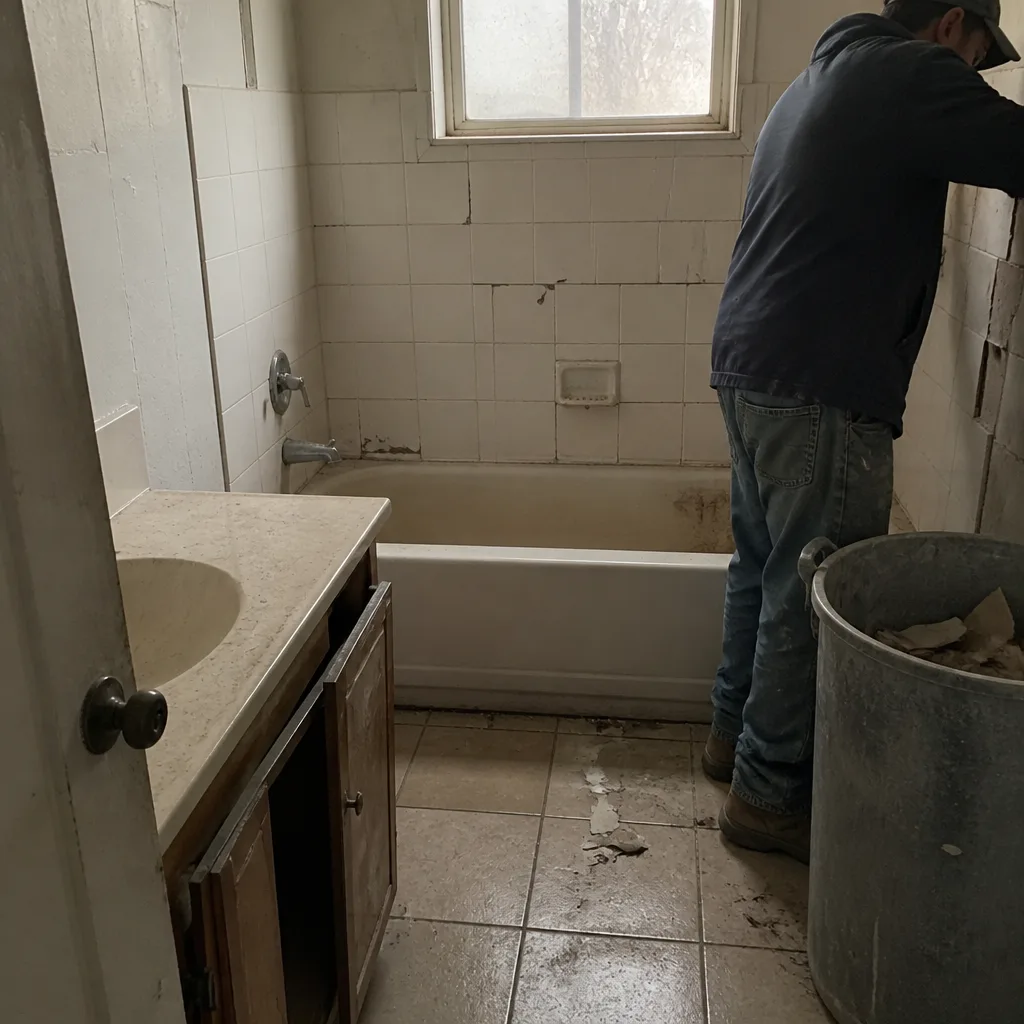
See the difference
 Before
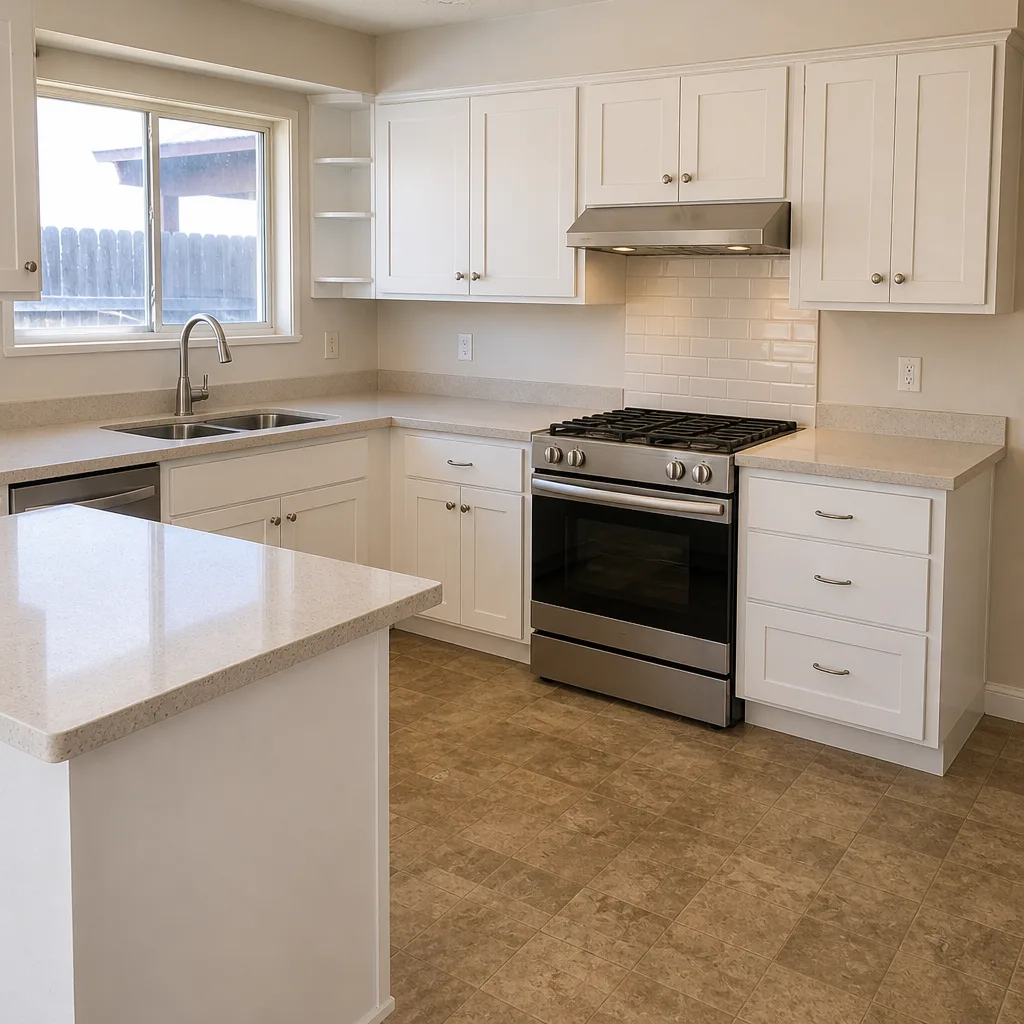 After
 Before
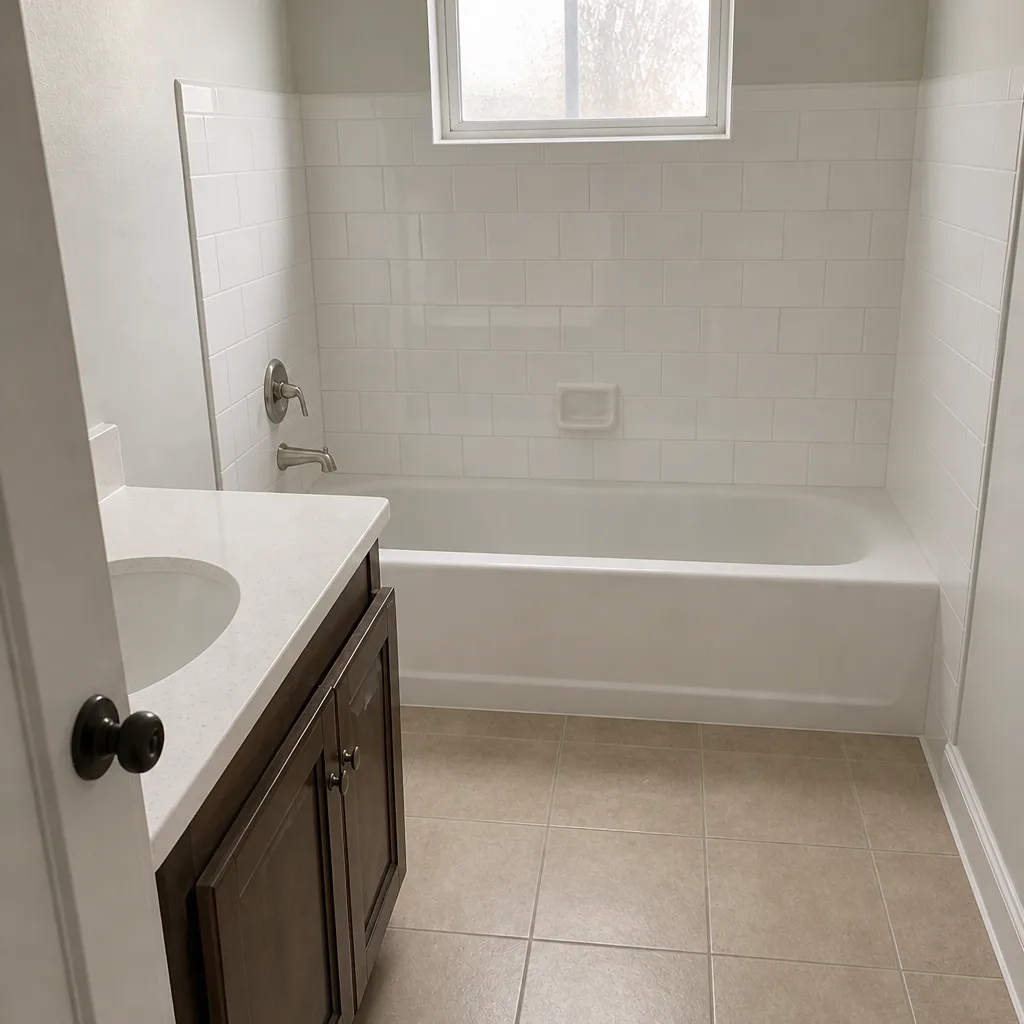 After
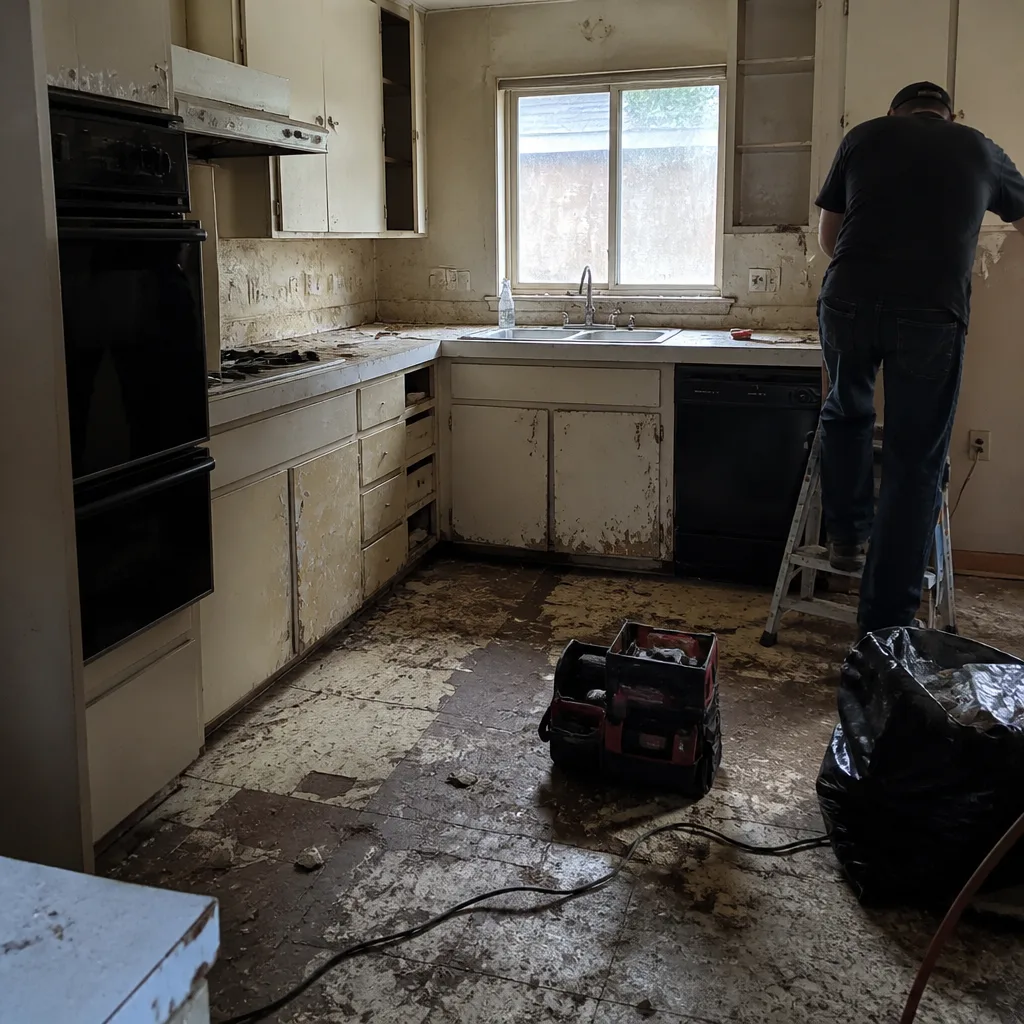 Before
 After
When to Call a Professional
A short, level fence in soft soil is a possible weekend project. But call a professional when any of these apply: the fence line crosses caliche or a slope; the run is longer than 100 linear feet; the fence sits on a property line; the yard has buried utilities, a pool, or a septic run; the project needs a permit or an inspection; or the fence backs onto a wind-exposed ridge. Those are the jobs where an experienced crew’s production rate and site knowledge pay for themselves. Our technicians have up to 19 years of experience, and we’ve handled every one of those conditions in Lancaster. Rowan Construction Group Lancaster offers free estimates in Lancaster – call (844) 797-3312 to schedule yours. Every quote is a written, flat price with a written scope and a written warranty, and the 365-Day Done Right Promise backs it in print.
Frequently Asked Questions
A typical residential fence in Lancaster takes 3 to 6 weeks from signed contract to finished install, with 2 to 5 of those days being actual construction and the rest being permit time, the 811 utility locate, material lead time, and concrete cure. Call (844) 797-3312 for a written timeline tied to your lot’s soil and material choice.
Yes, for most fences, especially any that exceeds the front-yard height limit or sits on a property line. LA County permits for a standard 6-foot privacy fence typically clear in 3 to 5 business days. Front-yard and corner-lot fences can take longer because of sight-line rules. We pull the permit and pass the inspection as part of the job.
The usual culprits are caliche under the posts, a permit plan check, or a late material delivery. Ask for the written scope with phase milestones – it makes the delay visible and answerable. If a change is needed, no work should proceed until a written change order is signed and priced.
The construction can be two days for a 150-foot wood fence on flat, clear ground. The full project cannot, because the permit, utility locate, material delivery, and concrete cure add 10 to 21 days before installation starts. Expect a two-to-five-day site phase within a three-to-six-week project.
Pressure-treated pine, because it’s in stock at regional yards and fabrication is minimal. Vinyl installs at a similar site rate but has a longer material lead time. Wrought iron is the slowest both to deliver and to install. The fastest total project is usually a standard-height pressure-treated wood fence on a flat lot.
It shouldn’t. Under Clause 1 of The Haven Standard, the price is written before anyone starts – so the number you agree to is the number you pay. If caliche or a utility conflict forces a change, we price it in a written change order and get your signature before any work proceeds. Bring a competitor’s written estimate and we’ll review it line by line at no charge.
The Bottom Line
Fence installation timelines in Lancaster are decided by permit time, utility locate, material lead, caliche, and cure – not by fence length. Budget 3 to 6 weeks for the full project, 2 to 5 days of which are actual construction. Plan around April, May, and October for the lowest weather risk. Ask for a written scope with phase milestones, and make sure the quote names soil, supplier, and permit. Those three items separate an honest timeline from a sales pitch. Call (844) 797-3312 to schedule a free estimate with a written price and a documented timeline before anyone picks up a tool.
Written by the team at Rowan Construction Group Lancaster.