Last updated November 17, 2026
Free written scope consultation - allowances, timeline, and change-order rules on paper before a single trade is scheduled
The Complete Home Additions & ADU Guide for Lancaster Homeowners
Most ADU guides skip the part that actually delays your project. In Lancaster, a detached unit sited within 150 feet of a high-fire-hazard zone triggers a separate CalFire review on top of the city and county approvals, and that one step can add 6 to 10 weeks to the permit timeline. It has nothing to do with your design and everything to do with where your lot sits. This guide maps the full approval sequence Lancaster homeowners actually walk through, the real dollar ranges in the Antelope Valley market, and the financing tools that work here. You’ll finish knowing what to file, in what order, and what each stage costs.
Quick Answer
A home addition or ADU in Lancaster typically costs $140 – $220 per square foot for an attached addition, $180 – $280 per square foot for a detached ADU, and $60,000 – $110,000 total for a garage conversion. The timeline runs 4 to 6 months for a garage conversion and 9 to 14 months for a detached new-build, driven less by construction than by the approval sequence: City of Lancaster zoning clearance, LA County Building & Safety permits, a utility service upgrade through Southern California Edison or LADWP if needed, and CalFire review when your lot falls near a fire hazard zone.
Styles & brands we work with
- Kitchen remodeling
- Bathroom remodeling
- Home additions & ADU
- Roofing
- Windows & doors
- Driveway & pavers
- Fence
Table of Contents
- The Lancaster Approval Sequence, Step by Step
- What Additions and ADUs Cost in Lancaster
- Setbacks, Lot Coverage, and What Your Lot Allows
- CalFire Review and the High-Fire-Hazard Zone Overlay
- Utility Upgrades: SCE, LADWP, and Panel Capacity
- The Owner-Builder Permit Option and Its Real Risks
- How Lancaster Homeowners Finance an ADU
- Common Mistakes to Avoid
The Lancaster Approval Sequence, Step by Step
Lancaster runs a two-agency structure that surprises people who’ve built in other California cities. The city handles zoning and land use; LA County Building & Safety issues the structural, electrical, and plumbing permits. Those are separate queues, and they don’t move in parallel. Here’s the order that works.
- Pre-application and zoning clearance – City of Lancaster Community Development. Confirm your lot’s zoning, setbacks, and lot coverage allowance before you draw anything. Expect 2 to 4 weeks. Submitting plans against the wrong assumption here is the single most common cause of a restart.
- Plan submittal and plan check – LA County Building & Safety. Structural, electrical, plumbing, and mechanical review. A straightforward garage conversion runs 4 to 6 weeks; a detached ADU with new foundation and utilities typically runs 8 to 12 weeks, longer if plan check comes back with corrections.
- CalFire review, if applicable. Triggered by proximity to a high-fire-hazard zone. Add 6 to 10 weeks. More on this below.
- Utility service application – SCE or LADWP. If the addition pushes your load past your existing panel, file the service upgrade application early. SCE coordination in the Antelope Valley commonly takes 6 to 12 weeks for a panel upgrade and longer if a new service drop or transformer work is involved.
- Permit issuance and construction. Once permits are in hand, a garage conversion runs 8 to 12 weeks of build time; a detached ADU runs 20 to 28 weeks.
- Inspections and final sign-off. Staged inspections through framing, rough MEP, insulation, and final. Nothing closes out until the utility connection is signed off too.
In our experience across Lancaster jobs, homeowners who file the utility application at the same time as the building permit save four to six weeks versus waiting until plan check clears.
What Additions and ADUs Cost in Lancaster
Antelope Valley pricing runs somewhat below coastal LA County because land and labor costs are lower, but it isn’t dramatically cheaper once foundation and utility work are included. Here are the ranges we see on Lancaster projects, quoted per square foot and as line items.
- Detached ADU: $180 – $280 per square foot, all in. A 600-square-foot unit lands roughly $108,000 – $168,000.
- Attached addition: $140 – $220 per square foot. A 400-square-foot primary suite addition runs roughly $56,000 – $88,000.
- Garage conversion: $60,000 – $110,000 total, depending on whether the existing slab and walls can be reused.
Line-item ranges on a typical Lancaster detached ADU:
- Foundation and slab: $14,000 – $24,000. Antelope Valley soil is generally stable, but caliche layers can force over-excavation on some lots.
- Framing and shell: $32,000 – $52,000.
- MEP (mechanical, electrical, plumbing): $22,000 – $38,000, plus $4,000 – $9,000 if a panel upgrade is needed.
- Finishes: $28,000 – $48,000, from cabinetry through fixtures. Delta and American Standard fixtures are common budget anchors; spec-grade kitchen and bath fittings land here.
- Permits and fees: $6,000 – $14,000, higher if CalFire review applies.
Every number above is the kind of figure that belongs in a written quote, not a verbal range. Under Clause 1 of the Haven Standard, we deliver a flat written price with a written scope before any work starts. For a broader look at how we structure these projects, see our Home Additions & ADU in Lancaster service page.
Setbacks, Lot Coverage, and What Your Lot Allows
Lancaster’s development standards for detached ADUs in R-1 zones generally allow 4-foot side and rear setbacks, which is tighter than what many homeowners assume. The setback isn’t the constraint most people hit. Lot coverage is.
R-1 lots in Lancaster typically cap total structure coverage at 40% of the lot area. On a standard 7,000-square-foot lot, that’s 2,800 square feet of coverage. Subtract your house, your garage, and any covered patios or detached sheds, and you’ll see how much room an ADU or addition actually has. A lot with a 1,800-square-foot house and a 400-square-foot garage leaves 600 square feet of coverage headroom – enough for a 500-square-foot ADU with space for the required separation from the main house.
Two more Lancaster specifics that affect siting:
- Fire separation: A detached unit within 6 feet of a property line or another structure may need fire-rated construction. That adds cost but is usually cheaper than moving the building.
- Access and parking: Lancaster generally does not require a new parking space for an ADU, but you still need a clear path for emergency access to the rear yard. Narrow lots in neighborhoods like Quartz Hill and West Lancaster often fail this on paper before they fail anything else.
It’s worth pulling your lot’s zone file and coverage calculation before you sketch. A 30-minute records check saves weeks of design.
CalFire Review and the High-Fire-Hazard Zone Overlay
If a detached ADU is sited within 150 feet of a high-fire-hazard zone, Lancaster requires a separate fire review beyond the standard building permit. That review considers defensible space, exterior material ratings, and ember-resistant venting. In practice, the added requirements are:
- Class A roofing: The entire unit, and often the main house if the addition triggers a reroof. GAF and Owens Corning both make Class A assemblies we spec on Lancaster jobs.
- Noncombustible siding and decking within the covered distances from the property line.
- Vented attic and soffit assemblies rated for ember intrusion; standard soffit vents fail.
- Defensible space maintained around the structure, coordinated with your landscape plan.
Cost impact is usually $4,000 – $12,000 on a 600-square-foot unit, mostly in siding, roofing, and venting upgrades. The timeline impact is the bigger issue: 6 to 10 weeks added to plan review. If your lot is anywhere near a hazard zone boundary, file the CalFire review at the same time as the building package rather than waiting to be scolded and resubmit.
Lots in Antelope Acres, Alpine, and the eastern edges of Lancaster toward the foothills carry the highest likelihood of this review. Lots near central Lancaster rarely trigger it.
Utility Upgrades: SCE, LADWP, and Panel Capacity
A new ADU adds a second set of kitchen appliances, HVAC equipment, water heating, and often a dedicated subpanel. That load routinely pushes a 100-amp or even a 200-amp main panel past capacity. The service upgrade becomes the controlling item on your schedule, and it runs on a different calendar than the building permit.
Southern California Edison serves the majority of Lancaster. LADWP handles some parcels at the city’s southern edges – check your pole before assuming. Either way, the sequence:
- Have an electrician perform a load calculation on the existing service with the new addition included.
- File the service upgrade application with your utility. SCE timelines in the Antelope Valley commonly run 6 to 12 weeks; LADWP often runs similar, subject to scheduling of the actual service visit.
- Coordinate the new service and meter with the building permit inspection schedule. Final sign-off requires the utility connection to be inspected and live.
A 200-amp panel upgrade plus trench and conduit in Lancaster typically runs $4,000 – $9,000 for a simple drop, more if transformer work is required. If you’re using a gas appliance package instead of all-electric, that changes the electrical load materially – worth modeling before you buy fixtures from Delta or American Standard.
The Owner-Builder Permit Option and Its Real Risks
California allows a homeowner to pull an owner-builder permit on their own residence, which exempts them from hiring a licensed contractor for that work. What it does not do is exempt the project from code compliance. Every inspection, every correction, and every failure to meet the plan remains your legal responsibility.
The concrete risks in Lancaster:
- Your lender. Many ADU construction loans and refinances require licensed-contractor documentation – a copy of the contract, the contractor’s license number, and the written scope – before releasing funds. Owner-builder applications frequently stall here.
- Resale. An owner-built ADU with an incomplete or unsigned permit record can complicate a sale and, in some cases, require demolition of the unit before closing. Title and disclosure issues surface years later.
- Insurance. Some carriers will not cover unpermitted or owner-permitted structures, and the ones that do often add endorsements.
- The 365-Day Done Right Promise doesn’t apply to owner-built work. That’s an honest statement about what the guarantee covers, not a dig at owner-builders.
For a homeowner with serious trade experience and time to spare, it can pencil out. For most, the lender and resale complications outweigh the contractor savings.
How Lancaster Homeowners Finance an ADU
Three tools cover well over 90% of what we see on Lancaster ADU projects. Each fits a different situation.
- HELOCs and cash-out refinances. Tied to your current equity. In Quartz Hill and West Lancaster, where homes bought between 2015 and 2022 have run up substantially, many homeowners have the equity to cover a full detached ADU. Rate and closing timelines depend on your lender; plan 4 to 8 weeks for a cash-out refinance, 2 to 4 for a HELOC.
- Construction-to-permanent loans. Structured as a single loan that draws during construction and converts to a fixed mortgage at completion. The lender will want a licensed contractor, a signed contract, a written scope, and permits. That documentation is where a flat written price and a signed change-order discipline matter – lenders read the same paperwork the homeowner does.
- LA County’s ADU Accelerator Program. A county-administered program offering grant and loan support to homeowners who plan to rent the ADU to a qualified tenant. Eligibility is income- and household-based, and the program details and thresholds change by funding cycle. Verify current terms directly with LA County before counting on this for your project budget.
Common Mistakes to Avoid
- Filing the building permit before the utility application. The two run on separate calendars and the permit being ready doesn’t mean the power is. On Lancaster jobs we’ve seen, filing both at once saves four to six weeks of dead time at the end.
- Assuming a coastal California cost range applies here. Antelope Valley labor and land are cheaper, but foundation, utility, and CalFire costs bring the total much closer to the city’s other regions than people expect. Budget from Lancaster numbers, not a blog post written about San Diego.
- Skipping a lot coverage calculation before design. Homeowners sketch a 700-square-foot ADU before discovering their R-1 lot only allows 500. The redesign and restart cost a month or more.
- Assuming the hazard overlay doesn’t apply to you. Lots near Antelope Acres and Alpine frequently sit near the boundary. Check the mapping yourself before assuming the review won’t trigger.
- Locking fixtures and appliances before the electrical load is modeled. All-gas vs. all-electric changes the panel upgrade cost by thousands. Model first, buy later.
- Taking the lowest bid on a garage conversion. The under-bids we see are invariably missing slab, permit, or MEP lines. Compare written scopes, not just totals.
- Relying on verbal ranges. A $180-$280 per square foot range is useful for planning, not for signing. Every project here should have a flat written price before any tool is picked up.
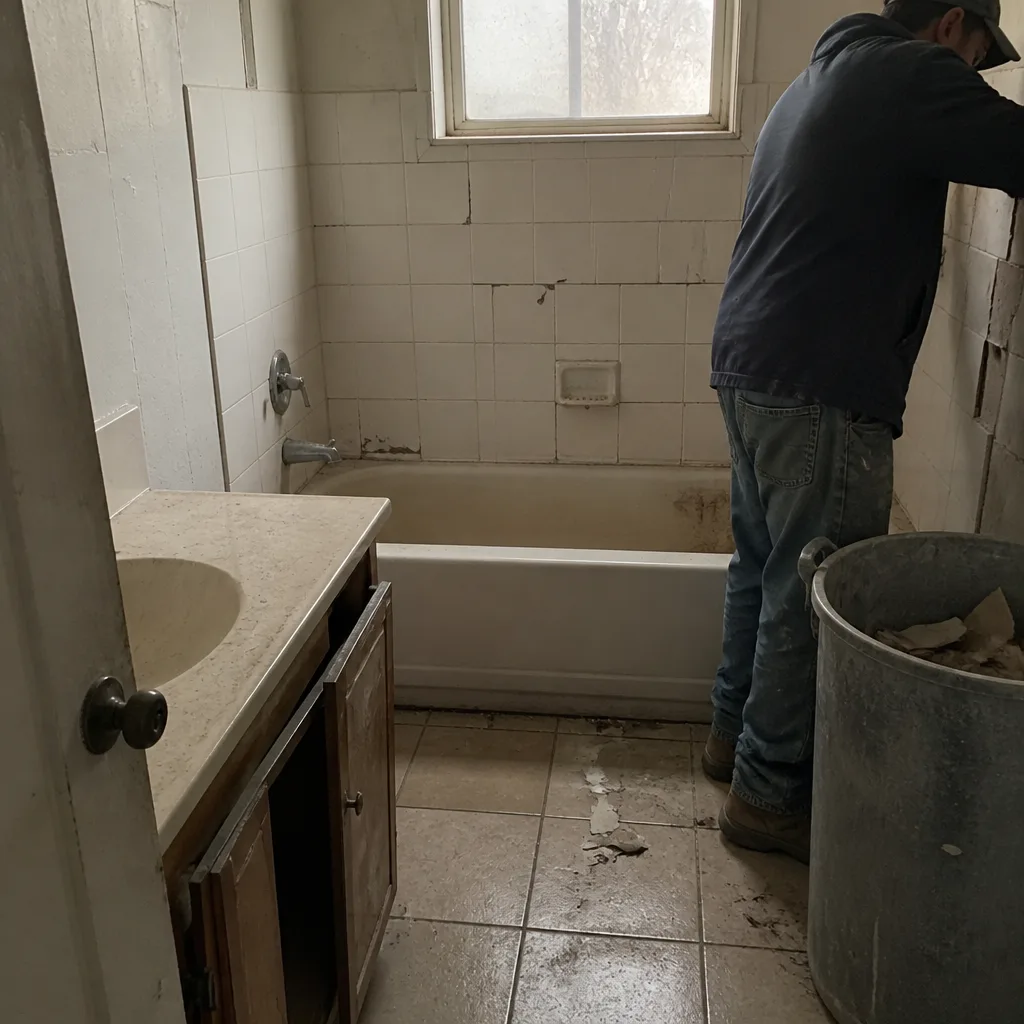
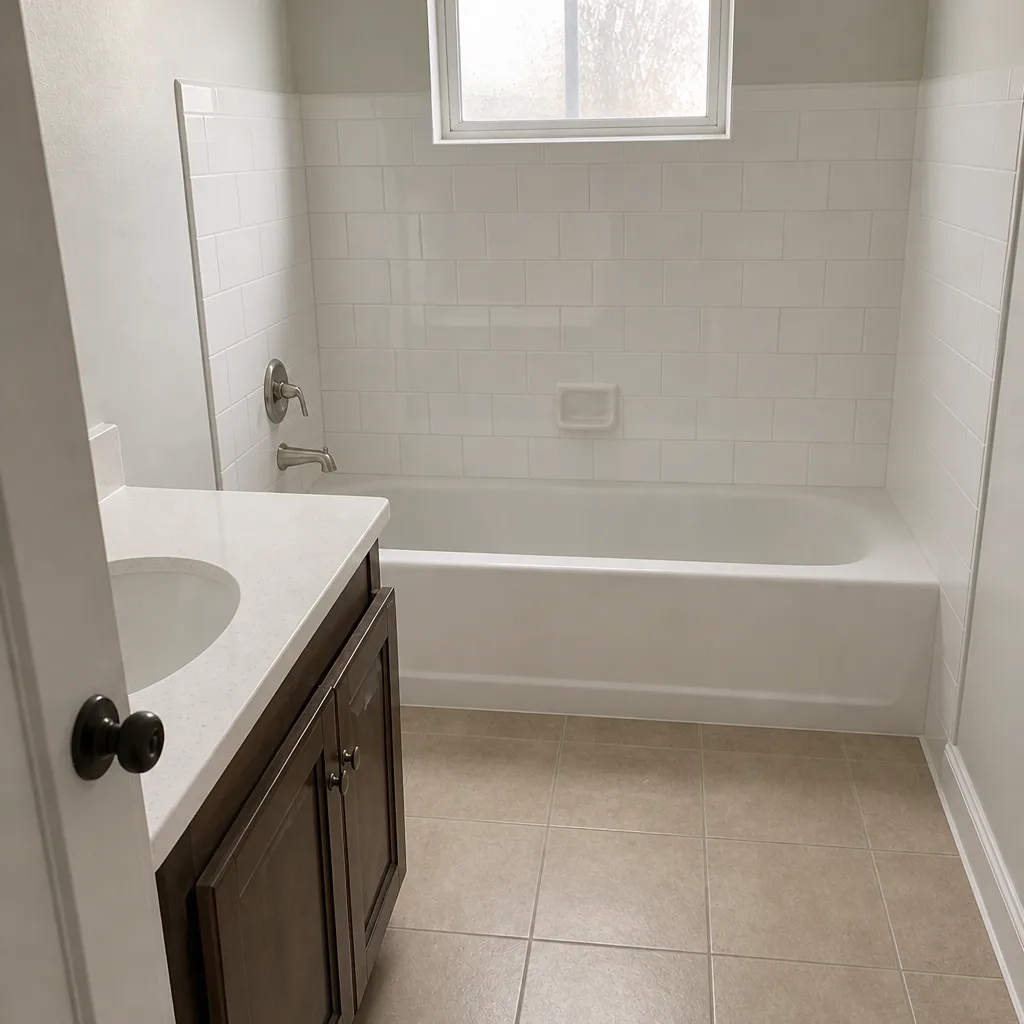
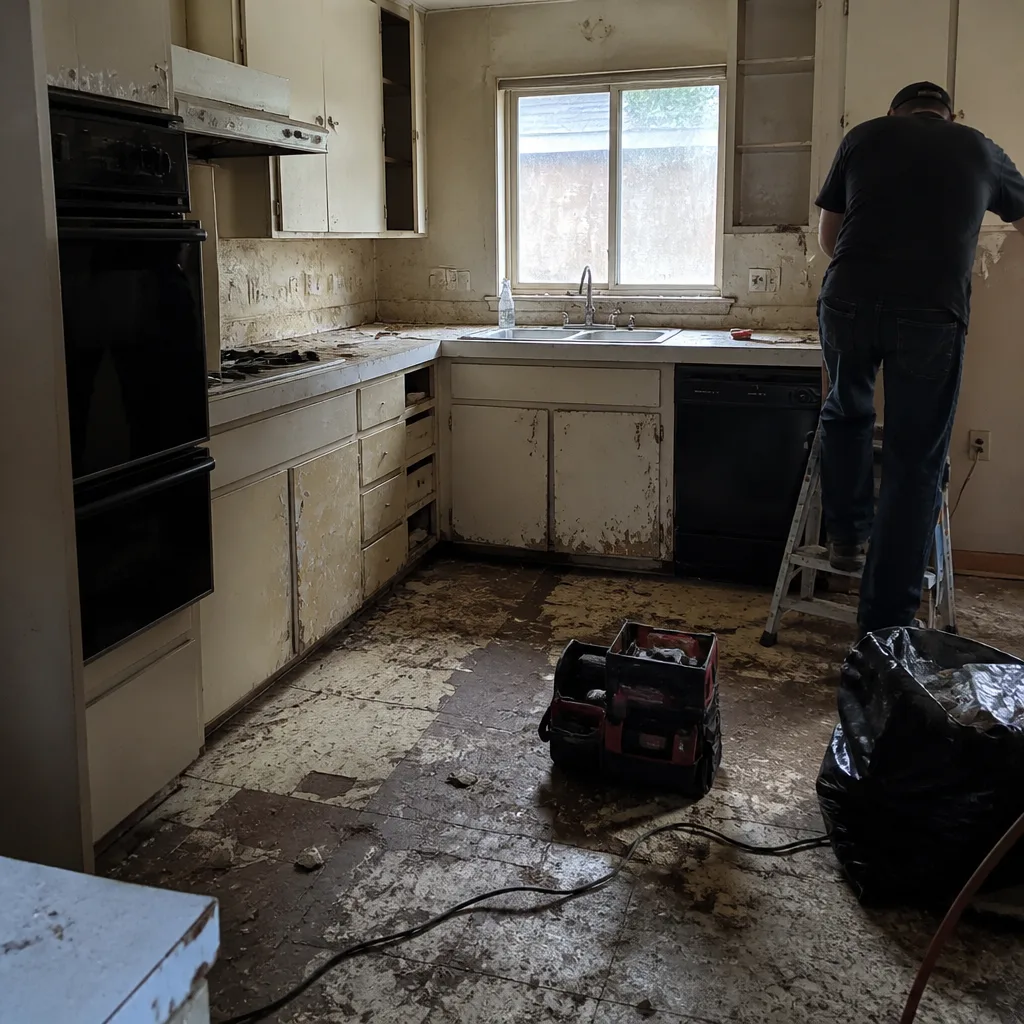
See the difference
 Before
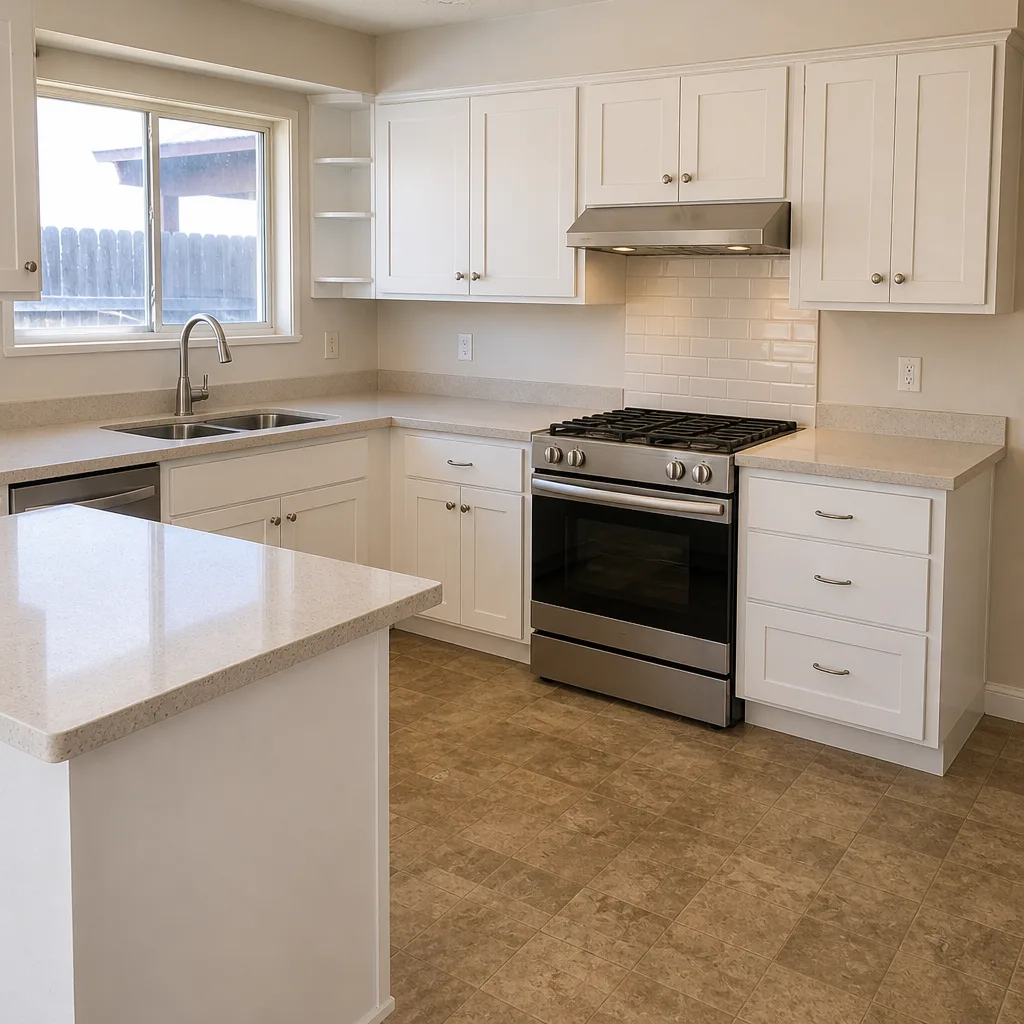 After
 Before
 After
 Before
 After
When to Call a Professional
Call a licensed contractor before you file anything if any of the following is true: your lot sits near a fire hazard zone boundary, your existing electrical panel is 100-amp and the ADU adds a kitchen or HVAC, your garage is an attached structure you plan to convert, or you’re financing the project through a construction loan that requires delineated scope. These four situations each carry their own failure point – the CalFire review, the panel upgrade, the fire separation of a shared wall, and the lender’s documentation requirement – and each is far cheaper to solve before submittal than after plan check comes back. Rowan Construction Group Lancaster offers free estimates in Lancaster. Call (844) 797-3312 to schedule yours, and bring any written estimate you already have for a line-by-line second opinion at no charge.
Frequently Asked Questions
A detached ADU permit in Lancaster typically takes 4 to 6 months from zoning clearance through issuance, and 9 to 14 months from first meeting to move-in. The variance comes from the utility service upgrade (6 to 12 weeks with SCE) and from CalFire review if your lot triggers it (adds 6 to 10 weeks). Call (844) 797-3312 to walk through the timeline on your specific lot – estimates are free.
Detached ADUs in the Lancaster market run $180 – $280 per square foot all in, so a 600-square-foot unit lands at roughly $108,000 – $168,000. Line items: foundation $14,000 – $24,000, framing and shell $32,000 – $52,000, MEP $22,000 – $38,000 plus panel work, finishes $28,000 – $48,000, permits $6,000 – $14,000. Call (844) 797-3312 for an itemized written quote – free, and every number in writing before work starts.
California allows an owner-builder permit on your own residence, so you aren’t legally required to hire a licensed contractor. But lenders commonly require contractor documentation before releasing ADU construction funds, and resale complications can appear years later. Call (844) 797-3312 to review your situation before you file.
Detached ADUs in Lancaster’s R-1 zones typically allow 4-foot side and rear setbacks. The real constraint is lot coverage, typically capped at 40% in R-1, so on a 7,000-square-foot lot your ADU competes for 2,800 square feet of total structure coverage. Fire separation and emergency access are the two details that most often force a redesign. Call (844) 797-3312 for a free lot assessment.
Yes, an ADU added to a Lancaster property is generally reassessed by the LA County Assessor as new construction, so the improvement’s value adds to your assessed value. The exact amount depends on the assessed value at completion. A written scope and flat price give you a reliable number to plan from – call (844) 797-3312 for an estimate.
CalFire review in Lancaster is triggered for a detached ADU sited within 150 feet of a high-fire-hazard zone, and it adds 6 to 10 weeks to the permit timeline plus roughly $4,000 – $12,000 in material upgrades. Lots near Antelope Acres, Alpine, and the eastern edges of Lancaster are most likely to trigger it. Call (844) 797-3312 to check your specific parcel – estimates are free.
The Bottom Line
Building in Lancaster means walking a specific sequence: City of Lancaster Community Development for zoning clearance, LA County Building & Safety for the permit, a utility upgrade through SCE or LADWP if your panel can’t take the load, and a CalFire review if your lot falls near the hazard overlay. Each stage has its own calendar and its own dollar range. Get them in the right order and file the utility application early. Know your lot coverage before you draw. Take the financing terms and the written price in writing, not verbally. For the constructed portion, see how we run Home Additions & ADU in Lancaster alongside our Driveway & Pavers in Lancaster and Fence Installation in Lancaster work, which often move together on the same projects. Start with our Rowan Construction Group Lancaster home for the full scope of what we do.
Every Lancaster project we take on starts with a flat written price, a written scope, and a written warranty in hand before anyone picks up a tool. Under Clause 1 of the Haven Standard, no work proceeds on a change without a signed change order – the discipline that keeps projects within a few percent of what the homeowner agreed to, and the reason we can offer the 365-Day Done Right Promise without an asterisk. Our technicians have up to 19 years of experience, crews are background-checked and uniformed, and every visit comes with a documented photo record as standard. Call (844) 797-3312 for a free estimate in Lancaster. If you already have a written quote from another contractor, we’ll review it line by line at no charge.
Written by the team at Rowan Construction Group Lancaster.