
Last updated November 17, 2026





Free written scope consultation - allowances, timeline, and change-order rules on paper before a single trade is scheduled
Bathroom Remodeling Warning Signs Every Homeowner Should Know
A contractor who can’t name the waterproofing membrane brand they plan to use behind your shower tile has already told you something important – they haven’t planned the job yet. That single blank in a bid documents more than any testimonial ever will. Most bathroom remodel warning signs don’t show up once the walls are open. They surface weeks earlier, in the paperwork, the questions a contractor asks (or doesn’t), and how they handle the first small change. This guide shows Lancaster homeowners how to read those signals before money changes hands.
Quick Answer
The biggest bathroom remodeling warning signs are missing line-item material breakdowns, no named plumbing and electrical subcontractors, no permit line in the estimate, and vague waterproofing specs. On site, orange or black subfloor staining, soft drywall outside the demo zone, and verbal-only scope changes predict cost overruns. Catch them before signing and you avoid most remodel disasters in Lancaster.
Styles & brands we work with
- Kitchen remodeling
- Bathroom remodeling
- Home additions & ADU
- Roofing
- Windows & doors
- Driveway & pavers
- Fence
Table of Contents
- Bid Red Flags: What a Weak Estimate Leaves Out
- The Waterproofing Question That Separates Planners From Pretenders
- Permit Lines, Inspections, and Why Lancaster Code Matters
- On-Site Warning Signs During Demo
- Mid-Project Behavior That Predicts Change Order Abuse
- Finish-Stage Inspection Checklist Homeowners Miss
- Post-Completion Signs of Skipped Waterproofing
- Lancaster-Specific Risks: Climate, Soil, and Older Housing Stock
Bid Red Flags: What a Weak Estimate Leaves Out
A bid is a planning document, not a sales pitch. When it’s thin, the job is thin. In our experience reviewing competitor estimates for Lancaster homeowners through our free second-opinion offer, the same gaps appear again and again. Missing line items don’t just look sloppy – they become change orders later, and change orders are where budgets die.
Here’s what a real bathroom estimate should contain, line by line:
- Material breakdown by brand and SKU. “Tile allowance: $1,800” means nothing without the brand, series, and square-foot price. A proper bid names the tile, the thinset, and the membrane. We specify names like Kohler and Toto for fixtures and KraftMaid or Wellborn for any vanity cabinetry so the number can be compared honestly.
- Named plumbing and electrical subcontractors. If the estimate says “plumber: TBD,” you have no idea who’s cutting into your supply lines. Ask for the company name and license.
- A permit line, with the dollar figure. Pulling a permit costs money. A bid with no permit line is a bid that plans to skip it or surprise you later.
- Demolition and haul-away. Tile and drywall debris has to leave your driveway. If that’s not listed, it’s coming out of your pocket eventually.
- A written scope with exclusions. Good bids say what they don’t cover – moving a drain, relocating a vent, replacing subfloor – so you’re not arguing about it in week three.
Under Clause 1 of The Haven Standard, the price is written before anyone starts. That’s the standard we hold bids to, and it’s the standard you should hold every Lancaster contractor to as well.
The Waterproofing Question That Separates Planners From Pretenders
Ask any contractor bidding your shower: “Which waterproofing membrane system are you using, and how does it tie into the drain flange?” A prepared professional answers in one breath – a liquid-applied membrane like RedGard or a sheet system like Schluter Kerdi, bonded to a specific drain type. A contractor who hesitates, or answers “we use the best stuff,” hasn’t planned the wet area.
Waterproofing is the single most consequential decision in a bathroom, and it’s nearly invisible once tile goes up. Two showers can look identical on day 90 and behave completely differently on day 400. The difference is whether the membrane was continuous across the floor, up the walls to at least six inches (higher in a steam shower), and sealed at every penetration – the valve, the shower arm, the drain.
What to look for in the bid and during construction:
- The membrane brand named in writing, with the drain compatibility noted.
- A flood test – the pan filled with water and left for 24 hours before tile – listed as a step, not an afterthought.
- Cement backer board specified, not green drywall, behind tile in the wet zone.
- Photos of the membrane before tile, which we include in the documented photo record on every visit as a standard deliverable.
If a bid is silent on membrane products, treat that silence as a warning sign. It’s the most common reason we see showers fail early in Lancaster homes, and it’s entirely preventable with a written spec.
Permit Lines, Inspections, and Why Lancaster Code Matters
Bathroom remodels that move plumbing, relocate a fixture, or alter electrical circuits require permits in Lancaster, and the estimate should say so. A contractor who suggests skipping the permit to “save time” is telling you they don’t want an inspector looking at their rough-in work. That’s a warning sign you should take seriously.
Permits do three things for you: they create a record of the work, they force an independent inspection of the plumbing and electrical rough-in before walls close, and they protect you at resale. Unpermitted bathroom work discovered during a home inspection in Lancaster can stall a sale or force a retroactive permit process that costs more than the original job.
A well-run estimate will list:
- The permit application and its cost as a distinct line.
- Which inspection stages are scheduled – typically rough plumbing, rough electrical, and final.
- Who pulls the permit – the contractor, in their name, not yours.
- A copy of the permit and final inspection card when the job closes.
When the paperwork names the permit and the inspector’s role, the contractor expects to be checked. That expectation changes how the work gets done. It’s one reason we build permits into the written scope on Rowan Construction Group Lancaster home projects and every trade we run under the Haven Standard.
On-Site Warning Signs During Demo
Demo day is the first honest look at what’s behind your walls, and it’s when hidden conditions announce themselves. A contractor who flags what they find in writing, with photos, is doing their job. One who barrels ahead without documenting anything is setting up a change order you’ll hear about later, without evidence.
Watch for these physical signs once the tile and drywall come down:
- Orange or black staining on the subfloor. Orange usually means old water exposure or a slow leak; black points to prolonged moisture and possible mold. Either one means the subfloor needs assessment before new tile goes down, not after.
- Soft drywall beyond the demo zone. If the drywall in the adjacent hallway or closet feels spongy, moisture has traveled further than the visible damage suggests. The bid’s scope should have language for extending the demo.
- Evidence of previous unpermitted work. Mismatched plumbing fittings, electrical junctions buried in walls without boxes, or a shower pan built without a membrane all point to a prior DIY or shortcut job. That history changes the plan and should be documented.
- Improperly flashed or missing window sealing if the bathroom shares an exterior wall, which is common in older Lancaster homes.
In our experience, the honest contractor stops, photographs, and writes down what they found before proceeding. Under the Haven Standard’s change-order discipline, no work proceeds on a change until the change order is signed – which means you see the evidence before you approve the cost. A contractor who skips that step is a warning sign, full stop.
Mid-Project Behavior That Predicts Change Order Abuse
The first two weeks of a remodel are the audition. How a contractor handles a small scope question tells you how they’ll handle a large one. Change order abuse rarely starts with a big number – it starts with a verbal “we’ll just do this while we’re in here” and ends with a bill you didn’t agree to.
Here’s what to watch for:
- Verbal scope changes without written confirmation. Any change – moving an outlet, adding a niche, swapping a fixture – should produce a signed change order with a price and a schedule impact before the work happens.
- “Equivalent” material substitutions without a spec sheet. When a contractor says a different tile or fixture is equivalent, ask for the spec sheet and the price difference. If they can’t produce it, the substitution is probably cheaper, not equivalent.
- Change orders that appear only at the end. Legitimate changes get documented when they happen. A stack of surprise invoices at the final walkthrough is a red flag.
- Vague answers about who’s on site. Background-checked, uniformed technicians should be the standard, not an upgrade. Ask who’s coming and when.
- No daily photo record. If you can’t see progress in writing, you’re relying on memory at the end. We include a documented photo record on every visit as standard.
Projects that follow the signed-change-order discipline finish within a few percent of the number the customer agreed to. Projects that don’t, don’t. That’s the whole reason the discipline exists.
Finish-Stage Inspection Checklist Homeowners Miss
Finish work is where shortcuts hide in plain sight. The tile looks fine at a glance and fails the straightedge test. The caulk looks clean until you realize it’s in a corner that should be grout. Walk the room with these checks before you make the final payment.
- Grout joints. Run a straightedge across the floor and wall tile. Uneven joints – lippage where one tile edge sits proud of the next – show up immediately. A good tile setter keeps lippage under about 1/32 inch on floor tile.
- Caulk where grout belongs. Caulk is correct at corners and plane transitions, where two surfaces move independently. Caulk in the middle of a flat field of tile is a shortcut that will fail and stain within a year.
- Fixture handle alignment. If the hot and cold handles on a valve trim don’t sit level with each other, the valve body was likely set at the wrong depth or the trim plate was forced. That’s a plumbing rough-in problem showing up at the finish stage.
- Door and drawer alignment on any vanity cabinet – a $2,000 KraftMaid or Wellborn cabinet should open and close flush without rubbing.
- Siliconed seams at the shower pan. The joint between wall tile and pan should have a flexible sealant, not a rigid grout line that will crack the first time the house settles.
Do this walkthrough with a flashlight and a straightedge, and take photos. Any finish-stage problem is easiest to fix before the punch list closes.
Post-Completion Signs of Skipped Waterproofing
Waterproofing failures announce themselves on a schedule. If you know the timeline, you can catch a problem while the contractor’s warranty still applies – and before it becomes a mold remediation job.
- White mineral deposits at grout lines within 60 days. Efflorescence happens when water moves through tile and grout and evaporates on the surface, leaving salts behind. A little is normal on new masonry; recurring deposits at the shower base usually mean the membrane isn’t doing its job.
- Baseboard paint bubbling at floor level within 90 days. Paint bubbles when moisture pushes from behind. If the baseboard on the wall behind the shower is bubbling, water is migrating through the wall assembly.
- Musty odor appearing within 90 days. A bathroom should smell like a bathroom, not a basement. Persistent mustiness after a remodel points to trapped moisture – often in the shower pan or behind the wall tile.
- Grout cracking in a pattern that follows the shower pan edges, which can indicate movement under the tile.
All four of these point back to the membrane decision from week one. Every project we complete carries the 365-Day Done Right Promise: if it’s not done right, we make it right, backed by The Haven Standard and a written warranty, not a handshake. When you’re comparing contractors in Lancaster, ask what their written warranty actually says about water intrusion.
Lancaster-Specific Risks: Climate, Soil, and Older Housing Stock
Lancaster’s climate puts specific stresses on a bathroom remodel that a contractor from outside the Antelope Valley may not account for. The high desert swings from hot, dry summers to cold winter nights, and that thermal cycling works on tile, grout, and caulk joints year after year. A rigid grout line at a plane transition will crack faster here than it would on the coast.
Soil matters too. Much of Lancaster sits on expansive clay that moves with moisture, and that movement translates into minor foundation and framing shifts. Bathroom tile set over a floor that flexes needs a proper uncoupling membrane, not tile bonded directly to plywood. If a bid doesn’t mention an uncoupling layer on the floor, ask why.
And the housing stock varies block to block. Older homes in established Lancaster neighborhoods often have galvanized supply lines that should be replaced during a remodel, and cast-iron drains that are near the end of their service life. A good contractor walks the property, opens a wall, and checks – not assumes. That’s the same investigative discipline that applies to our Fence Installation in Lancaster and Driveway & Pavers in Lancaster projects: look, document, then price.
If your remodel grows into a larger footprint – a primary suite with a new bath, for example – the same warning signs apply to the bigger project. Our guide to Home Additions & ADU in Lancaster walks through what to watch for on those scopes, including the modular systems from builders like Abodu and Cover that some Lancaster homeowners are weighing for ADU additions.
Common Mistakes to Avoid
- Accepting a lump-sum bid with no line items. A number with no breakdown is impossible to compare and easy to inflate. Demand the material and labor split before signing.
- Skipping the permit to save a few hundred dollars. In Lancaster, unpermitted bathroom work surfaces at resale and during insurance claims. The inspection exists to protect you.
- Letting the contractor “just add” a change without a signed order. Verbal changes are the number-one cause of cost overruns. If it isn’t in writing, it isn’t agreed.
- Not asking who the plumber and electrician are. If the bid says “our guy” but can’t name the licensed sub, you don’t know who’s cutting into your supply lines.
- Paying the final bill before the finish walkthrough. Run the straightedge and flashlight checklist first. Corrections after final payment are much harder to get.
- Ignoring efflorescence or a musty smell as “just a new bathroom thing.” Those are early alarms for a waterproofing problem, and the window to fix them cheaply is short.
- Choosing on price alone without a written warranty. A cheap bid with no warranty is the most expensive option over five years.
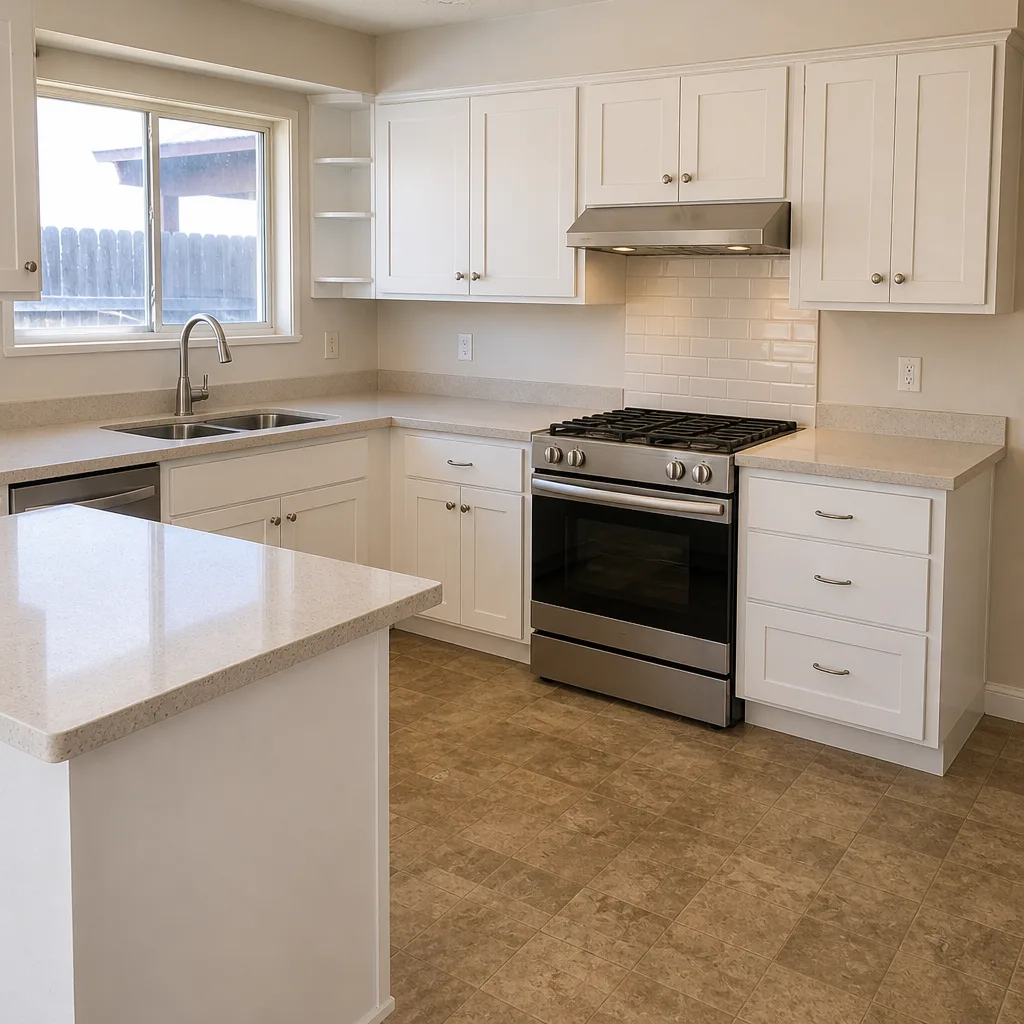
See the difference
 Before
 After
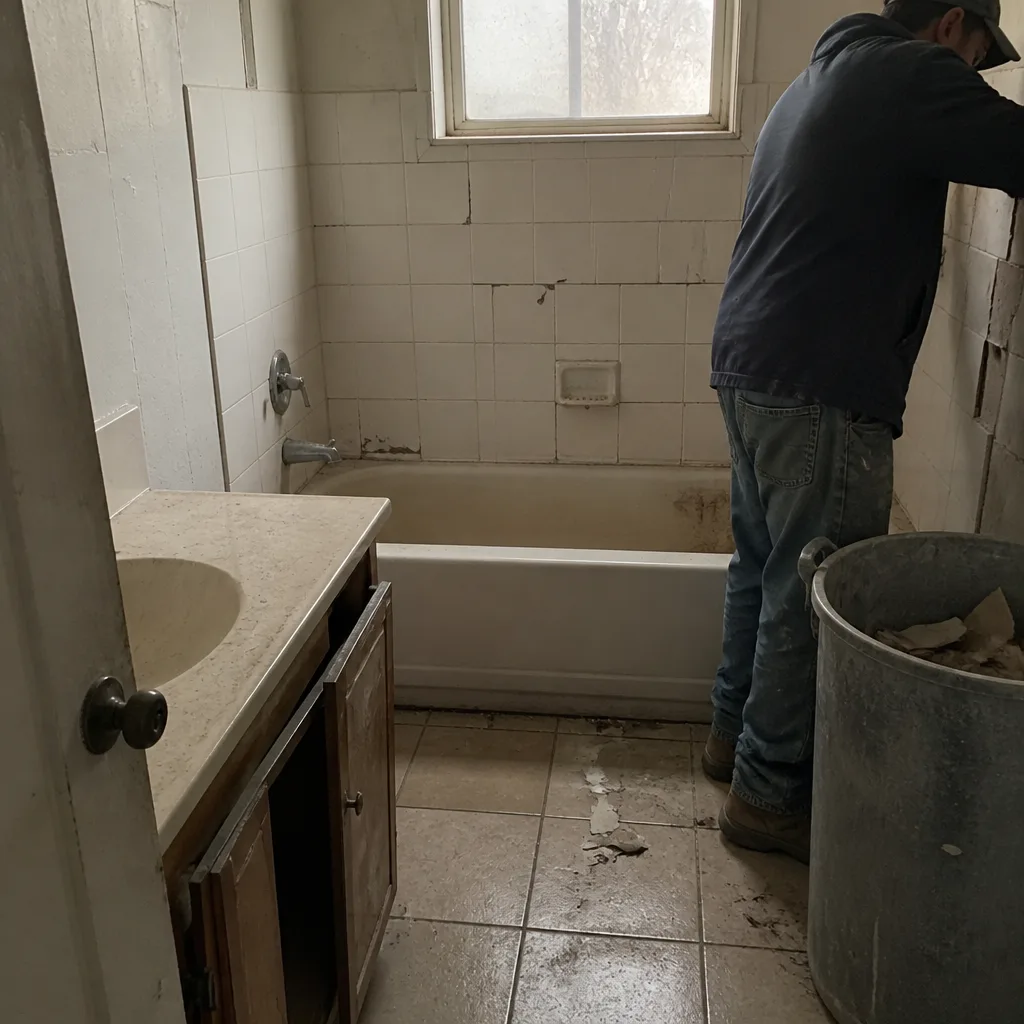 Before
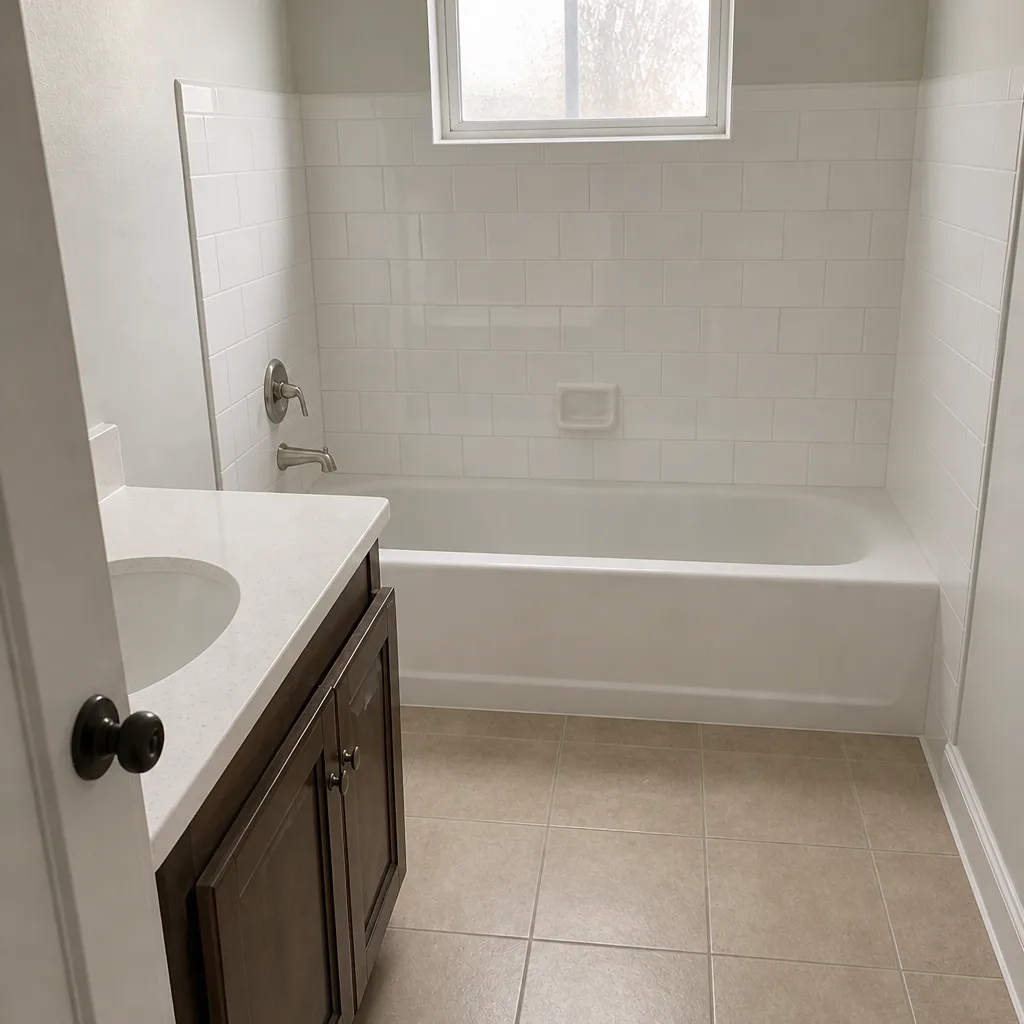 After
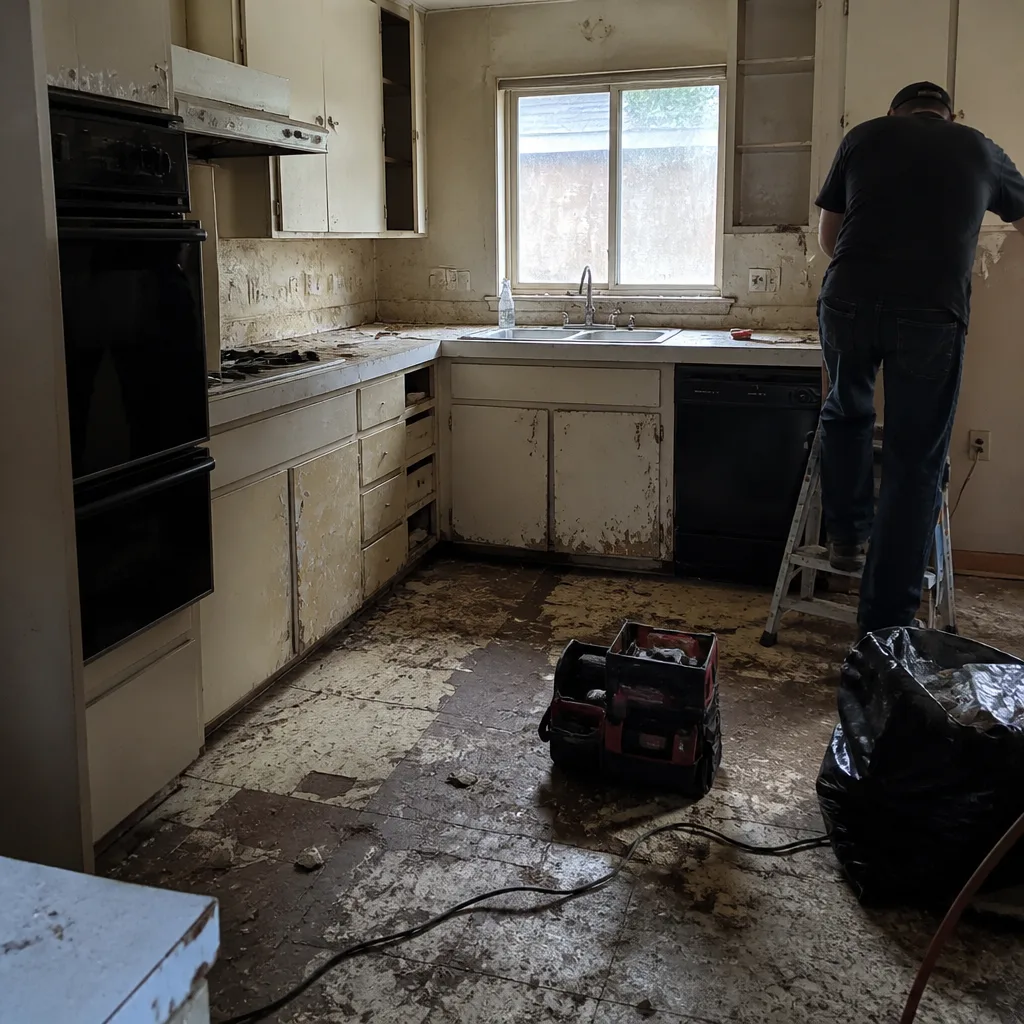 Before
 After
When to Call a Professional
Call a licensed contractor when your remodel involves moving plumbing or electrical, pulling a permit, or rebuilding a shower pan – all work where the consequences of a shortcut are hidden behind finished surfaces. Call immediately if demo reveals orange or black subfloor staining, soft drywall outside the demo zone, or evidence of previous unpermitted plumbing or electrical. Call before signing a bid that’s missing line items, named subs, or a permit line. And call if you see efflorescence, bubbling baseboard paint, or mustiness in the first 90 days after a remodel. Rowan Construction Group Lancaster offers free estimates in Lancaster – call (844) 797-3312 to schedule yours, or bring a competitor’s quote for a free line-by-line second opinion.
Frequently Asked Questions
A bid with no line-item material breakdown and no permit line is the biggest warning sign. It tells you the contractor hasn’t planned the job, so every surprise becomes a change order. Ask for the brand and SKU on every material before signing. Call (844) 797-3312 for a free line-by-line review of any written estimate.
A typical hall bath remodel in Lancaster runs $18,000-$28,000 for a full gut with mid-grade fixtures; a primary bath with a large shower and quality tile lands roughly $32,000-$55,000. The range depends mostly on plumbing relocation, tile selection, and whether the subfloor needs repair. Call (844) 797-3312 for an exact written price – estimates are free.
Yes, if the work moves plumbing, adds or relocates electrical, or changes the framing or footprint. Cosmetic work – tile, paint, fixtures in the same location – usually does not need a permit. A legitimate bid lists the permit cost and who pulls it. Estimates from Rowan Construction Group Lancaster are free.
Orange staining usually means prior water exposure or a slow leak that has been there a while; black staining points to prolonged moisture and possible mold. Either requires assessment before new tile goes down. A contractor who photographs the finding and writes it into a signed change order is doing it right. Call (844) 797-3312 to discuss what you found.
Watch for efflorescence – white mineral deposits – at grout lines within 60 days, baseboard paint bubbling at floor level, or a musty odor appearing within 90 days of completion. All three point to moisture getting where it shouldn’t. Check the bid for a named membrane system and flood-test step. Estimates are free at (844) 797-3312.
It can, but only for conditions that couldn’t be seen before demo, and only with a signed change order in writing. Under Clause 1 of The Haven Standard, the price is written before anyone starts and no change proceeds without a signature. Projects that follow that discipline finish within a few percent of the agreed cost. Call (844) 797-3312 for a written price on your Lancaster bathroom.
The Bottom Line
Most bathroom remodel warning signs surface in the paperwork, not on site. Missing line items, unnamed subcontractors, a bid with no permit line, and vague waterproofing specs are the signals that predict cost overruns and failed showers months before they happen. On demo day, watch for orange or black subfloor staining, soft drywall outside the zone, and any scope change presented verbally. At finish, run the straightedge and look for caulk where grout belongs. And after completion, treat efflorescence, bubbling paint, and mustiness in the first 90 days as alarms. In Lancaster, the climate and older housing stock make these checks worth more than they are elsewhere. A written price, a signed change order, and a documented photo record are the standards that separate a careful contractor from a costly one.
Rowan Construction Group Lancaster has completed 4,000-plus projects since 2007, each one with a written price before work started and a documented record when the crew left. Our technicians have up to 19 years of experience, and every project carries the 365-Day Done Right Promise. Call (844) 797-3312 for a free estimate on your Lancaster bathroom remodel.
Written by the team at Rowan Construction Group Lancaster.