Last updated November 17, 2026


Free written scope consultation - allowances, timeline, and change-order rules on paper before a single trade is scheduled
Windows & Doors Warning Signs Every Homeowner Should Know
The most expensive window and door failures in Lancaster homes are rarely the ones you can see. They’re the moisture and air leaks working quietly inside wall cavities and at subfloor level, and they broadcast clear signals that most homeowners read as cosmetic. Here’s one that gets misdiagnosed constantly: peeling paint on interior window trim isn’t a paint problem. It’s a condensation or infiltration problem using the paint failure as its announcement, and by the time that paint peels, the drywall behind the trim has usually been wet for two seasons. This guide covers what those signals look like, the order they appear in, and the measurements that separate a nuisance from structural damage.
Quick Answer
The earliest warning signs of window and door failure are interior paint peeling at the window trim, efflorescence (white powder) on interior sills, exterior caulk cracking at frame corners, and doors that stick seasonally before sticking permanently. In Lancaster’s high-desert climate and expansive clay soils, these signals typically appear 18 to 24 months before visible structural damage, which is why catching them early is the difference between a reseal and a full-frame replacement.
Styles & brands we work with
- Kitchen remodeling
- Bathroom remodeling
- Home additions & ADU
- Roofing
- Windows & doors
- Driveway & pavers
- Fence
Table of Contents
- Why the Invisible Failures Cost the Most
- Window Warning Signs: What Lancaster’s Climate Shows You
- Door Warning Signs: The Foundation Movement Sequence
- Glass Fogging: Recent Condensation vs. Long-Term Failure
- Contractor Red Flags During Window and Door Estimates
- The 30-Day Post-Installation Inspection Checklist
- The Failure Timeline: What Happens Month by Month
Why the Invisible Failures Cost the Most
In our experience across Lancaster, a window that won’t open gets fixed. A window that lets a thin ribbon of air and moisture into the wall cavity for two years does not, because nobody knows it’s happening. The frame looks fine from the room and fine from the yard. The damage accumulates inside the wall, at the subfloor, and in the framing the stucco and drywall are hiding.
Lancaster’s climate sets this up in a particular way. Summers push 100°F-plus for weeks and the interior stays air-conditioned to the mid-70s. That temperature differential drives condensation on cold glass surfaces and inside wall assemblies. Winters drop into the 30s at night. The expansion and contraction cycle between those swings is what opens the caulk joints and hairline cracks that let moisture in. Add the region’s famous wind and the seasonal dust that rides with it, and any gap that opens becomes a channel for both air and grit.
What that means for a Lancaster homeowner is straightforward. You can’t judge a window or door by how it opens and closes. You judge it by the evidence at the edges: the caulk, the sill, the trim, the stucco. Those are the places where the failure announces itself first, and where a trained eye reading a photo record can tell you whether you’re looking at a reseal or a replacement. The Rowan Construction Group Lancaster home page lays out how each of our trades handles the inspection side of this.
- Interior paint peeling at the trim – condensation or infiltration, not a paint issue
- White efflorescence on the interior sill – moisture moving through the assembly and depositing minerals on the surface as it dries
- Exterior caulk cracking at frame corners – the leading edge of water entry at the most stressed joint
- Hairline stucco cracks arcing above the header – movement at the header, either thermal or structural
- Doors sticking seasonally – framing movement tied to soil moisture cycles
Window Warning Signs: What Lancaster’s Climate Shows You
Lancaster windows fail from the outside in, and the visual indicators arrive in a predictable order. The exterior caulk is first. Caulk at the frame corners takes the most thermal stress of any joint on the window, and in Lancaster’s 40-degree-plus day-night swings, standard caulk begins to crack at those corners within a few seasons. When you see a crack at the bottom corner of a frame, water is already finding a path behind the nail fin. Look at the top corners and the sill joint next.
The second indicator appears inside. Efflorescence is the chalky white deposit that shows up on interior sills and trim, and it’s how you read moisture that hasn’t yet shown itself as a stain. Water travels through the wall assembly, dissolves salts from the drywall, stucco, or concrete, and leaves them on the surface as it evaporates. A white powder on a sill that you can wipe away and that returns is a moisture signal, not a cleaning problem. In our experience, Lancaster sills that show efflorescence have been wet for a full season or more.
The third is the hairline stucco crack that arcs above the window header. A vertical crack is often benign; an arcing crack that follows the load path over the header is telling you the header or the framing above it has moved. In Lancaster, this shows up most often on west-facing walls that take the full afternoon sun, where thermal expansion is highest. It’s also common in older tracts where the original stucco has aged past its flex point.
How to check these signs without opening a wall
- Run a fingertip along the exterior caulk at each frame corner. A crack you can feel is a path water can follow.
- Wipe the interior sill with a dark cloth. White residue on the cloth after a dry week is efflorescence.
- Stand back 15 feet and look at the stucco above each window. Arcing cracks read more clearly from a distance than up close.
- Press on the drywall below the sill with your palm. A soft or spongy feel means the paper face has taken on moisture.
- Note which walls face west. Those are the highest-stress exposures in Lancaster and the first to show signs.
If more than two of those checks fail, the window is past the reseal stage and into the assessment stage. Our crew photographs each finding as part of every visit, so you end up with a documented record of what we found rather than a verbal impression.
Door Warning Signs: The Foundation Movement Sequence
Doors tell you about your foundation and framing before anything else in the house does. Lancaster’s expansive clay soils are the reason. Those soils swell when they take on water and shrink hard when they dry out, and the region’s wet-winter-dry-summer pattern drives the cycle year after year. A door that binds in late summer and frees up in winter is showing you the soil moving under the slab or the stem wall. That’s a framing-movement signal, and it follows a sequence you can track.
Stage 1: Seasonal sticking. The door rubs the strike plate or the top jamb in the dry months and clears in the wet months. This is the early warning. It’s easy to dismiss as humidity, but in Lancaster the mechanism is the opposite of what most people assume: the soil is shrinking in the heat and the frame is racking slightly with it.
Stage 2: Permanent misalignment. The door no longer frees up when the season changes. You adjust the strike plate, and the gap reappears within a month. The latch needs a push to catch. This is when the movement has exceeded the adjustment range, and it’s the stage where a foundation inspection and a door inspection should be done together.
Stage 3: Frame separation. You can see daylight at a corner, the head jamb has pulled away from the drywall, or the door drags hard enough to scuff the threshold. At this stage the movement is structural, and replacing the door without addressing the framing underneath will only produce the same result.
Measurements to take
Record these three numbers at each door and compare them in wet and dry seasons:
- Diagonal measurement of the door opening (top-left corner to bottom-right, then the opposite). A difference of more than 1/4 inch between the two diagonals means the opening is out of square.
- Reveal width at the top and both sides – the gap between the door edge and the jamb. The gap should be even. A top gap that grows on one side and shrinks on the other is racking.
- Latch alignment – measure the distance from the latch to the strike plate opening at the start and end of the dry season.
These three readings, taken twice a year, tell you whether the movement is seasonal and stable or progressive. Progressive movement on a Lancaster slab is a foundation conversation, and the door is usually the first place it shows. Our Home Additions & ADU in Lancaster work regularly uncovers this kind of pre-existing movement when we open up a wall, and it’s the reason we assess the frame before we touch a finish.
Glass Fogging: Recent Condensation vs. Long-Term Failure
A foggy double-pane window is a seal failure, and how long it’s been failing tells you what else is going on. The insulating glass unit (IGU) has a perimeter seal that holds the argon or air between the panes. When that seal breaks, moisture gets in and condenses on the interior glass surface. Recent fogging is a resealable window problem. Long-term fogging is often a marker for a failing frame, because the same moisture that entered the IGU has been working on the sill and frame around it.
Glass-fogging failure sequence
- Early fogging: a haze or light film appears on the interior pane in cold weather and clears by afternoon. The seal has started to fail but the unit still holds most of its performance.
- Persistent fogging: the film stays all day and doesn’t clear. Moisture is now cycling in and out of the unit.
- Water droplets or staining: visible beads or a cloudy, etched look between the panes. The desiccant is saturated and the seal is fully gone.
- Sill and frame damage: the fogging you can see is masking rot in the sill or frame that the same moisture has been feeding for seasons.
The practical test: if the fog clears when weather warms and returns in the cold, the unit is in the early stage and the frame is likely still sound. If it’s foggy year-round and the interior sill shows efflorescence or the exterior caulk at that window is cracked, the fogging was the symptom and the frame was the problem. A window contractor’s first question should be about the sill and the caulk, not the glass.
Glazing selection matters here too. On a Lancaster west-facing wall, the wrong glass spec will fog and stress earlier than the same glass on a north wall, because the thermal load on the unit is higher. When we write a scope, we name the glazing product and the frame material specifically so the quote reflects the exposure. Specifying a name means the price is honest rather than padded for a mystery product.
Contractor Red Flags During Window and Door Estimates
Most window and door problems get solved or compounded at the estimate stage. A written proposal tells you what the contractor intends to install, how the installation is protected, and what happens if something fails. These are the red flags we see Lancaster homeowners bring us for a second opinion.
1. No flashing product named
The single most important protection behind a new window or door is the flashing at the head and the sill pan. A proposal that specifies a window brand but no flashing product by name has left the critical waterproofing detail to chance. Ask which flashing product is being installed and how the sill pan is built. If the answer is “we use standard flashing,” that’s not a spec, it’s a shrug.
2. Interior trim restoration omitted
A full-frame replacement means the interior trim comes off and goes back on, and that’s a line item. Bids that omit interior trim restoration are either quoting a pocket replacement and calling it full-frame, or planning to leave you with unpainted trim and a second bill. A written scope names the trim, the paint, and the finish.
3. No written warranty on the installation
A manufacturer’s product warranty covers the window. It does not cover the labor that set it. Those are two different documents, and the installation warranty is the one that matters when a leak shows up at the flashing. Under Clause 1 of The Haven Standard, the written price covers the written scope, and our own warranty on the work is printed on every page rather than hidden in an asterisk. Ask any contractor to show the installation warranty in writing before you sign.
4. No site visit before the price
A number given over the phone without a look at the sill slope, the wall assembly, and the existing flashing is a guess. Our policy is a written price before any work starts, every time, and that price follows an inspection. A contractor who won’t look before pricing is pricing you to their worst case.
5. No manufacturer and no model number
You can’t compare two bids that don’t name the same products. We source across fifty-plus vetted brands, and when a proposal names the make and model, the comparison is apples-to-apples. If a bid says “premium vinyl window,” it’s not a bid, it’s a hope.
The 30-Day Post-Installation Inspection Checklist
The first 30 days after a window or door goes in are your proof window. Everything the installation warranty depends on is observable before the weather turns, and a proper inspection now is worth more than a warranty claim later. Walk the house with a flashlight and take photos on day one, day fourteen, and day thirty so you have a record.
- Check exterior sill slope. The sill should shed water away from the frame. Pour a cup of water against the sill on a dry day and watch it run off and away. If it pools or runs back toward the frame, the slope is wrong.
- Verify weep hole clearance. Weep holes at the bottom of the frame are the drain path for any water that gets in. Shine a light through and confirm they’re open and not blocked by caulk, trim, or stucco. A caulked-over weep hole traps water in the frame.
- Test weatherstrip compression. Close the window or door on a strip of paper; if the paper pulls out with no resistance, the weatherstrip isn’t compressed. Repeat at the four corners and the middle. Every spot should grip.
- Check the flashing at the head. The head flashing should lap over the window flange and shed water out. Confirm the caulk joint over it is continuous and tooled, not smeared.
- Look for interior gaps at the trim. A gap between the trim and the drywall is a path for air and dust. It should be closed and painted.
- Test the door swing and latch. A new exterior door should open and close with a single hand, latch without a push, and not drag anywhere through the full swing.
- Photograph everything. Record the date, and keep the photos. On a warranty claim, the day-thirty photo of that weep hole is the evidence that matters.
If any of the seven fails, it’s a warranty matter, and it’s far easier to resolve in month one than month thirteen. Under the 365-Day Done Right Promise, we make it right if it isn’t done right, and the documented photo record we leave on every visit is exactly what makes that straightforward.
The Failure Timeline: What Happens Month by Month
Understanding the sequence helps you know which stage you’re in. Here’s the typical progression for a Lancaster window or door that starts to fail:
- Months 0-6: Exterior caulk cracks at frame corners. No visible interior sign yet. A reseal stops the process.
- Months 6-12: Moisture reaches the interior wall assembly. Interior paint at the trim begins to peel and efflorescence appears on the sill.
- Months 12-18: Drywall paper face softens below the sill. On doors, seasonal sticking becomes permanent misalignment.
- Months 18-24: Sill and frame material begin to rot. Glass fogging appears as the frame loses its seal. Stucco above the header shows arcing cracks.
- Months 24+: The damage is now structural. Full-frame replacement, and possibly framing repair, is the only correct path.
What makes this timeline useful is that every stage has a cheaper intervention than the next one. The reseal in month three is a small fraction of the full-frame replacement in month twenty-five. The door adjustment in stage one matters more than the door replacement in stage three. In Lancaster, where the soil and the sun do the heavy lifting, the 18-to-24-month window between first signal and structural damage is the entire game. If this guide has told you anything, it’s that the paint peel and the sticking door are the cheapest warnings you’ll get.
Exterior maintenance on a Lancaster home runs on the same logic. If you’re resealing windows and checking door frames, the time to inspect the rest of the envelope is the same weekend, and the Fence Installation in Lancaster and Driveway & Pavers in Lancaster work we do often uncovers drainage issues that feed the moisture problems at the window sill. The exterior services we handle are all connected to the same water-management question.
Common Mistakes to Avoid
- Repainting peeling trim without finding the moisture source. The paint will peel again within a season. Find the leak, fix it, then paint.
- Treating seasonal door sticking as normal. Seasonal movement that’s stable is one thing. Sticking that gets a little worse each summer is a foundation signal in Lancaster’s clay.
- Blocking weep holes with caulk or trim. It looks tidy and it traps water inside the frame. Weep holes are the drain, not a gap to fill.
- Accepting an estimate with no installation warranty. The manufacturer’s warranty covers the product. It doesn’t cover the flashing, the caulk, or the labor. Get the installation warranty in writing.
- Hiring a contractor who won’t look before pricing. A phone quote on a window with a rotted sill is a guess. A written price follows an inspection.
- Replacing glass in a fogged window without checking the frame. The fogging is a symptom. If the sill is wet or the caulk is cracked, the frame is the real problem.
- Skipping the 30-day post-install walk-through. The evidence you want is observable in month one and gone by month thirteen. Photograph the weep holes, the sill slope, and the weatherstrip now.
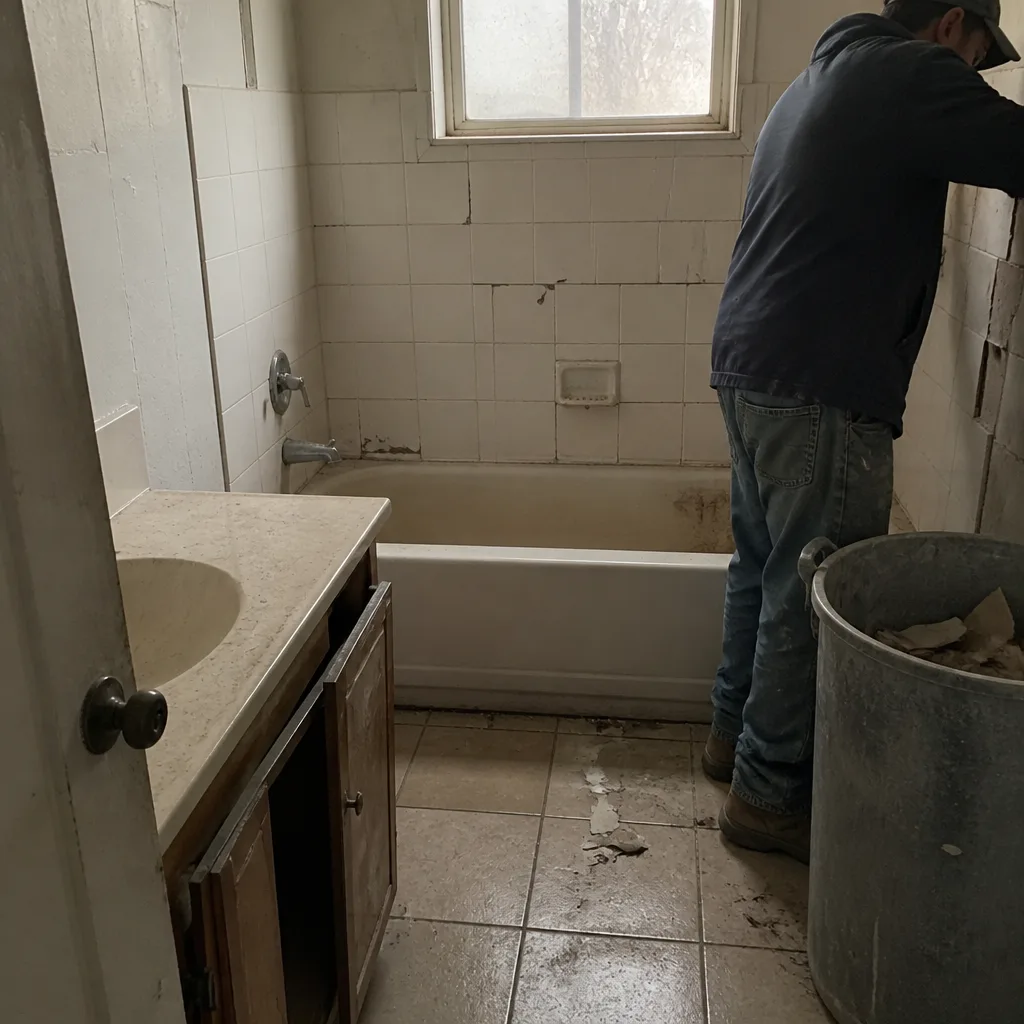
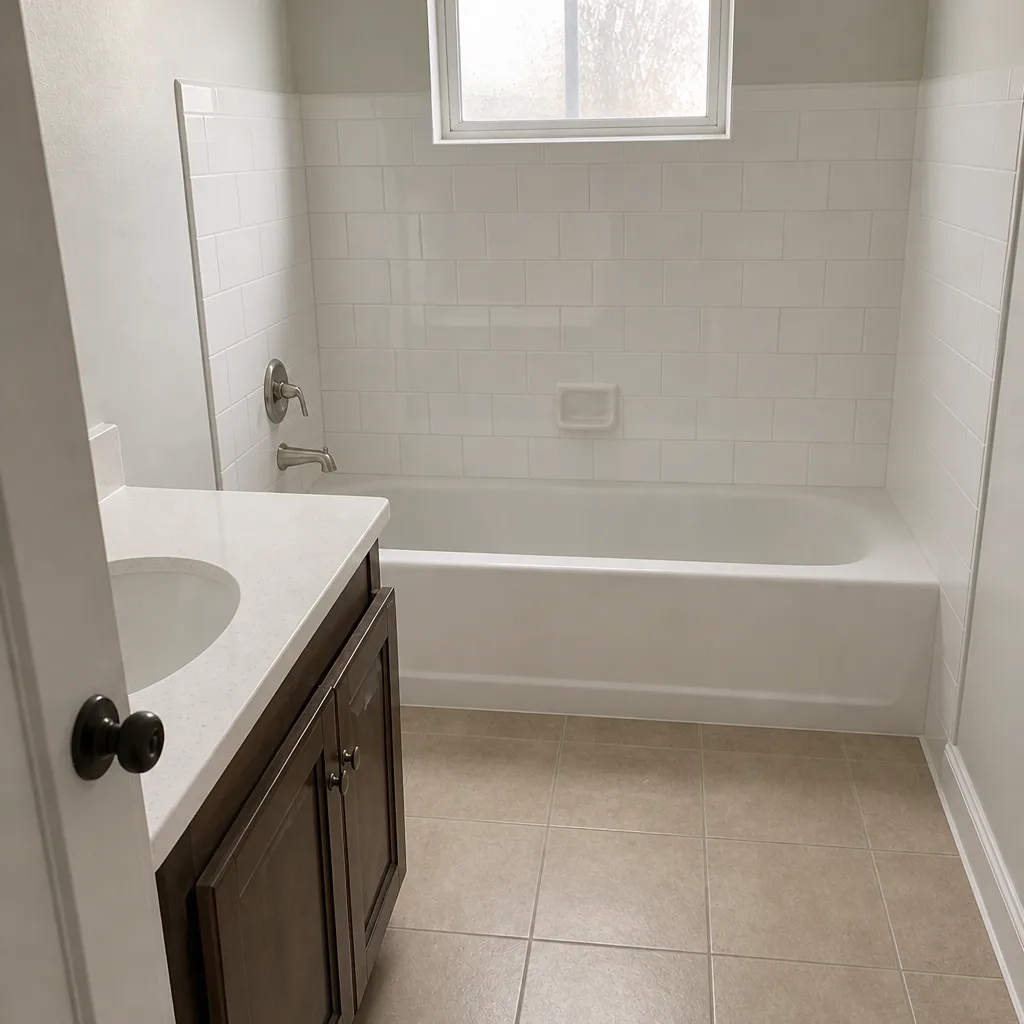
See the difference
 Before
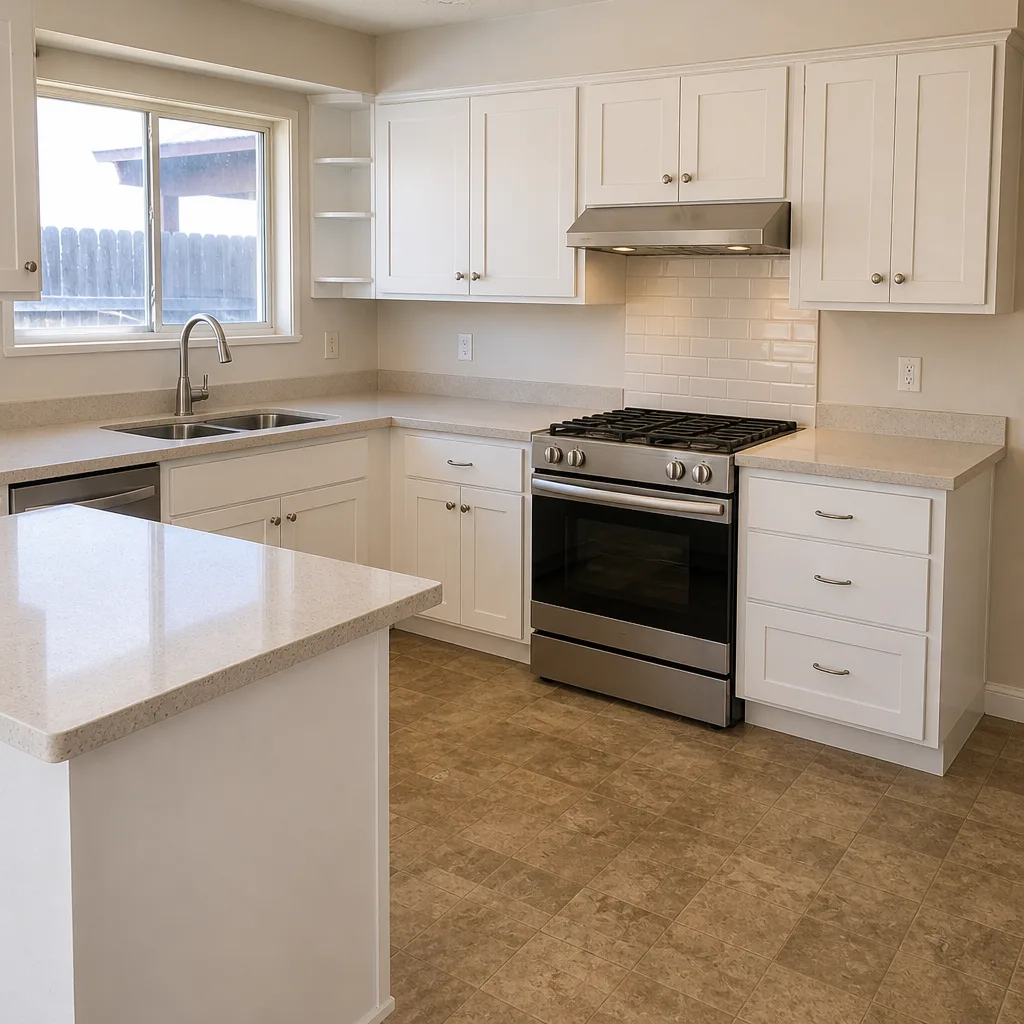 After
 Before
 After
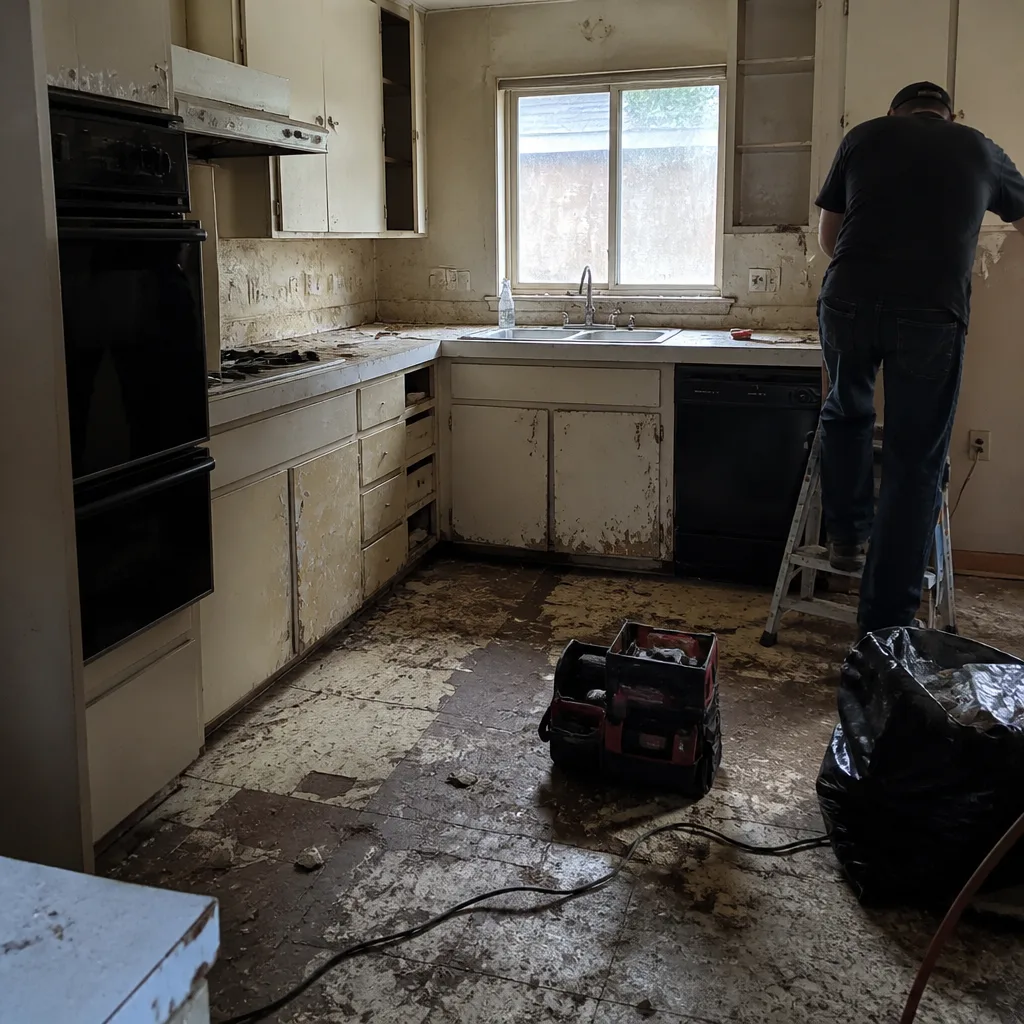 Before
 After
When to Call a Professional
Some of this is a homeowner checklist. Some of it is a trained eye with a photo record. Call a professional when: the interior paint peel at a window trim has recurred after a fresh coat; efflorescence on an interior sill returns after wiping; a door has moved from seasonal sticking to permanent misalignment; you can see daylight at a door frame; exterior caulk cracks at the corners recur after resealing; or the fog between the panes has stopped clearing entirely. On a high window, steep wall, or anything requiring ladder work above the first floor, the inspection itself should go to a trained professional. Rowan Construction Group Lancaster offers free estimates in Lancaster. Call (844) 797-3312 to schedule a free inspection and a written price before any work starts. Background-checked technicians, a live person answering calls 24/7, and a documented photo record on every visit.
Frequently Asked Questions
Cracking exterior caulk at the frame corners is the first visible sign, and it usually appears a full season before anything shows inside. Run a fingertip along the corners and check the sill joint. If the crack catches your nail, water is already finding that path. Call (844) 797-3312 for a free inspection – the estimate is free and the findings come with photos.
No. Peeling paint at the window trim is a condensation or infiltration problem announcing itself through the paint. By the time the paint peels, the drywall behind the trim has typically been wet for two seasons. Repainting without fixing the source buys you one more season at most. Call (844) 797-3312 to find the moisture source before you repaint.
If the fog clears in warm weather and returns in the cold, the insulating glass is in the early stage and the frame is likely still sound. If it’s foggy year-round and the interior sill shows white residue or the exterior caulk is cracked, the glass fog was masking sill or frame damage and the window is past a reseal. Call (844) 797-3312 for an assessment – estimates are free.
Doors stick in Lancaster because the region’s expansive clay soils swell and shrink with the wet-dry season, and the framing moves with them. Worry when the sticking stops clearing with the season and the latch needs a push. That’s the shift from stage one to stage two, and it’s the point to measure the opening and call a professional. Call (844) 797-3312 for a free door and frame assessment.
A written window estimate should name the window make and model, the flashing product, the interior trim restoration, and the warranty on the installation separately from the product warranty. It should also carry a flat written price with a written scope, on every trade. Bring any competing quote to us and we’ll review it line by line at no charge. Call (844) 797-3312.
A single window replacement is typically a same-week assessment and a scheduled install day, while a whole-house window project usually runs several days depending on count and access. The timeline is written into the scope before work starts, and no change proceeds without a signed change order. Call (844) 797-3312 to schedule your free estimate.
The Bottom Line
The window and door problems that cost Lancaster homeowners the most are the ones that don’t look like problems. Peeling interior paint, white powder on a sill, a crack at the frame corner, a door that sticks a little more each summer – these are the early broadcast signals of moisture and movement, and they arrive 18 to 24 months before structural damage. Catch them at month three and you’re resealing; catch them at month twenty-five and you’re replacing a frame. A written price follows an inspection, the installation warranty gets checked before signing, and the 30-day post-install walk-through is your proof window. Our technicians have up to 19 years of experience reading exactly these signs.
Call (844) 797-3312 to schedule your free estimate with Rowan Construction Group Lancaster. We deliver a flat written price before any work starts, a signed change order for any change, background-checked and uniformed technicians, and a documented photo record on every visit – all backed by the 365-Day Done Right Promise.
Written by the team at Rowan Construction Group Lancaster.