Last updated November 17, 2026


Free written scope consultation - allowances, timeline, and change-order rules on paper before a single trade is scheduled
Seasonal Construction Care for Lancaster: Year-Round Homeowner’s Guide
Concrete flatwork poured in Lancaster between June 15 and September 15 without an evaporation retarder applied within 20 minutes of screeding carries a measurably higher surface-crack rate. The Mojave’s single-digit humidity pulls bleed water off the slab faster than hydration chemistry can stabilize it, and the crack that shows up the following spring traces straight back to that afternoon. The product costs about $0.15 per square foot. The repair runs $12 to $18 per square foot. That gap, between a cheap decision made on time and an expensive one made late, is the whole logic of this guide. Lancaster’s four seasons don’t look like the textbook version, but they produce four distinct threat windows for residential construction, and homeowners who map maintenance to those windows spend less than those who respond after damage appears.
Quick Answer
In Lancaster, seasonal construction care means timing your exterior maintenance to four specific windows rather than a generic spring-and-fall checklist: drainage and stucco inspection after the first winter rain (November through February), wind-driven debris and fastener checks in spring (March through May), UV sealant and expansion-joint work before peak summer heat (June through September), and crack diagnosis during the autumn dry-out (October and November). Photograph every exterior surface on the same date each year. That baseline is what lets you tell seasonal shrinkage from structural settling, and it’s what keeps repair bids honest.
Styles & brands we work with
- Kitchen remodeling
- Bathroom remodeling
- Home additions & ADU
- Roofing
- Windows & doors
- Driveway & pavers
- Fence
Table of Contents
- Why Lancaster’s Climate Breaks Standard Maintenance Calendars
- Winter (November-February): Drainage, Joints, and Stucco
- Spring (March-May): Wind Damage and the Re-Leveling Window
- Summer (June-September): UV, Boots, and Thermal Expansion
- Autumn (October-November): Telling Shrinkage From Settling
- The Annual Photo Record: Your Best Defense at Bid Time
- Common Mistakes to Avoid
- When to Call a Professional
Why Lancaster’s Climate Breaks Standard Maintenance Calendars
Most home maintenance advice is written for a climate with reliable summer rain and a deep winter freeze. Lancaster has neither. What it has is an alkali soil profile, an annual swing from hard overnight frost to triple-digit afternoons, and a prevailing wind that crosses open desert before it reaches the neighborhoods along the Antelope Valley floor. Each of those forces acts on a different building component at a different time of year.
Alkali soil is the one Lancaster homeowners underestimate most. High-pH, sodium-heavy ground expands and contracts with moisture, which means a wet winter pushes against foundation edges, walkway slabs, and fence post footings, and a dry summer lets them settle back. The movement is small per cycle. Over a decade it shows up as hairline cracks in stucco, gates that no longer latch, and pavers that rock underfoot. Homes near the Quartz Hill and Antelope Acres edges of Lancaster, where lots are larger and irrigation is less uniform, see more of this movement than tighter suburban lots with consistent landscaping.
Wind is the second force. Spring gusts across the valley don’t just blow dust; they load roof edges, fence panels, and shade structures with a repeated push-and-release cycle that loosens fasteners a quarter turn at a time. A roof that survived a decade of rain can lose ridge cap shingles to one bad March if the fasteners were never checked.
The practical upshot: treat Lancaster as four maintenance seasons, not two. The Rowan Construction Group Lancaster home page lists the trades that handle each window, and the rest of this guide walks through them in order.
Winter (November-February): Drainage, Joints, and Stucco
Lancaster’s rainy months are short and concentrated, which means water arrives fast and has nowhere to go if the grading has shifted. Winter work is about moving water away from the structure and sealing the places where it tries to get in.
Start with a drainage grading inspection after the first significant rain of the season, not before. You want to see where the water actually pooled, not where you assume it drains. Walk the perimeter and check three things: that soil slopes away from the foundation at a visible fall, that downspouts discharge at least several feet from the wall rather than dumping at the base, and that no low spot holds standing water for more than a day. Correcting a negative grade is inexpensive compared to what a season of foundation-edge saturation costs.
Next, inspect the concrete joint caulk before the hard freeze cycles arrive. Expansion joints in driveways, walkways, and patios are designed to flex, but the caulk that keeps water out of them dries and pulls away over time. A joint with failed caulk lets winter rain into the subgrade, and the next freeze lifts the slab edge. Run a finger along each joint; if the caulk is cracked, brittle, or separated from one side, it needs replacement before the cold sets in.
Stucco Crack Mapping Before Moisture Intrusion
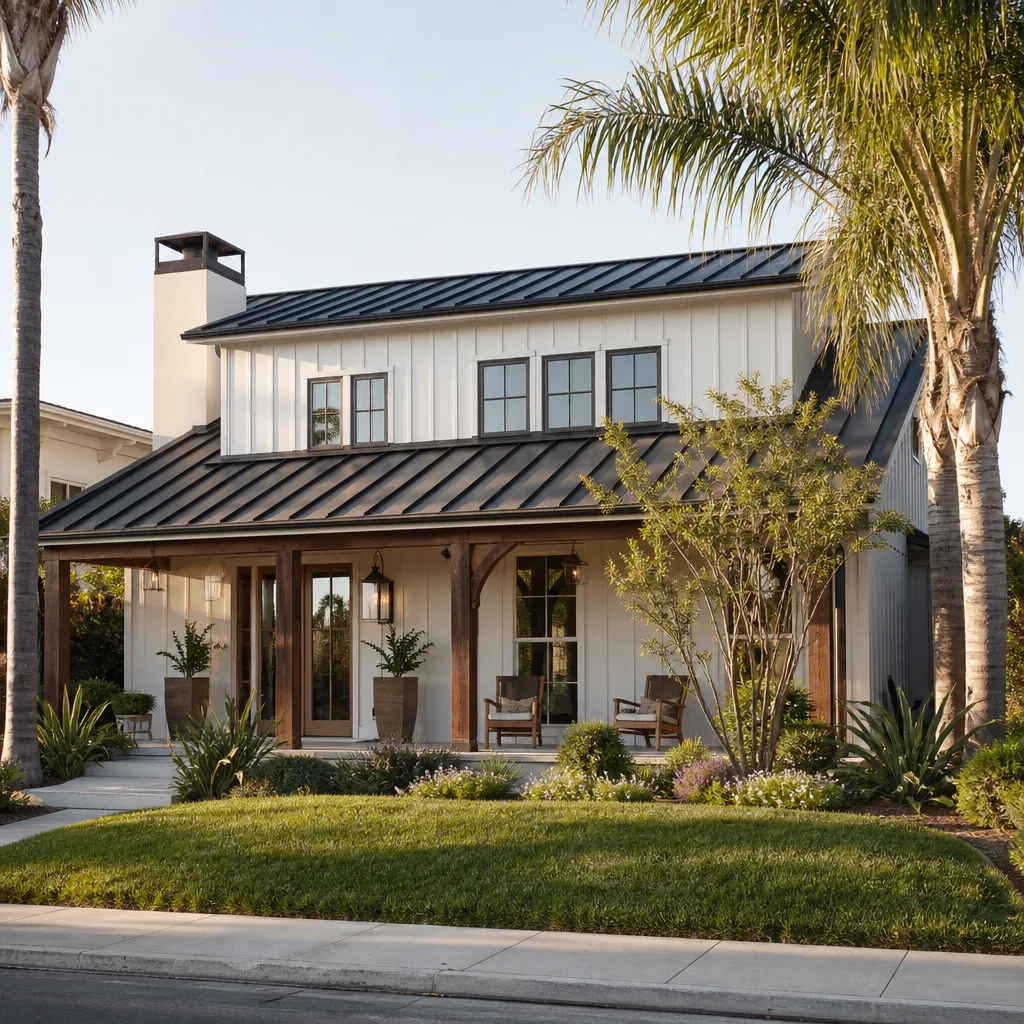
Stucco over a wood-frame wall is a moisture barrier only if it stays intact. Winter is when hairline cracks become water channels. Map every crack you find: note its location, its width, and whether it’s vertical, horizontal, or diagonal.
- Walk each elevation and photograph the full wall, then each crack close up.
- Record crack width against a reference (a coin or a ruler works).
- Note orientation. Vertical cracks near corners often follow framing; diagonal cracks at window corners often follow stress.
- Re-check the same cracks in spring. Growth tells you more than any single measurement.
That map becomes the evidence you hand a contractor when you request a bid, and it’s the same evidence we ask for when scoping stucco repair. If you’re planning an addition or ADU on the same wall, the crack history changes how the new structure ties in; the Home Additions & ADU in Lancaster page covers how tie-ins are sequenced.
Spring (March-May): Wind Damage and the Re-Leveling Window
Spring in Lancaster is a wind event with warm days mixed in. The maintenance priority shifts from water to uplift and fastener fatigue, and there’s one narrow window for hardscape work that closes the moment the heat arrives.
The Roofing Fastener Inspection Protocol
Wind doesn’t remove shingles at random; it works on the ones already loose. Check them in a fixed order so nothing gets skipped:
- Walk the perimeter at ground level first and look for shingle tabs, granules, or ridge cap pieces on the ground. Debris on the ground tells you where the roof failed before you ever climb.
- Check the ridge line and the windward edges, where uplift forces concentrate.
- Look at fascia and soffit for lifted or separated panels; soffit that flutters in wind is a sign fasteners have backed out.
- Check the flashing at every penetration and wall junction for lifted edges.
GAF and Owens Corning systems both specify fastener patterns that matter more in high-wind zones. If a roof was installed to a minimum pattern and the wind exposure here is higher than the installer assumed, the fix is re-fastening, not re-roofing. That’s a conversation worth having before a loose shingle becomes a water intrusion. Roof work at height is genuinely dangerous; we recommend a trained professional handle anything past a ground-level visual check.
Fence post uplift deserves the same attention. Push each post firmly; a post that moves at the base has lost its footing, and a fence panel that leans in March will be on the ground after the next wind event. The Fence Installation in Lancaster page explains how post depth and concrete footing are set for this soil.
Why Hardscape Re-Leveling Belongs in Spring

Base materials for pavers and concrete behave differently at different temperatures. In spring, the ground is still cool and workable, and a crew can re-level and compact a base before the summer heat bakes it hard. Wait until July and you’re fighting both the material and the schedule. The Driveway & Pavers in Lancaster page covers the base-prep sequence and why paver and concrete decisions diverge here. If you’ve noticed pavers rocking or a walkway edge settling, spring is the window to fix it.
Summer (June-September): UV, Boots, and Thermal Expansion
Summer is the season that punishes deferred decisions. Lancaster’s UV load is severe, its humidity is near zero, and the thermal swing between a 100-degree afternoon and a cool desert night makes every joint in the house work.
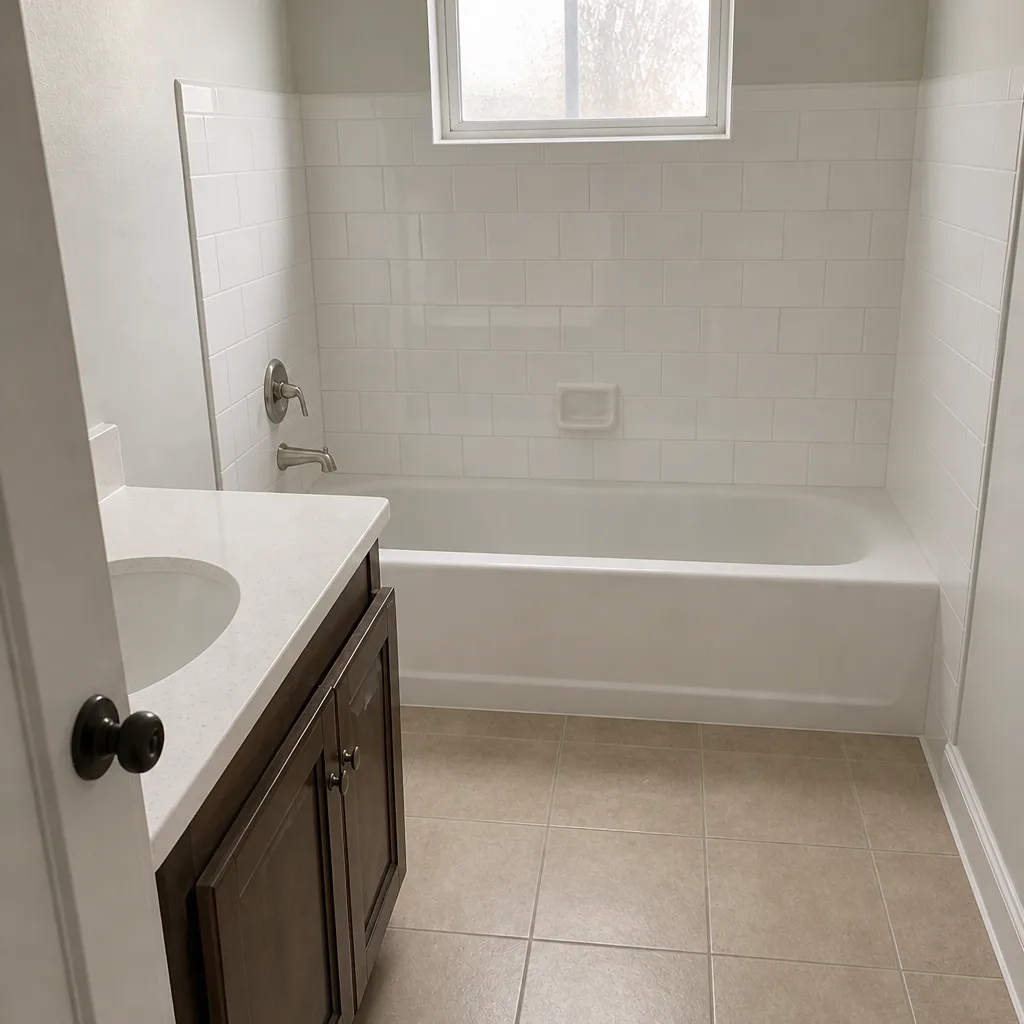
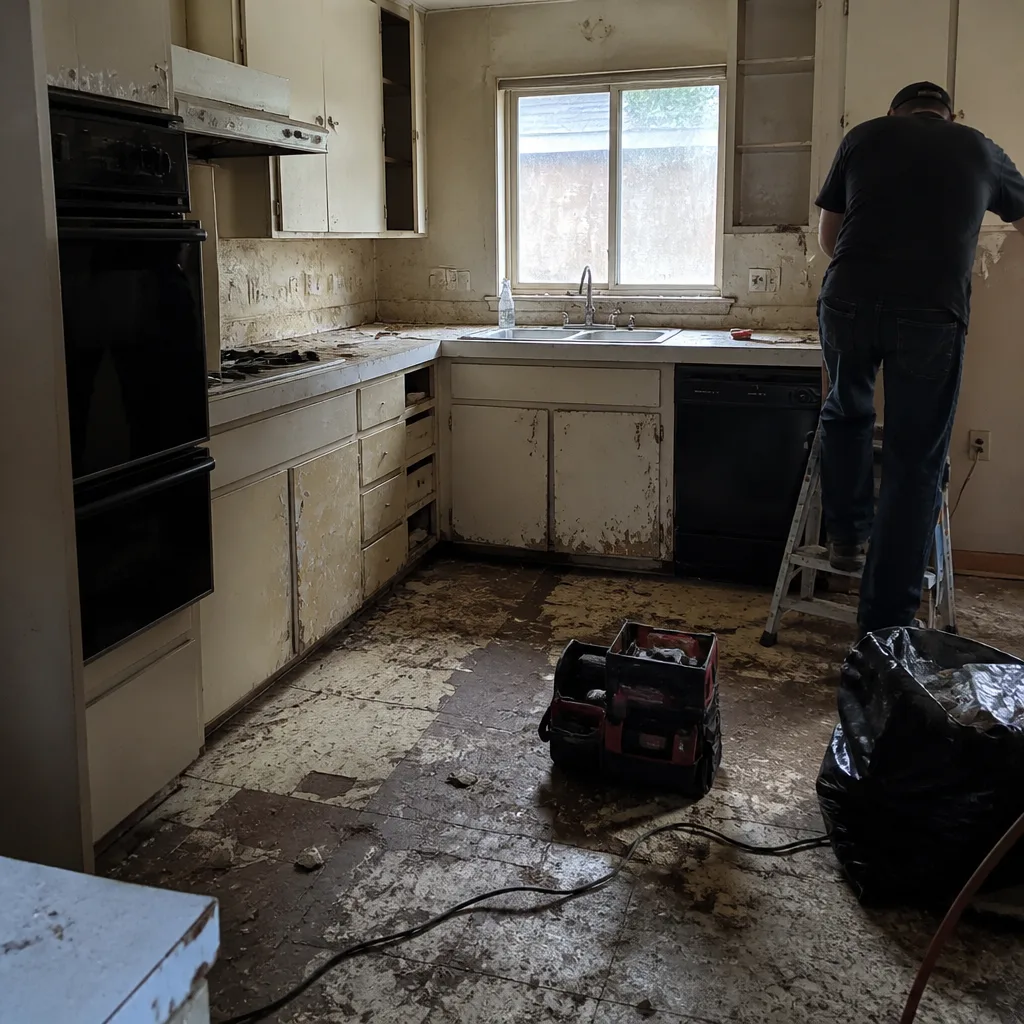
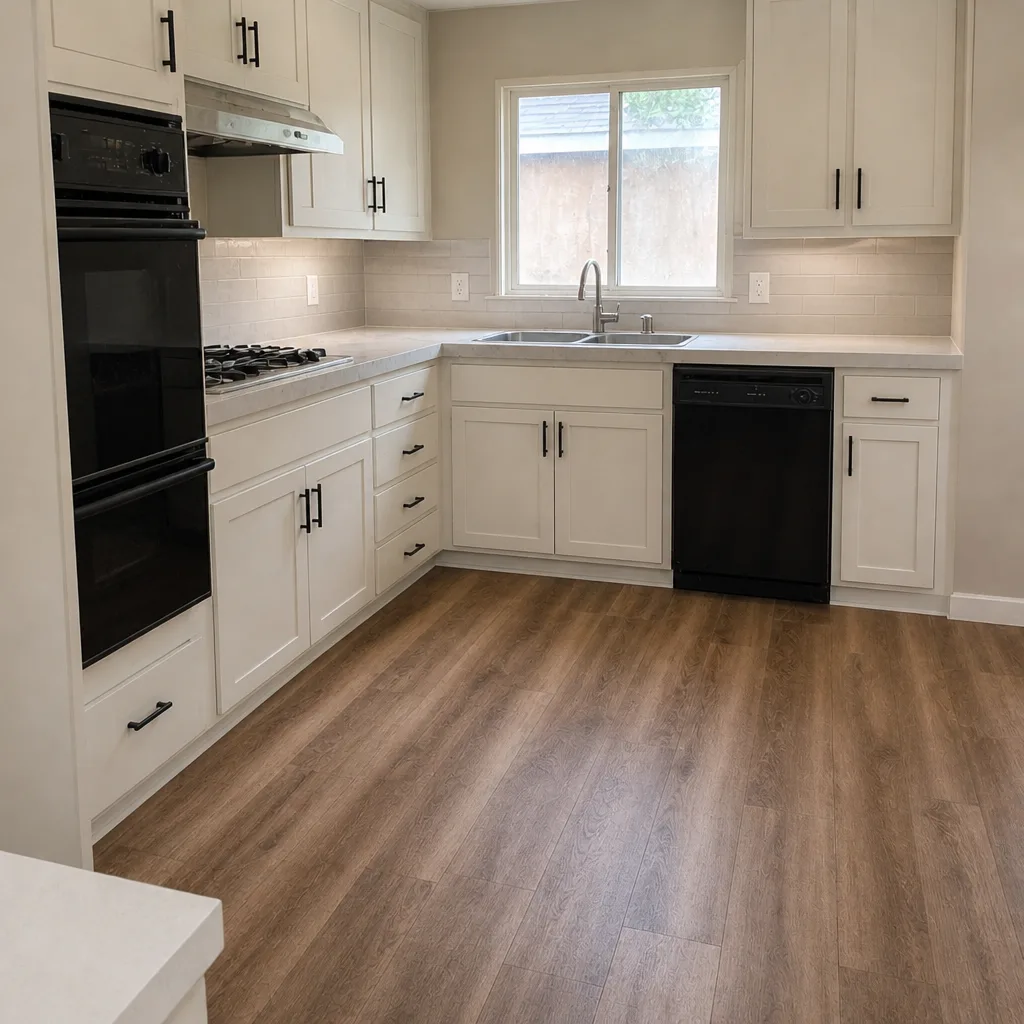
See the difference
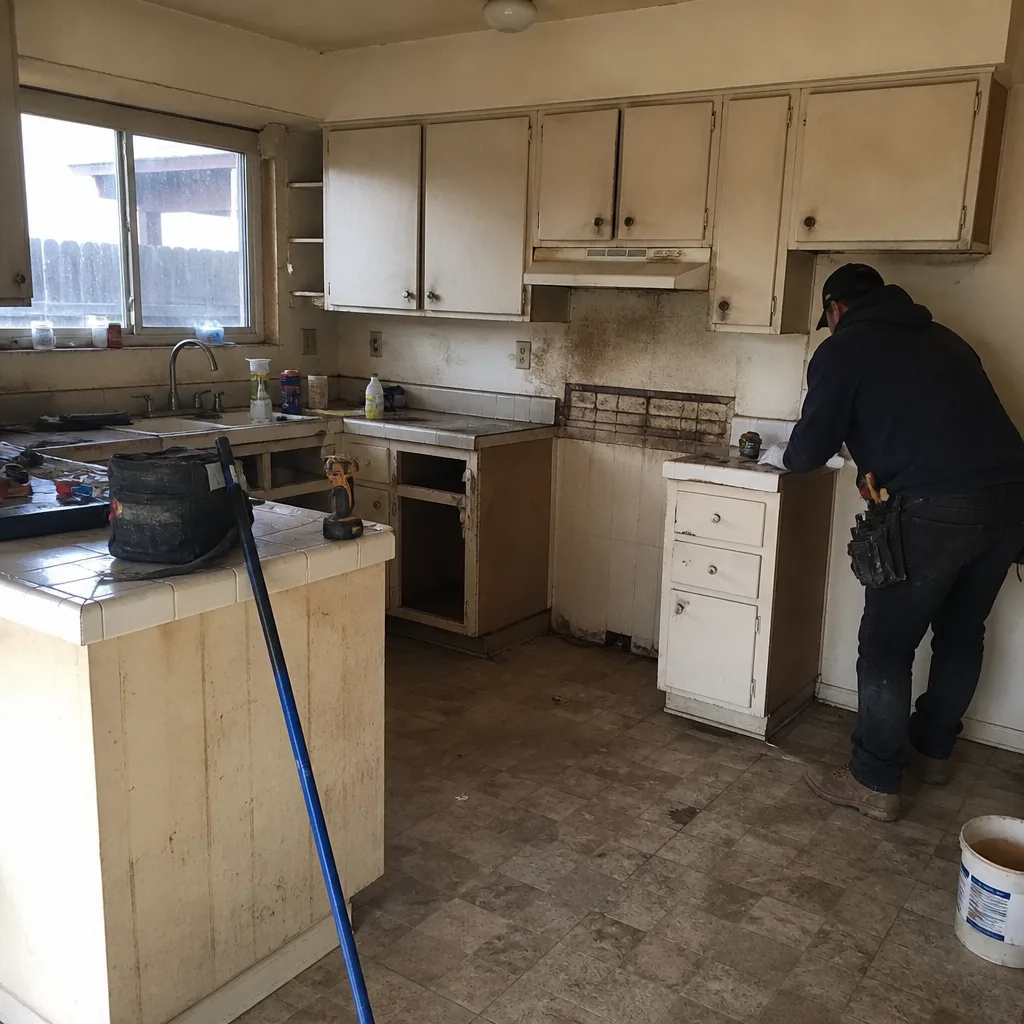 Before
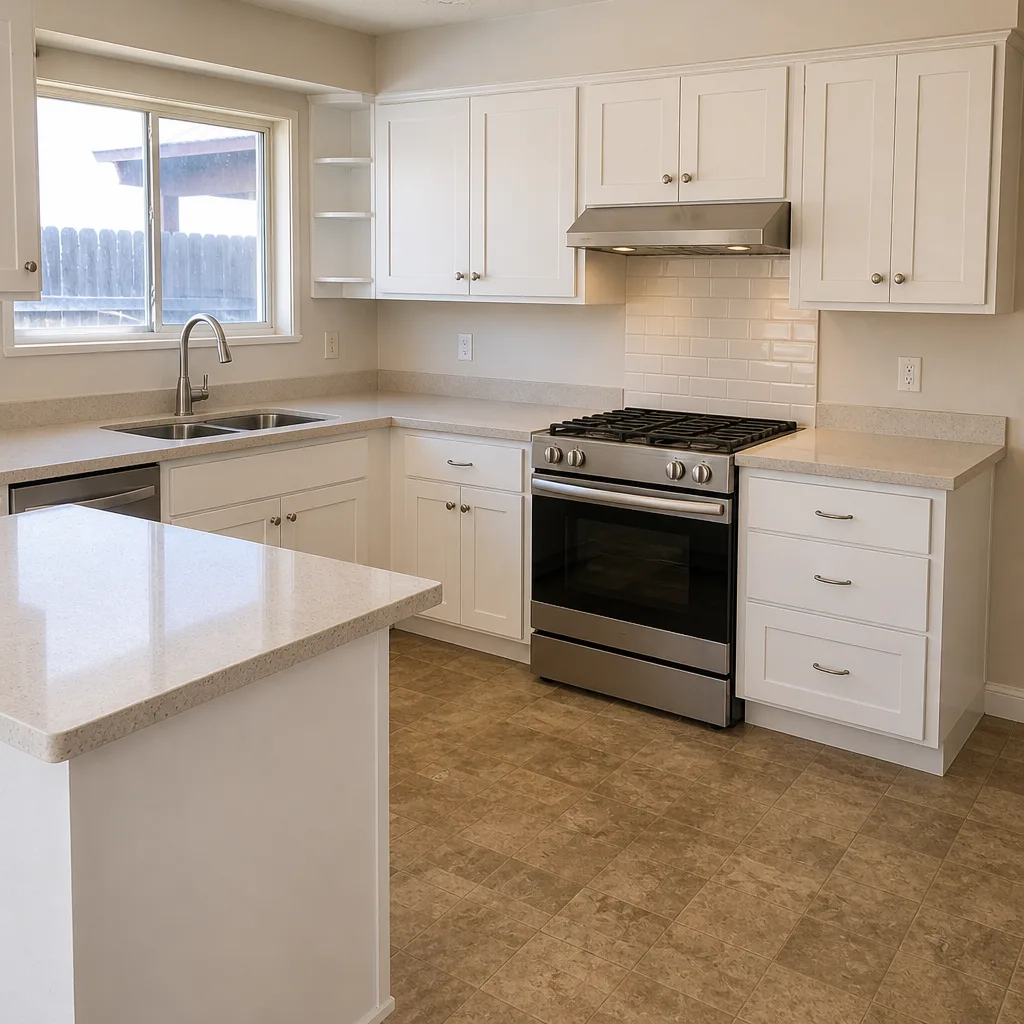 After
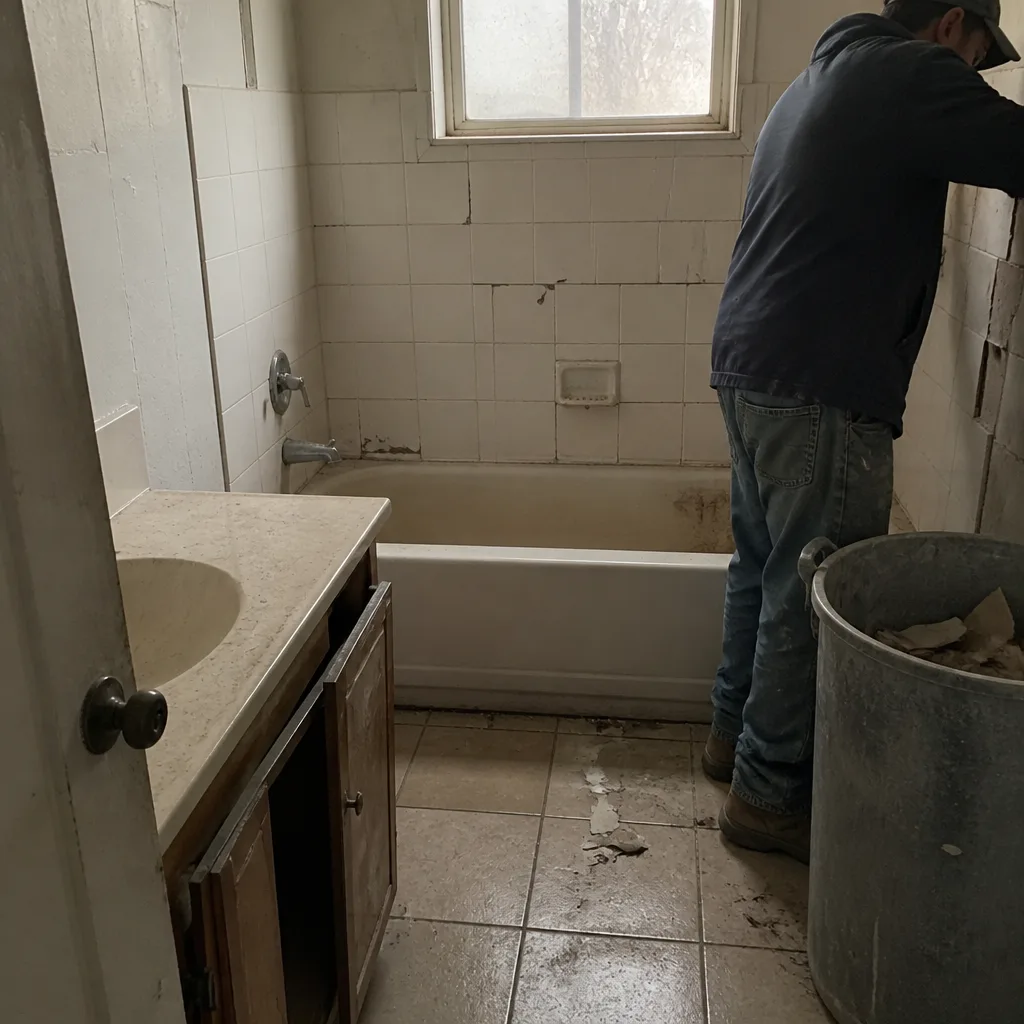 Before
 After
 Before
 After
Wood Deck and Pergola UV Sealant Schedule
A wood deck or pergola in Lancaster takes more UV in one summer than the same structure would take in several years in a coastal climate. Sealant breaks down on a schedule, and the schedule is shorter than most product labels imply. Reapply UV sealant before the surface goes gray and before the wood checks (splits along the grain). The tell is a deck that drinks water instead of beading it. Once checking starts, you’re into sanding and repair, not just sealing.
HVAC Penetration Boot Inspection
Every roof penetration has a boot, a rubber or metal collar that seals the pipe where it passes through the roof. UV degrades the rubber ones. In Lancaster’s sun, a rubber boot can fail years before the shingles around it do. Inspect each boot in early summer; a cracked or pulled-away boot lets water in at the first winter rain, and the damage shows up inside the wall before it shows up on the ceiling. This is a small-part inspection with an outsized payoff, and it’s one we do routinely on any roof we’re already touching.
Clearing Concrete Expansion Joints Before Peak Heat
Thermal expansion is the summer force. A concrete slab expands as it heats, and the expansion joints are what give it room to move. Joints packed with dirt, sand, or debris have nowhere to push, and the slab cracks instead. Clear every expansion joint in the drive, walk, and patio before the heat peaks, then re-caulk with a flexible material. This is one of the cheapest maintenance tasks on the list, and it’s the one most often skipped.
Autumn (October-November): Telling Shrinkage From Settling
October and November are the dry-out season. After a summer of expansion, the ground and the wood framing both contract, and cracks appear that weren’t there in June. Some of those cracks are seasonal and harmless. Some are structural. Knowing the difference is the single most useful diagnostic skill a homeowner can develop.
Seasonal shrinkage cracks are typically hairline, uniform, and appear in predictable places: drywall seams, the corners of door and window openings, and stucco along framing lines. They don’t grow quickly, and they close or stabilize when humidity returns. Structural settling cracks tend to be wider, often diagonal, and frequently appear alongside other signs: a door that suddenly sticks, a floor that feels uneven, a gap at a baseboard that wasn’t there before.
- Hairline cracks at drywall corners that don’t widen: likely seasonal. Photograph and monitor.
- Diagonal cracks running from window or door corners: worth a professional look, especially if they widen.
- Cracks that pair with sticking doors or sloping floors: treat as structural until a professional says otherwise.
- New cracks in a wall you didn’t touch: document and get an opinion before winter rain.
This is the season to walk the interior and exterior together and compare against last year’s photos. It’s also the season to plan next year’s structural work. Homeowners researching prefab options for a future addition often compare Abodu and Mighty Buildings units side by side; whichever route you consider, the site work and grading schedule is better set in autumn than in summer. If a crack diagnosis turns into a conversation about adding on, that’s a different scope, and the Home Additions & ADU in Lancaster page walks through how additions are sequenced against existing structure.
The Annual Photo Record: Your Best Defense at Bid Time
The most valuable maintenance habit in Lancaster costs nothing and takes an hour. Once a year, on the same date, photograph every exterior surface of the house: each elevation, the roof from ground level, every walkway and driveway, the fence line, and the interior corners where cracks tend to appear. Store the images with the date in the filename.
Why the same date matters: it creates a comparison baseline. When a contractor tells you a crack is new or a roof is at end of life, you can either confirm it against last year’s photo or question it. Progressive damage shows up in a sequence. A single inspection shows a moment.
Three things the record does for you:
- It proves or disproves a contractor’s claim about when damage started.
- It shows you the rate of change, which is often more useful than the condition itself.
- It makes a free second opinion on a written estimate far more productive, because we can compare your baseline to the proposed scope line by line.
Every visit from our crews includes a documented photo record as a standard deliverable, not an upgrade. You leave with evidence of what was found and what was done, in the same format you’ve been building yourself.
Common Mistakes to Avoid
- Pouring concrete in peak summer without an evaporation retarder. The Mojave pulls bleed water faster than the slab can cure, and the surface cracks before it’s a week old. The product costs pennies per square foot; the repair runs into the double digits.
- Sealing a deck in the wrong season. Sealant applied over a surface that’s still holding summer heat or about to take winter rain doesn’t bond. Lancaster’s UV schedule is short enough without a failed application.
- Confusing autumn shrinkage cracks with structural settling. Treating a structural crack as cosmetic means it gets a season of winter water before anyone looks at it.
- Skipping the HVAC boot because the roof looks fine. A cracked rubber boot fails years before the shingles around it, and the leak shows up in the wall, not the ceiling.
- Letting expansion joints fill with dirt. A packed joint gives the slab nowhere to move, and the slab cracks at the weakest point instead of the joint.
- Re-leveling pavers in July. Base material compacts and cures differently in heat. Spring is the window; summer turns a small job into a difficult one.
- Accepting a verbal scope with no written price. A flat written price with a written scope before work starts is the only way to compare bids, and it’s the reason we don’t offer “call for a quote.”
When to Call a Professional
Some of this guide is genuine DIY territory: walking the perimeter after rain, clearing expansion joints, photographing elevations. Other parts are not. Roof work at height, structural crack diagnosis, foundation grading that requires regrading, and anything involving the electrical or gas systems behind a wall all warrant a trained professional. Garage door springs, panel work, gas lines, and steep-roof repairs are the four we’d never suggest a homeowner tackle; the injury risk and the permit requirements both point to a licensed trade.
The dividing line we use: if a mistake could hurt someone or void a warranty, call a professional. If it’s inspection, documentation, or routine cleaning, do it yourself and keep the record. Rowan Construction Group Lancaster offers free estimates in Lancaster across all seven of our trades, with a written price before any work starts. Call (844) 797-3312 to schedule yours.
Frequently Asked Questions
Pour concrete in Lancaster in spring or early autumn when daytime temperatures are moderate and humidity is workable. If you must pour in summer, an evaporation retarder applied within 20 minutes of screeding is the difference between a sound slab and a cracked one. Call (844) 797-3312 for an exact quote on flatwork; estimates are free.
Hairline cracks that don’t widen and appear at framing lines or drywall seams are usually seasonal shrinkage. Diagonal cracks running from window or door corners, or any crack that widens over a season, warrant a professional look. Photograph it against a reference and re-check in 60 days. Call (844) 797-3312 to schedule a free inspection if the crack is widening.
Reseal a wood deck in Lancaster more often than a coastal climate requires because the UV load is severe. Watch for water no longer beading on the surface; that’s the signal to reseal, and it typically comes sooner than a product label suggests. Reapply before the wood goes gray and before checking (splitting) starts.
No work proceeds on a change until the change order is signed. That’s the discipline that has kept Rowan’s projects within a few percent of the agreed cost across 4,000-plus jobs. Every project is quoted with a flat written price and written scope before work begins. Call (844) 797-3312 for a free estimate.
Yes. Permits and inspections are part of the scope for any work that requires them, and they’re written into the flat price before work starts. If a contractor offers to skip the permit to save time, that’s a red flag. Call (844) 797-3312 to ask what your project needs.
Routine seasonal tasks like joint caulking, boot inspection, and expansion-joint clearing take a day or less. Repair work like re-leveling a paver base or fixing a fence post runs longer and depends on scope. You’ll get a written timeline with the written price before anyone picks up a tool. Call (844) 797-3312 for your free estimate.
The Bottom Line
Lancaster’s four threat windows are drainage and stucco in winter, wind and hardscape in spring, UV and thermal expansion in summer, and crack diagnosis in autumn. Map your maintenance to those windows and you’ll spend less than the homeowner who fixes after damage. Photograph every exterior surface on the same date each year; that record is what keeps repair bids honest and what proves progressive damage. Name the price before work starts, sign the change order before any change proceeds, and keep the documentation the crew leaves behind. That’s the whole system, and it holds under the Mojave sun.
Written by the team at Rowan Construction Group Lancaster.